AI estimate as of October 27, 2026 · verify with a professional before acting
AI-Generated · Verify before acting
Everything on this page is generated by AI for informational purposes only. AI can make mistakes — the AI may misidentify items or misattribute them (artist, maker, brand, designer, origin, era). This is not an official valuation and should not be used for insurance, sale, tax, estate, legal, or lending purposes — or any decision requiring a certified appraisal. It is not an authoritative claim about any person, brand, or rights holder — do not share or rely on it as a factual statement about a third party. Always consult qualified professionals before making financial decisions.
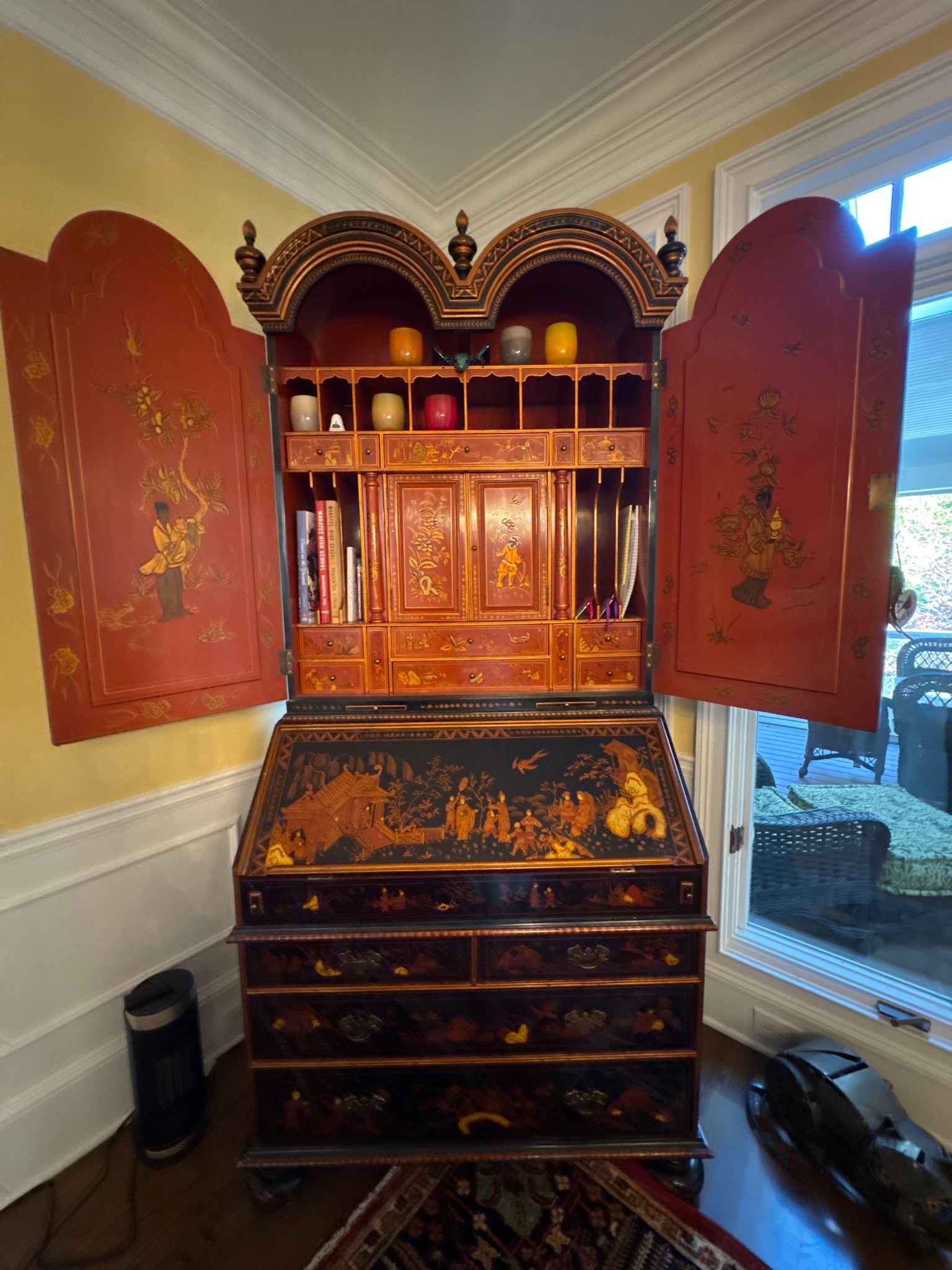
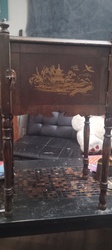
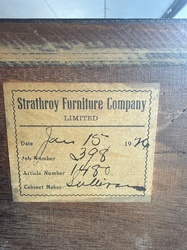
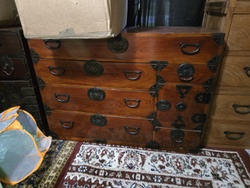
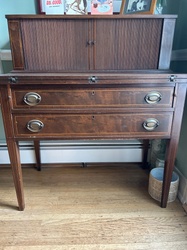
This is a large and ornate secretary desk and cabinet combination featuring traditional Chinoiserie decoration executed in gold tones against red and black lacquered surfaces. The upper section consists of twin arched doors that open to reveal an interior fitted with shelves, pigeonholes, small drawers, and central cabinet doors, all richly decorated with hand-painted figural and botanical motifs depicting figures in traditional settings, pagodas, and flora. The lower portion includes a slant-front fall-front writing desk that conceals further compartments, resting above a base unit featuring multiple graduated exterior drawers fitted with decorative metal hardware. The exterior of the upper cabinet doors and the slant front showcase detailed pictorial landscapes and figures, consistent with European Chinoiserie styles popular during the 18th century and later revival periods. The piece exhibits a glossy finish with visible age-related wear, light surface patina, and minor rubbing along the edges, consistent with careful use over time. Construction details appear to involve wood with applied gesso and lacquer layers. No visible maker's mark or signature is immediately apparent from the photographic evidence, and the identification is based purely on the distinct stylistic characteristics, form, and decorative lacquer technique.
AI Appraisal Report
Based on the visual evidence provided, I can observe a large Chinoiserie lacquered bureau cabinet featuring twin arched doors, a slant-front writing desk, and extensive hand-painted figural and botanical motifs in gold tones against red and black surfaces. Based on what I can see, the stylistic characteristics and form are consistent with European Chinoiserie styles popular during the 18th century or subsequent revival periods. However, I cannot verify from a photo whether the piece is an 18th-century antique, a later 19th-century revival piece, or a more modern decorative copy. I would need physical inspection to confirm the wood species, age of the gesso and lacquer layers, hardware composition, and any structural joinery. The estimated range of $4,000–$8,000 represents the typical market value for an item of this type *if* the attribution to a period 18th-century or high-quality revival piece is correct. Market demand for fine Chinoiserie lacquer furniture remains steady among interior designers and collectors of decorative arts, though values can fluctuate based on condition and prevailing trends. The piece exhibits visible age-related wear, light surface patina, and minor edge rubbing, which are factored into this estimate. To fully establish authenticity, age, and potential workshop origin, an in-person physical examination by a qualified furniture conservator, material analysis, and comprehensive provenance documentation would be required. If the piece were determined to be a later reproduction, replica, or made strictly 'in the style of' rather than a period item, the market value would drop significantly, typically falling into the $800–$1,500 range depending on the overall craftsmanship.