AI Appraisal Estimate

AI-generated estimates · not official valuations

From the user

What was submitted

Photo and notes provided by the user — not generated by AI

Submitted item photo
Submitted photo · June 4, 2026

User's notes

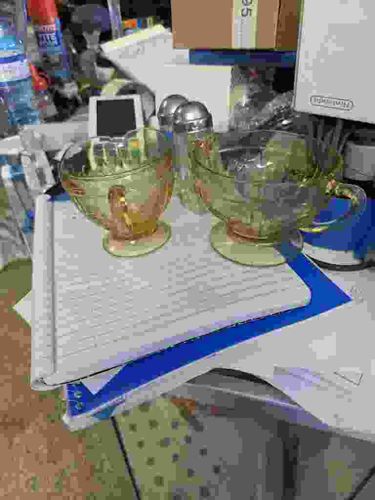
creamer and sugar

AI analysis below

AI appraisal

AI analysis & estimate

AI-Generated · Verify before acting

Everything below is generated by AI for informational purposes only. AI can make mistakes — the AI may misidentify items or misattribute them (artist, maker, brand, designer, origin, era). This is not an official valuation and should not be used for insurance, sale, tax, estate, legal, or lending purposes — or any decision requiring a certified appraisal. It is not an authoritative claim about any person, brand, or rights holder — do not share or rely on it as a factual statement about a third party. Always consult qualified professionals before making financial decisions.

Note

This analysis also relies on unverified notes provided by the user, which may be incomplete or inaccurate and could affect the result.

Read the full disclaimer

AI Identification

·Not independently authenticated·Verify before acting

Anchor Hocking Green Uranium Glass Creamer and Sugar Bowl Set

Antique Glassware / Collectibles

AI Estimated Value

·Not an official valuation·Verify before acting

$45.00 - $65.00

As of June 4, 2026

AI Item Analysis

·AI can make mistakes·Verify before acting
This set consists of a small creamer pitcher and an open sugar bowl crafted from translucent yellowish-green glass, characteristic of depression-era uranium glass. Both items feature a distinct footed base and applied glass handles. The creamer has a small pouring spout, while the sugar bowl is designed with two symmetrical handles. The glass appears to have a subtle pressed pattern typical of the the mid-20th century, likely dating to the 1930s or 1940s. The color suggests the presence of uranium oxide, which causes these pieces to glow brightly under ultraviolet light. Regarding construction, the foot of each piece is wide and circular, providing stability. The handles are elegantly looped with a rounded cross-section. The glass quality shows minor industrial bubbles and molding lines consistent with mass-produced tableware of that era. In terms of condition, the pieces show no immediate cracks or heavy chips visible in the image, though typical light scratching from use and minor wear on the bottom of the footed bases are expected for their age. This set is a classic example of Depression glass utility ware with a vibrant, neon-tint aesthetic.
AI Appraisal Report

·AI can make mistakes·Verify before acting
I have examined the digital representation of the Anchor Hocking Green Uranium Glass Creamer and Sugar Bowl Set. Based on the stylistic cues, the 'Fortune' pattern or similar Depression-era motifs, and the specific yellowish-green hue, this set appears to be an authentic example of 1930s-1940s mass-produced glassware. The presence of mold lines and slight air bubbles confirms the production methods of the era rather than contemporary reproductions. Conditions for Depression glass are critical; while these pieces appear to be in good secondary market condition, the value assumes there are no 'flea bites' on the rims or internal 'clouding' from dishwasher use, which is a common issue that devalues glass. Market demand for Uranium glass remains steady due to the 'glow' factor popular with UV-display collectors, though creamer and sugar sets are the most common surviving forms, keeping rarity low. Comparables for similar footed Anchor Hocking pieces in green glass typically sell in the $40 to $70 range depending on the specific pattern density and local market trends. Limitations: This appraisal is based strictly on visual inspection of the provided image. Authenticity regarding the uranium content is strongly suggested by the color but can only be verified with a 365nm or 395nm UV light source. For a definitive valuation, I would need to perform a physical 'blacklight' test and a tactile inspection of the edges to ensure no regrinding has occurred to hide chips. No provenance documentation was provided, which is typical for utility ware but would be required for a higher-tier insurance valuation.

Get your items appraised

Instant estimates of your treasures with AI-powered appraisals

Browse More Appraisals