AI Appraisal Estimate

AI-generated estimates · not official valuations

From the user

What was submitted

Photo and notes provided by the user — not generated by AI

Submitted item photo
Submitted photo · June 1, 2026

User's notes

No additional notes provided.

AI analysis below

AI appraisal

AI analysis & estimate

AI-Generated · Verify before acting

Everything below is generated by AI for informational purposes only. AI can make mistakes — the AI may misidentify items or misattribute them (artist, maker, brand, designer, origin, era). This is not an official valuation and should not be used for insurance, sale, tax, estate, legal, or lending purposes — or any decision requiring a certified appraisal. It is not an authoritative claim about any person, brand, or rights holder — do not share or rely on it as a factual statement about a third party. Always consult qualified professionals before making financial decisions.

Read the full disclaimer

AI Identification

·Not independently authenticated·Verify before acting

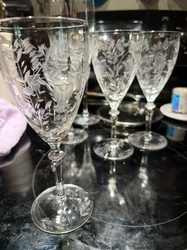
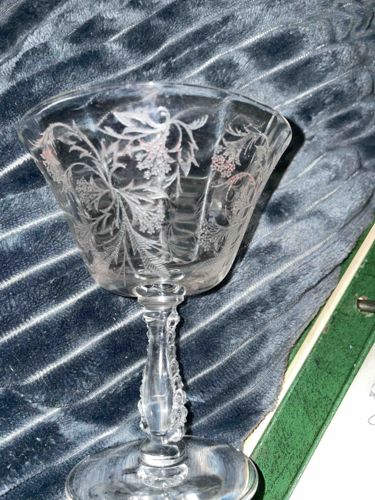
Fostoria Glass 'Chintz' Pattern Etched Champagne or Tall Sherbet Glass

Vintage Glassware and Stemware

AI Estimated Value

·Not an official valuation·Verify before acting

$18.00 - $28.00 per stem

As of June 1, 2026

AI Item Analysis

·AI can make mistakes·Verify before acting
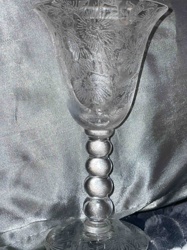
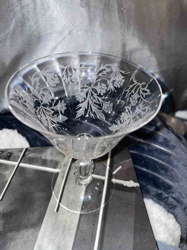
This item is a piece of elegant stems glassware, specifically a champagne or tall sherbet glass featuring a delicate floral etch. The item is identified as the 'Chintz' pattern (etch #338), produced by the Fostoria Glass Company, likely on the #6017 stem blank. The glass is made of clear, high-quality non-lead or low-lead crystal, exhibiting excellent clarity and light refraction. Its physical construction features a wide, flared conical bowl with a slightly out-turned rim, supported by an ornate decorative stem. The stem shows a central baluster shape with pressed vertical ribbing or 'zipper' style accents, which provides both visual interest and tactile grip. The etching consists of a complex, flowing arrangement of blossoms, leaves, and wispy foliage that wraps around the bowl in a romantic, naturalistic style characteristic of the Depression era and mid-20th century. This pattern was introduced in the 1940s and remained popular through the 1970s. The glass appears to be in very good vintage condition with no visible chips, cracks, or significant clouding (devitrification) often seen in older glass. The base is a simple circular foot with a smooth finish. There are no maker's marks visible, which is standard for Fostoria of this period, as they primarily used paper labels. The craftsmanship is evident in the sharpness of the etch and the lack of internal bubbles or seams in the glass.
AI Appraisal Report

·AI can make mistakes·Verify before acting
I have conducted a visual examination of this champagne/tall sherbet glass in the Fostoria 'Chintz' pattern (Etch #338) on the #6017 stem. Based on the provided imagery, the glass displays the high clarity and precise 'needle etch' execution typical of Fostoria’s mid-century production. The condition appears to be 'near-mint' with no evidence of rim chips, base flakes, or the 'sick' glass clouding often caused by automatic dishwasher use. The #6017 stem is identified by its tiered, ornate baluster shape, which is a hallmark of this series introduced in 1940. Market demand for Fostoria Chintz remains steady among Depression-era glass collectors and bridal registries, though the market is currently saturated with common stemware shapes compared to more niche items like the juice flutes or iced tea glasses. Recent sales data for single stems in this specific bowl shape range from $18 to $28, depending on the venue. Sets of four or eight often command a slight premium per piece due to the convenience of a matching set. Limitations: This appraisal is based strictly on photographic evidence. While the item appears authentic, a physical inspection is required to confirm the 'ring' of the glass (checking for lead content/resonance), verify the absence of microscopic 'flea bites' on the rim, and detect any potential professional grinding or repairs. Full authentication would involve checking for original paper labels (rarely extant) or verifying provenance against known collection origins. Without a physical assessment of the glass texture and weight, I cannot definitively rule out high-quality contemporary reproductions, though Chintz on the #6017 blank is not known to be widely faked.

Get your items appraised

Instant estimates of your treasures with AI-powered appraisals

Browse More Appraisals