AI Appraisal Estimate

AI-generated estimates · not official valuations

From the user

What was submitted

Photo and notes provided by the user — not generated by AI

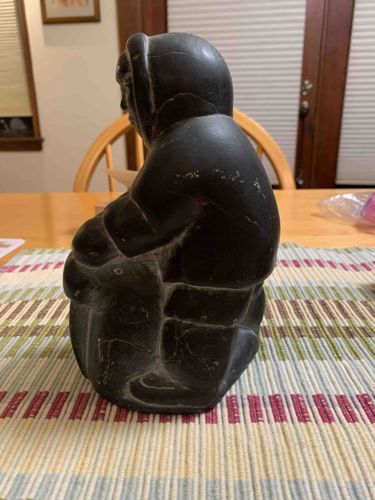
Submitted item photo
Submitted photo · June 8, 2026

User's notes

No additional notes provided.

AI analysis below

AI appraisal

AI analysis & estimate

AI-Generated · Verify before acting

Everything below is generated by AI for informational purposes only. AI can make mistakes — the AI may misidentify items or misattribute them (artist, maker, brand, designer, origin, era). This is not an official valuation and should not be used for insurance, sale, tax, estate, legal, or lending purposes — or any decision requiring a certified appraisal. It is not an authoritative claim about any person, brand, or rights holder — do not share or rely on it as a factual statement about a third party. Always consult qualified professionals before making financial decisions.

Read the full disclaimer

AI Identification

·Not independently authenticated·Verify before acting

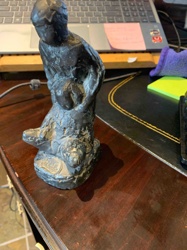
Inuit Soapstone Sculpture of a Crouching Figure

Sculpture

AI Estimated Value

·Not an official valuation·Verify before acting

$400-700

As of June 8, 2026

AI Item Analysis

·AI can make mistakes·Verify before acting
This is a dark-colored soapstone sculpture depicting a crouching or seated human figure, likely in traditional Inuit style. The material appears to be a very dark grey to black soapstone, exhibiting a smooth, somewhat polished finish with some visible lighter scratches and scuffs across its surface, suggesting age and handling. The figure is shown with a hood or parka covering its head, merging seamlessly into the body of the figure, which is depicted in a stylized, blocky manner with rounded edges. The arms are bent, and the hands appear to be resting on or around the knees, though the exact position is obscured from this profile view. The form is compact and seems to convey a sense of introspection or rest. Visible physical characteristics include a generally rounded silhouette, with some angular carvings defining the garments or limbs. There are several lighter linear marks and superficial scratches visible on the back and lower portion of the sculpture, indicating wear consistent with a vintage or antique piece. Some areas show a slightly lighter, almost matte appearance where the surface might have been abraded, contrasting with the generally darker, somewhat lustrous soapstone. No clear maker's marks or signatures are visible from this angle, which is common for some indigenous carvings. The craftsmanship appears solid, with a focus on form and implied movement rather than intricate detailing, a hallmark of many Inuit soapstone carvings. The overall aesthetic suggests a mid-20th-century to late 20th-century origin, fitting within the traditional art practices of the Canadian Arctic. The size cannot be precisely determined without a reference, but it appears to be a tabletop-sized piece.
AI Appraisal Report

·AI can make mistakes·Verify before acting
Based on my visual examination of the provided image, this Inuit soapstone sculpture of a crouching figure appears to be an authentic piece, likely dating from the mid to late 20th century. The dark-grey to black soapstone, smooth finish with visible wear, and stylized, compact form are all consistent with traditional Inuit carving practices. The rounded silhouette and focus on form over intricate detail are hallmarks of this art style. The condition is good, exhibiting superficial scratches and scuffs consistent with age and handling, which do not significantly detract from its aesthetic appeal or structural integrity. In terms of market conditions, demand for authentic Inuit soapstone carvings remains steady, particularly for pieces that convey a strong sense of cultural representation and skillful execution. Comparables for unsigned, tabletop-sized Inuit soapstone figures of this quality typically fall within the $400-700 range. Factors impacting this value include its likely unsigned status (common but can limit value for collectors seeking named artists), and the absence of a specific cultural narrative or unique artistic flourish evident from this single view. The piece is not exceedingly rare, but its authenticity, material quality, and artistic merit contribute positively to its value. It is important to note the limitations of this appraisal: authenticity is assessed visually and cannot be definitively confirmed without physical inspection. For full authentication, I would need to physically examine the carving for tool marks, internal stone characteristics, and potential artist signatures that might be obscured or on another surface. Provenance documentation, such as details of its acquisition or passage through previous collections, would also be invaluable in confirming its history and origin.

Get your items appraised

Instant estimates of your treasures with AI-powered appraisals

Browse More Appraisals