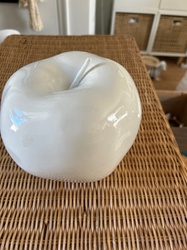
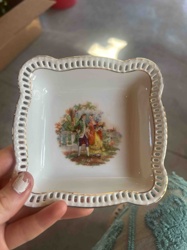
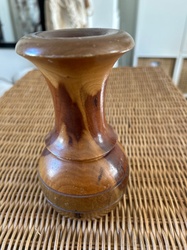
AI estimate as of October 11, 2025 · verify with a professional before acting
AI-Generated · Verify before acting
Everything on this page is generated by AI for informational purposes only. AI can make mistakes — the AI may misidentify items or misattribute them (artist, maker, brand, designer, origin, era). This is not an official valuation and should not be used for insurance, sale, tax, estate, legal, or lending purposes — or any decision requiring a certified appraisal. It is not an authoritative claim about any person, brand, or rights holder — do not share or rely on it as a factual statement about a third party. Always consult qualified professionals before making financial decisions.
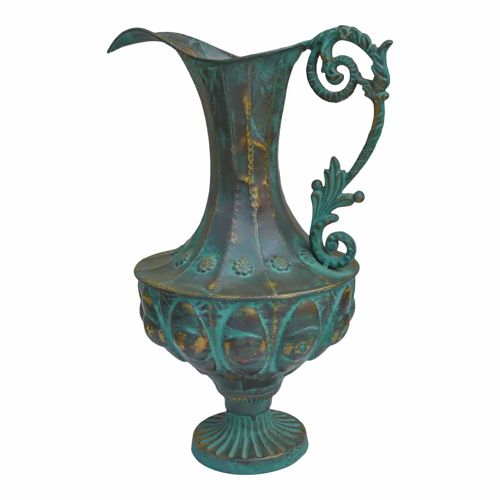
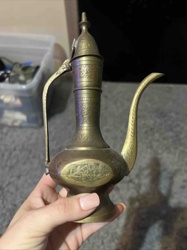
This item is a decorative ewer or pitcher, likely crafted from cast metal such as iron or bronze, given its heavy and robust appearance. It features a prominent and well-developed verdigris patina, which presents as a rich blue-green color with underlying hints of brassy or coppery tones peeking through, particularly on raised details and worn areas. The ewer has a classical, possibly Neoclassical or Victorian-era inspired design, characterized by an elegant, elongated neck that flares into a wide, gracefully curved spout. The body is bulbous at its widest point, transitioning from a smooth upper section to a textured, decorative band of ovoid or almond-shaped relief patterns, each framed by a raised border and interspersed with smaller floral or rosette motifs. Below this, the body narrows to a distinct pedestal-style base with a fluted or reeded design, providing stability. A prominent, ornate handle is affixed to the side, featuring elaborate scrollwork and acanthus leaf-like embellishments, showcasing fine casting and detailing. The overall construction appears solid, with no immediately visible cracks or structural damage. The extensive patina suggests age or an intentional antique finish, contributing significantly to its aesthetic appeal. The craftsmanship, particularly the detailed handle and body ornamentation, indicates a piece intended for decorative display rather than utilitarian use, reflecting a focus on aesthetic quality. The combination of its classical form, intricate detailing, and aged finish makes it a visually striking object.
AI Appraisal Report
Based on my visual examination of the provided image, this Verdigris Patinated Decorative Ewer Pitcher appears to be in very good decorative condition. The prominent verdigris patina, a rich blue-green, seems consistent and well-established, enhancing its antique aesthetic. I note the detailed scrollwork, acanthus leaf embellishments, and 'almond-shaped' relief patterns on the body, which indicate quality casting. The overall form suggests a late 19th to early 20th-century decorative piece, possibly Neoclassical Revival or Victorian, intended purely for display. The robust appearance implies it is likely cast iron or bronze, which adds to its perceived quality and heft. There are no visible chips, cracks, or significant losses to the material or patina from the image alone. This good surface condition contributes significantly to its value.
From a market perspective, decorative objects with well-preserved patinas and intricate detailing like this ewer consistently attract interest. Comparables would include other antique or vintage cast metal decorative pitchers and ewers found in online antique markets and smaller auction houses. While not exceptionally rare, pieces with such an attractive and deep patina, along with good craftsmanship, are always in demand among collectors of decorative arts and those furnishing period-style interiors. The perceived age and decorative appeal are the primary value drivers here.
My primary limitation in full authentication is the absence of an in-person physical inspection. Without direct handling, I cannot definitively confirm the metal composition (e.g., distinguishing between cast iron, bronze, or spelter with a bronze-like finish) or verify the authenticity of the patina. An in-person examination would allow for tactile assessment of weight, material sound (if tapped), and closer inspection of surface details and aging. Provenance documentation would further confirm its history, and scientific testing (e.g., XRF analysis) would provide a definitive material composition and age assessment. For this appraisal, I am proceeding on the assumption that the material is a base metal (likely iron or bronze) with a genuine or historically applied verdigris finish consistent with the period suggested by its style.