Carved Bovine Bone or Vegetable Ivory Pomander / Scent Bead
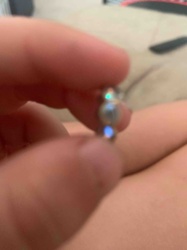
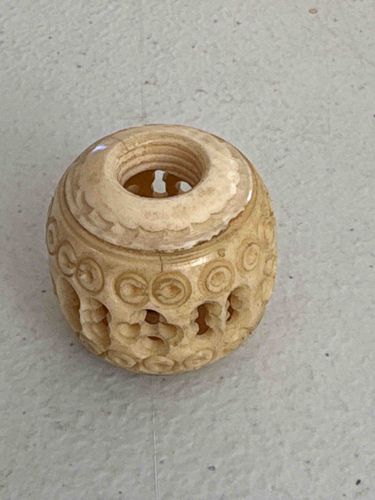
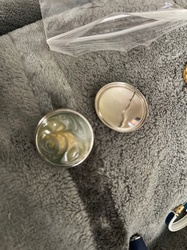
This is a small, intricately carved spherical object, likely a pomander or scent bead designed to hold aromatic materials. Measured by eye, it appears approximately 1 to 1.5 inches in diameter. The material is a dense, organic substance, potentially bovine bone or antique vegetable ivory (tagua nut), characterized by its cream to yellowish-white hue and visible grain structure. The exterior features complex openwork (reticulated) carving consisting of circular 'eye' motifs and foliate patterns, allowing for the passage of air. The top section is threaded, indicating it originally screwed into a larger assembly or had a matching cap, likely for a Victorian-era chatelaine or walking stick handle. Condition shows significant signs of age including organic staining, a fine network of surface cracks (craquelure), and a mellowed patina typical of 19th-century organic materials. The threading is exposed and shows some wear, with minor accumulation of dust in the deep recesses of the carving. No maker's marks are visible, but the carving style is consistent with late Victorian or early 20th-century decorative accessories influenced by Gothic or Orientalist trends. The craftsmanship is high, demonstrating precision in the lattice work.
AI-Generated Appraisal Disclaimer
Estimated Value
$65 - $125
Basic Information
Category
Antique Personal Accessories / Bijouterie
Appraised On
December 19, 2025
Estimated Value
$65 - $125
Additional Details Provided By Owner
User Provided Information
M h goss
Item Description
This is a small, intricately carved spherical object, likely a pomander or scent bead designed to hold aromatic materials. Measured by eye, it appears approximately 1 to 1.5 inches in diameter. The material is a dense, organic substance, potentially bovine bone or antique vegetable ivory (tagua nut), characterized by its cream to yellowish-white hue and visible grain structure. The exterior features complex openwork (reticulated) carving consisting of circular 'eye' motifs and foliate patterns, allowing for the passage of air. The top section is threaded, indicating it originally screwed into a larger assembly or had a matching cap, likely for a Victorian-era chatelaine or walking stick handle. Condition shows significant signs of age including organic staining, a fine network of surface cracks (craquelure), and a mellowed patina typical of 19th-century organic materials. The threading is exposed and shows some wear, with minor accumulation of dust in the deep recesses of the carving. No maker's marks are visible, but the carving style is consistent with late Victorian or early 20th-century decorative accessories influenced by Gothic or Orientalist trends. The craftsmanship is high, demonstrating precision in the lattice work.
Get Your Items Appraised
Instant estimates of your treasures with AI-powered instant appraisals