AI Appraisal Estimate

AI-generated estimates · not official valuations

From the user

What was submitted

Photo and notes provided by the user — not generated by AI

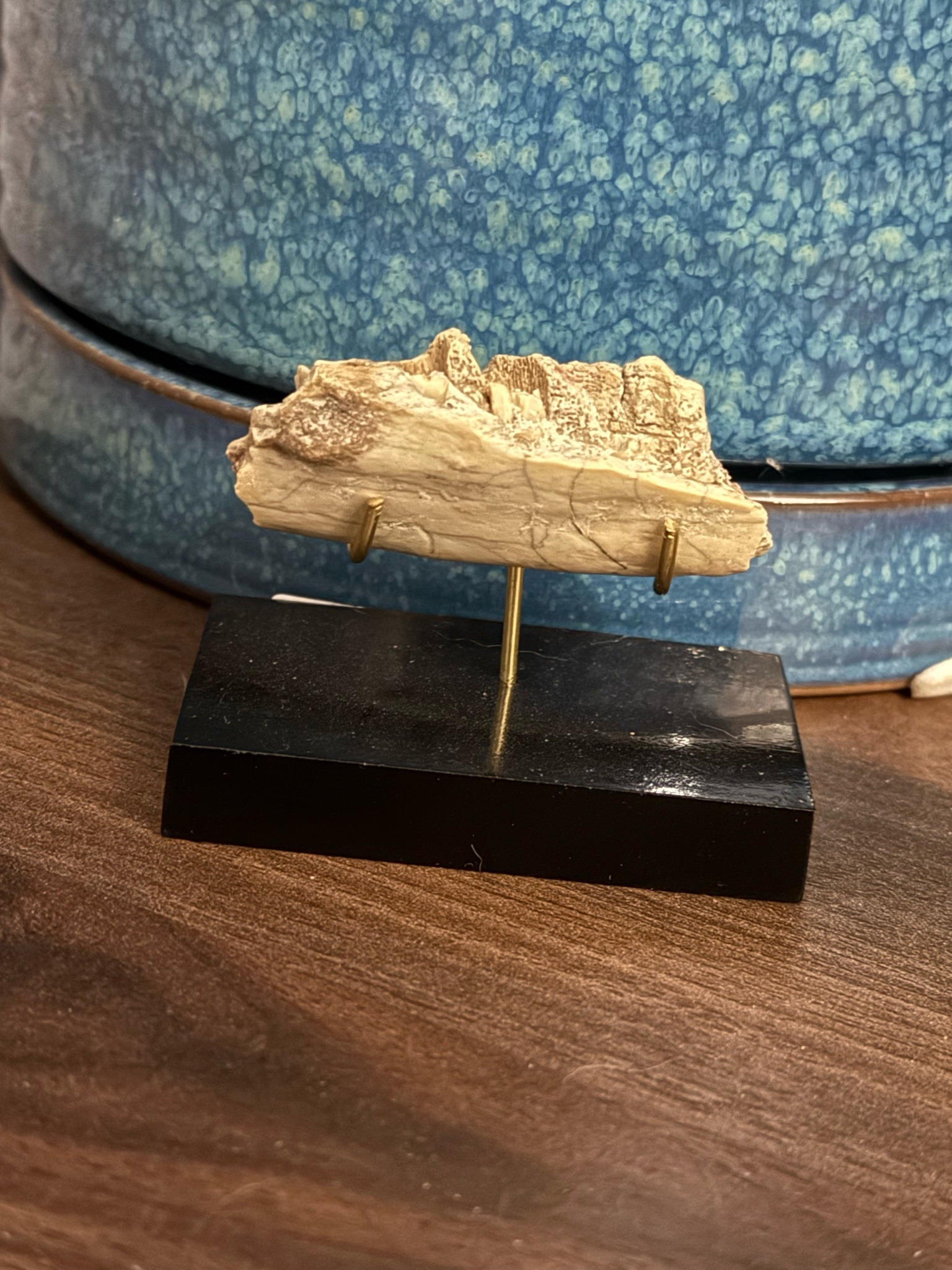
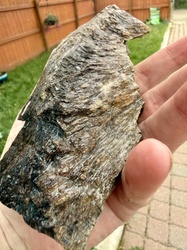
Submitted item photo
Submitted photo · June 3, 2026

User's notes

Partial dicintus false saber cat jaw

AI analysis below

AI appraisal

AI analysis & estimate

AI-Generated · Verify before acting

Everything below is generated by AI for informational purposes only. AI can make mistakes — the AI may misidentify items or misattribute them (artist, maker, brand, designer, origin, era). This is not an official valuation and should not be used for insurance, sale, tax, estate, legal, or lending purposes — or any decision requiring a certified appraisal. It is not an authoritative claim about any person, brand, or rights holder — do not share or rely on it as a factual statement about a third party. Always consult qualified professionals before making financial decisions.

Note

This analysis also relies on unverified notes provided by the user, which may be incomplete or inaccurate and could affect the result.

Read the full disclaimer

AI Identification

·Not independently authenticated·Verify before acting

Fossilized mandible fragment in the style of a prehistoric carnivore

Fossils and Natural History

AI Estimated Value

·Not an official valuation·Verify before acting

$450 - $850

As of June 3, 2026

AI Item Analysis

·AI can make mistakes·Verify before acting
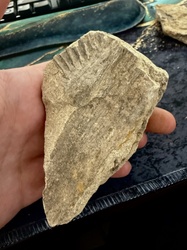
This specimen appears to be a mineralized partial mandible fragment, mounted on a modern black display base with two brass-tone supports. The object measures several inches in length and exhibits a characteristic pale beige to tan coloration, consistent with fossilized bone or dental tissue. The surface texture is highly weathered and porous, with visible longitudinal striations on the cortical surface. Portions of what appear to be fossilized tooth crowns or roots are visible along the superior margin, though they are heavily eroded and fragmented, making precise biological identification through imagery alone impossible. The owner identifies this as a 'partial dicintus false saber cat jaw'; however, this attribution is unverified without professional paleontological examination. The shape and tooth-bearing margin are stylistically consistent with Miocene-era nimravids or similar small prehistoric feliforms. There are no visible maker's marks or accession numbers on the piece. Significant condition issues include extensive fragmentation, loss of the vertical ramus, and heavy surface ablation, which are typical for fossil remains recovered from sediment. The modern mounting suggests this was prepared as a decorative or educational specimen.
AI Appraisal Report

·AI can make mistakes·Verify before acting
Based on my visual analysis of the provided image, this specimen appears to be a mineralized mandible fragment exhibiting characteristics consistent with a prehistoric carnivore. The owner identifies this as a 'partial dicintus false saber cat jaw,' which I am treating as a working hypothesis for this valuation. From what I can see, the specimen displays the porous bone texture and longitudinal striations typical of fossilized remains, though I cannot verify the specific genus or biological authenticity from a photograph alone. The presence of eroded tooth crowns along the margin suggests a predatory dental morphology, stylistically similar to Miocene-era nimravids. The value estimate is founded on the assumption that the material is a genuine fossil fragment. The inclusion of a modern display base suggests it is intended for the decorative or educational market, where there is steady demand for vertebrate paleontology. However, the heavy ablation and loss of the vertical ramus significantly impact the value compared to complete specimens. To confirm the identity and age of this piece, an in-person examination by a professional paleontologist and potentially CT scanning would be required to verify the internal structure of the roots. If the specimen were determined to be a high-quality cast or synthetic reproduction, the market value would likely drop to the $50-$150 range. As an unauthenticated fragment with an unverified attribution, the provided range represents the potential market value for a partial specimen of this specific type within the natural history trade, noting that documented provenance or professional identification would be necessary to achieve the higher end of that estimate.

Related Tags

Explore similar items and categories

Get your items appraised

Instant estimates of your treasures with AI-powered appraisals

Browse More Appraisals