AI Appraisal Estimate

AI-generated estimates · not official valuations

From the user

What was submitted

Photo and notes provided by the user — not generated by AI

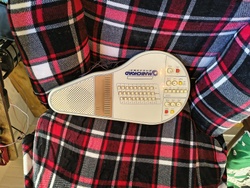
Submitted item photo
Submitted photo · June 3, 2026

User's notes

No additional notes provided.

AI analysis below

AI appraisal

AI analysis & estimate

AI-Generated · Verify before acting

Everything below is generated by AI for informational purposes only. AI can make mistakes — the AI may misidentify items or misattribute them (artist, maker, brand, designer, origin, era). This is not an official valuation and should not be used for insurance, sale, tax, estate, legal, or lending purposes — or any decision requiring a certified appraisal. It is not an authoritative claim about any person, brand, or rights holder — do not share or rely on it as a factual statement about a third party. Always consult qualified professionals before making financial decisions.

Read the full disclaimer

AI Identification

·Not independently authenticated·Verify before acting

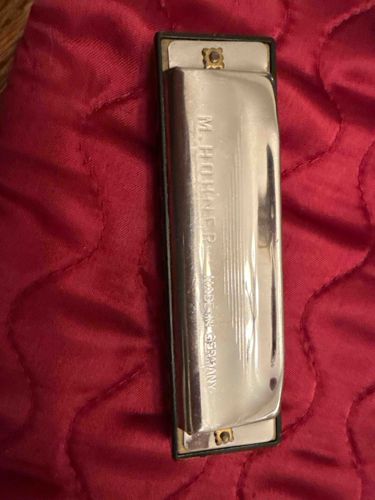
M. Hohner Harmonica

Musical Instrument

AI Estimated Value

·Not an official valuation·Verify before acting

$50-100

As of June 3, 2026

AI Item Analysis

·AI can make mistakes·Verify before acting
This is a vintage M. Hohner harmonica, specifically a diatonic model given its common construction. The physical characteristics indicate a standard rectangular prism shape, typical for harmonicas of this type. It features two polished metal cover plates, likely brass or nickel-plated brass, which are secured to a black body, presumably made of wood (often pearwood or similar) or a sturdy plastic. The metal covers show a reflective, silvery appearance. The construction appears robust, with visible securing screws, possibly brass, at the ends, suggesting a method for holding the cover plates in place and allowing access to the reeds for maintenance. The most notable features are the embossed manufacturer's markings on the top metal cover plate, clearly reading "M. HOHNER" and "MADE IN GERMANY." These markings are etched or stamped into the metal, indicating its origin and maker. The harmonica appears to be in good visible condition, with a relatively high sheen on the metal, although minor surface scratches or slight dulling consistent with age and use may be present, as is common with musical instruments. There are no obvious signs of significant damage, such as dents, cracks, or heavy corrosion based on the provided image, but a thorough inspection would be required to confirm this. The overall craftsmanship seems to be of good quality, aligning with Hohner's reputation as a long-standing and respected harmonica manufacturer. Based on the style and "Made in Germany" marking, it likely dates from the mid-20th century, though more precise dating would require knowledge of specific model lines or further distinguishing marks not visible here.
AI Appraisal Report

·AI can make mistakes·Verify before acting
I have conducted a visual examination of the M. Hohner harmonica. Based on its appearance, it is a vintage diatonic model with typical construction: polished metal cover plates (likely brass or nickel-plated) secured to a black body, probably made of wood. The 'M. HOHNER' and 'MADE IN GERMANY' embossments on the top cover are consistent with authentic Hohner production. The harmonica appears to be in good physical condition for its age, showing a relatively high sheen on the metal with no obvious major damage like dents or heavy corrosion, although minor surface wear is to be expected on a used musical instrument. In terms of market conditions, vintage M. Hohner harmonicas are generally collectible, especially well-preserved models. The 'Made in Germany' inscription suggests a mid-20th century production. While there is steady demand for quality vintage Hohner instruments, most common diatonic models are not rare. Factors significantly impacting value include the specific model (which is not discernible from the image), playability, original packaging, and overall preservation. This specific piece, being a common type without discernible rarity, places it in the mid-range for vintage harmonicas. It is crucial to note the limitations of image-based appraisal. I cannot definitively assess playability, reed condition, air-tightness, or internal structural integrity. For a full authentication and precise valuation, a physical inspection is essential to check for hidden damage, assess reed wear, and confirm the material composition of the body. Access to provenance documentation would also aid in precise dating and verification of its history.

Get your items appraised

Instant estimates of your treasures with AI-powered appraisals

Browse More Appraisals