AI Appraisal Estimate

AI-generated estimates · not official valuations

From the user

What was submitted

Photo and notes provided by the user — not generated by AI

Submitted item photo
Submitted photo · June 3, 2026

User's notes

No additional notes provided.

AI analysis below

AI appraisal

AI analysis & estimate

AI-Generated · Verify before acting

Everything below is generated by AI for informational purposes only. AI can make mistakes — the AI may misidentify items or misattribute them (artist, maker, brand, designer, origin, era). This is not an official valuation and should not be used for insurance, sale, tax, estate, legal, or lending purposes — or any decision requiring a certified appraisal. It is not an authoritative claim about any person, brand, or rights holder — do not share or rely on it as a factual statement about a third party. Always consult qualified professionals before making financial decisions.

Read the full disclaimer

AI Identification

·Not independently authenticated·Verify before acting

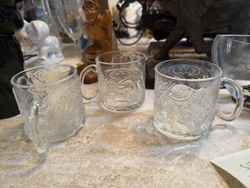
Pinwheel Pattern Brilliant Cut Glass Highball Tumbler

Collectibles / Glassware

AI Estimated Value

·Not an official valuation·Verify before acting

$45.00 - $65.00

As of June 3, 2026

AI Item Analysis

·AI can make mistakes·Verify before acting
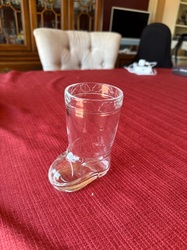
This item is a tall highball-style tumbler crafted from brilliant cut glass, featuring the classic 'Pinwheel' motif common in American Brilliant Period (ABP) and European cut glass traditions. The glass is clear and heavy, indicative of high lead content, which allows for deep, prismatic cutting that creates a high refractive index. The primary decorative element is a large, multi-pointed star or 'pinwheel' centrally located on the body, surrounded by fine cross-hatching (strawberry diamond) and deep vertical wedge cuts. The rim features a simple, polished edge, while the base appears to have a starburst cut to match the overall aesthetic. The tumbler measures approximately 5 to 6 inches in height. Regarding condition, the glass shows excellent clarity without significant clouding (sickness), though minuscule 'flea bites' or nicks may be present along the sharp edges of the deep cuts, which is typical for vintage glassware of this age. No major chips or cracks are visible in the provided image. While no specific maker's mark is discernible, the style is consistent with mid-20th-century production by companies like Waterford, Gorham, or various Bohemian glassworks. The craftsmanship is high, evidenced by the symmetry of the hand-cut patterns and the polished finish of the incisions.
AI Appraisal Report

·AI can make mistakes·Verify before acting
Based on my visual examination of this Pinwheel Pattern Highball Tumbler, the piece exhibits the characteristic weight and refractive brilliance associated with lead crystal. The 'Pinwheel' motif is a staple of 20th-century glassware, popularized by European manufacturers and later adopted widely by Canadian and American firms. The craftsmanship shows quality hand-cutting, as evidenced by the sharp convergence of the wedge cuts and the clarity of the strawberry diamond infill. The absence of 'sickness' or etching indicates proper storage, though the noted micro-abrasions (flea bites) on the sharpest facets are consistent with a mid-century origin. Market demand for individual tumblers in the Pinwheel pattern is currently stable but modest. While the American Brilliant Period (1876–1917) pieces command high premiums, the style and execution of this specific tumbler suggest a more contemporary production (circa 1950–1970). Comparable individual glasses from makers like Webb Corbett or various Bohemian works typically realize between $40 and $70 at retail. The value is limited by its status as a single utility item; full sets of six or eight generally command higher per-unit prices. Authentication via digital imagery has inherent limitations. To confirm the piece's origin and more precise value, an in-person inspection is required to check for acid-etched signatures, which are often faint and located near the base. I would also need to perform a UV light test—fluorescence can help differentiate between older lead glass and modern soda-lime formulations. Finally, verifying the 'ring' or resonance of the glass when tapped would confirm its lead content and structural integrity beyond what photographic evidence can provide.

Get your items appraised

Instant estimates of your treasures with AI-powered appraisals

Browse More Appraisals