AI Appraisal Estimate

AI-generated estimates · not official valuations

From the user

What was submitted

Photo and notes provided by the user — not generated by AI

Submitted item photo
Submitted photo · May 18, 2026

User's notes

No additional notes provided.

AI analysis below

AI appraisal

AI analysis & estimate

AI-Generated · Verify before acting

Everything below is generated by AI for informational purposes only. AI can make mistakes — the AI may misidentify items or misattribute them (artist, maker, brand, designer, origin, era). This is not an official valuation and should not be used for insurance, sale, tax, estate, legal, or lending purposes — or any decision requiring a certified appraisal. It is not an authoritative claim about any person, brand, or rights holder — do not share or rely on it as a factual statement about a third party. Always consult qualified professionals before making financial decisions.

Read the full disclaimer

AI Identification

·Not independently authenticated·Verify before acting

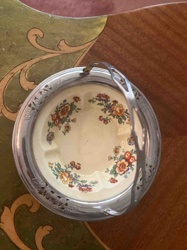
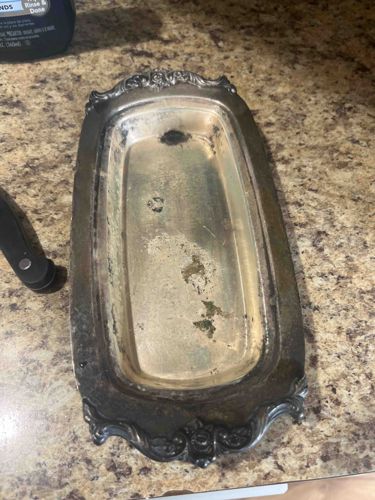
Vintage Silver-Plated Repoussé Bread Tray

Vintage Silverware and Tableware

AI Estimated Value

·Not an official valuation·Verify before acting

$15.00-$25.00

As of May 18, 2026

AI Item Analysis

·AI can make mistakes·Verify before acting
This is a rectangular silver-plated serving tray, traditionally used for bread or hors d'oeuvres. The tray features a deep central well and a wide, flared rim. The ends of the rim are decorated with ornate repoussé work, depicting a floral and scrolling foliate motif, likely in a Neo-Rococo or Victorian style typical of the mid-20th century. The piece is constructed from a base metal (likely copper or nickel silver) with an electroplated silver coating. Regarding its condition, the tray shows significant signs of age and neglect. There is deep, dark oxidation (tarnish) across the entire surface, particularly thick around the rim's ornate edges. Most notably, the silver plating has worn through in several areas in the central well—a condition known as 'bleeding'—revealing the yellowish base metal underneath. There are also visible scratches and pitting on the surface of the well. While no maker's mark is visible from this top-down view, this style was mass-produced by manufacturers such as Oneida, International Silver, or Reed & Barton. Its current state suggests it was a functional household item rather than a preserved collector's piece, requiring professional restoration to return to its original luster.

AI Appraisal Report

·AI can make mistakes·Verify before acting
I have conducted a visual examination of the vintage silver-plated repoussé bread tray. The item is identified as a mid-20th-century mass-produced tabletop piece, likely of American manufacture (e.g., International Silver or Oneida). The design features Neo-Rococo floral motifs consistent with mid-market production intended for domestic use rather than fine dining. My assessment of the condition reveals significant issues: the silver plating has suffered 'bleeding,' exposing the base metal (likely copper) in the central well. This indicate heavy use and abrasive cleaning over decades. The heavy oxidation and visible pitting further detract from its visual appeal and functional safety for food service. The current market for silver-plated hollowware is over-saturated, with low collector demand for common patterns, especially those lacking a sterling silver (.925) base. Comparable items in polished condition typically sell for $30-$45; however, given the cost of professional replating (which would exceed $100), the current value is largely decorative or nominal. Limitations: This appraisal is based solely on digital images. Without a physical inspection, I cannot verify the manufacturer’s hallmarks on the underside, which might slightly adjust the valuation if a premium maker is identified. A physical examination would also confirm the integrity of the base metal and ensure the 'yellow' visible is not merely stubborn tarnish but true plate loss. Direct inspection or provenance documentation would be required to rule out any unique historical significance, though given the style, this is unlikely. For a definitive valuation, the piece should be weighed and checked for hallmarks under magnification.

Get your items appraised

Instant estimates of your treasures with AI-powered appraisals

Browse More Appraisals