AI Appraisal Estimate

AI-generated estimates · not official valuations

From the user

What was submitted

Photo and notes provided by the user — not generated by AI

Submitted item photo
Submitted photo · June 4, 2026

User's notes

No additional notes provided.

AI analysis below

AI appraisal

AI analysis & estimate

AI-Generated · Verify before acting

Everything below is generated by AI for informational purposes only. AI can make mistakes — the AI may misidentify items or misattribute them (artist, maker, brand, designer, origin, era). This is not an official valuation and should not be used for insurance, sale, tax, estate, legal, or lending purposes — or any decision requiring a certified appraisal. It is not an authoritative claim about any person, brand, or rights holder — do not share or rely on it as a factual statement about a third party. Always consult qualified professionals before making financial decisions.

Read the full disclaimer

AI Identification

·Not independently authenticated·Verify before acting

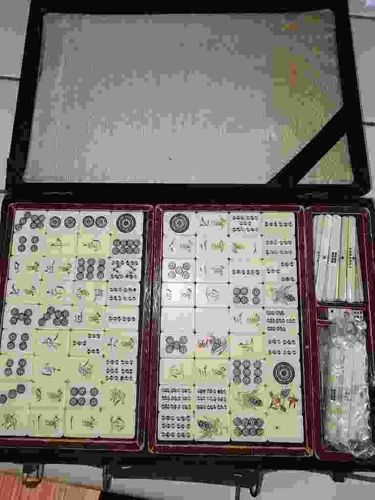
Vintage Mahjong Set in Briefcase Carrying Case

Games / Vintage Collectibles

AI Estimated Value

·Not an official valuation·Verify before acting

$150 - $250

As of June 4, 2026

AI Item Analysis

·AI can make mistakes·Verify before acting
This is a comprehensive vintage Mahjong tile set, likely dating from the mid-to-late 20th century. The set features a complete collection of game tiles, a set of counting sticks (tallies), and dice, all housed in a specialized black rectangular carrying case with a hinged lid. The tiles appear to be constructed from a synthetic material, such as Bakelite or another dense early plastic, featuring a cream or off-white base color with deeply incised traditional Chinese characters and symbols. The engravings are filled with vibrant pigments in green, red, and black, representing suits like dots, bamboo, and characters, along with wind and dragon tiles. The tiles are arranged across two main red-lined felt trays, with a third vertical compartment on the right holding the accessories. The counting sticks are elongated, white rectangular pieces with varying dot patterns in black and red. The carrying case shows signs of age-related wear, including some scratching on the exterior and minor discoloration or staining on the interior lid lining. The black exterior material likely consists of textured vinyl or faux leather over a wood or cardboard frame, secured with metal latches and a handle. Overall, the set appears to be a mid-range production model intended for portability and regular play, characterized by its clear typography and sturdy construction.

AI Appraisal Report

·AI can make mistakes·Verify before acting
I have carefully examined the vintage Mahjong set and its accompanying briefcase. Based on the visual evidence, the tiles appear to be high-quality Catalin or Urea Resin, common in the mid-20th century. The set is complete with bone-style counting sticks and dice, which is essential for maintaining value. The condition is fair to good; while the tiles show excellent color retention, the carrying case exhibits notable internal staining and external scuffs consistent with frequent use. Market demand for mid-century Mahjong sets remains steady, driven by both players and collectors of 'Americana' game history. Comparables for mass-produced sets of this era typically fall between $100 and $300, depending on the material and count. This specific set lacks the elaborate carving of 1920s bone-and-bamboo sets but offers the 'clack' and weight preferred by modern players. The inclusion of the original, albeit worn, red-lined case preserves its historical context. A significant limitation of this remote examination is the inability to conduct a 'hot water' or Simichrome test to definitively identify the material as Bakelite, which would command a premium. To fully authenticate the set, I would need to inspect the tile backs for mold marks or laminations and verify the total tile count (usually 144 or 152 for American play). In-person inspection would also determine if the discoloration on the lid is surface-level or indicative of structural rot or mold, which would decrease the value toward the lower end of the estimate.

Get your items appraised

Instant estimates of your treasures with AI-powered appraisals

Browse More Appraisals