AI estimate as of August 6, 2025 · verify with a professional before acting
AI-Generated · Verify before acting
Everything on this page is generated by AI for informational purposes only. AI can make mistakes — the AI may misidentify items or misattribute them (artist, maker, brand, designer, origin, era). This is not an official valuation and should not be used for insurance, sale, tax, estate, legal, or lending purposes — or any decision requiring a certified appraisal. It is not an authoritative claim about any person, brand, or rights holder — do not share or rely on it as a factual statement about a third party. Always consult qualified professionals before making financial decisions.
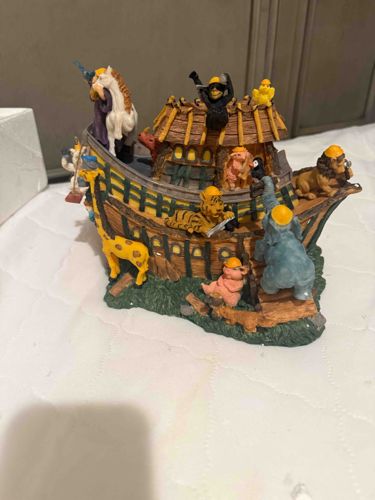
This item is a decorative figurine depicting Noah's Ark filled with a variety of animals, rendered in a whimsical and anthropomorphic style. It appears to be made from a polyresin or ceramic material, hand-painted with a matte finish. The overall color palette is earthy, with browns, greens, and various animal-specific colors. The ark itself is depicted with a brown wooden hull, green railings, and a distinct thatched or shingled roof for the central cabin. The base of the figurine is sculpted to resemble grassy ground, complete with some wooden log accents, suggesting the ark has landed. \n\nThe animals are a prominent feature, many of which are shown wearing yellow hard hats or similar headwear, which is an unusual and distinguishing element. Visible animals include a white unicorn with a blue horn, a black monkey-like figure on the roof, a yellow duck, a light brown tiger with black stripes holding an open book, a light pink pig, a large light blue elephant, a standing giraffe, and a lion. The lion is positioned at the bow of the ark, and the unicorn at the stern. The details on the animals, such as the tiger's stripes and the giraffe's spots, are clearly defined. The craftsmanship appears to be of a mass-produced decorative item rather than fine art, with some visible molding lines and brush strokes. There are no obvious signs of significant damage like chips or cracks from the image, but specific wear would require a closer physical inspection. No maker's marks or signatures are discernible from the provided images. The style suggests it could be a contemporary decorative piece, possibly from the late 20th or early 21st century, designed as a collectible or a gift item.
AI Appraisal Report
Upon examining the Noah's Ark Figurine with Animals in Hard Hats, I assess its condition as very good to excellent based solely on the provided image. There are no visible chips, cracks, or significant paint loss, though a physical inspection would be necessary to confirm the absence of subtle wear or molding imperfections. Authenticity, in terms of its origin as a manufactured decorative piece, is evident from the mass-produced characteristics. However, without a maker's mark or specific brand identification, I cannot authenticate a particular manufacturer or series.
Market conditions for such contemporary decorative figurines are generally steady but not robust. This item falls into the collectible novelty category rather than fine art. Comparables include similar polyresin or ceramic Noah's Ark interpretations, often sold in gift shops, home decor stores, or online marketplaces. Pieces with unique, whimsical elements like the hard hats can attract a niche audience, but this does not translate into significant rarity or high demand in the broader collector's market. Demand is primarily driven by personal aesthetic preference or as a gift item, rather than investment potential.
The primary factor impacting value is its nature as a mass-produced decorative item. While charming, its lack of artistic pedigree, identifiable maker, or limited edition status caps its market value. The whimsical 'animals in hard hats' theme adds character but not intrinsic value beyond its decorative appeal. Without provenance documentation or a physical examination to check for maker's marks, material quality, or the presence of any original packaging, further authentication or a higher valuation is impossible. Definitive authentication of material composition (e.g., polyresin vs. ceramic) would require direct physical handling.