Hand-Painted Egyptian Papyrus Art Depicting Isis and Hathor
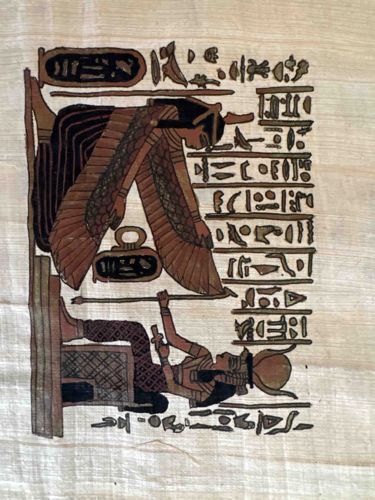
This item is a contemporary hand-painted decorative artwork executed on a genuine papyrus substrate. The painting depicts two major female deities from Egyptian mythology: the winged goddess Isis, shown in a kneeling protective posture with large outstretched wings, and the goddess Hathor (or a queen in her likeness), seated on a throne wearing a sun disk and cow horn headdress while holding a papyrus scepter. The artwork is characterized by a traditional Egyptian 'frontalist' style with figures in profile. The color palette consists of earthy ochres, terracottas, and deep blacks, with fine line-work detailing the scales of the wings and the patterns of the garments. Surrounding the figures are several columns of decorative hieroglyphs including cartouches. The papyrus itself displays a visible horizontal and vertical fibrous grain texture characteristic of the Cyperus papyrus plant pith. The edges appear roughly cut, typical of tourist-grade souvenir art from the late 20th century. The condition is good with vibrant pigments and no major staining or fraying, though small creases are visible in the background material. This piece serves as a modern homage to the tomb paintings of the New Kingdom, likely inspired by scenes from the Tomb of Queen Nefertari.
AI-Generated Appraisal Disclaimer
Estimated Value
$45 - $75
Basic Information
Category
Art / Collectible Souvenirs
Appraised On
April 6, 2026
Estimated Value
$45 - $75
Item Description
This item is a contemporary hand-painted decorative artwork executed on a genuine papyrus substrate. The painting depicts two major female deities from Egyptian mythology: the winged goddess Isis, shown in a kneeling protective posture with large outstretched wings, and the goddess Hathor (or a queen in her likeness), seated on a throne wearing a sun disk and cow horn headdress while holding a papyrus scepter. The artwork is characterized by a traditional Egyptian 'frontalist' style with figures in profile. The color palette consists of earthy ochres, terracottas, and deep blacks, with fine line-work detailing the scales of the wings and the patterns of the garments. Surrounding the figures are several columns of decorative hieroglyphs including cartouches. The papyrus itself displays a visible horizontal and vertical fibrous grain texture characteristic of the Cyperus papyrus plant pith. The edges appear roughly cut, typical of tourist-grade souvenir art from the late 20th century. The condition is good with vibrant pigments and no major staining or fraying, though small creases are visible in the background material. This piece serves as a modern homage to the tomb paintings of the New Kingdom, likely inspired by scenes from the Tomb of Queen Nefertari.
Related Tags
Get Your Items Appraised
Instant estimates of your treasures with AI-powered instant appraisals