These notes were written by the person who submitted this item. Appraiser.AI has not verified them, and the AI's identification and estimate may rely on them.
AI Estimated Value
Not an official valuation
$3,800 - $4,800
AI estimate as of July 20, 2025 · verify with a professional before acting
AI-Generated · Verify before acting
Everything on this page is generated by AI for informational purposes only. AI can make mistakes — the AI may misidentify items or misattribute them (artist, maker, brand, designer, origin, era). This is not an official valuation and should not be used for insurance, sale, tax, estate, legal, or lending purposes — or any decision requiring a certified appraisal. It is not an authoritative claim about any person, brand, or rights holder — do not share or rely on it as a factual statement about a third party. Always consult qualified professionals before making financial decisions.
This analysis also relies on unverified notes provided by the user, which may be incomplete or inaccurate and could affect the result.
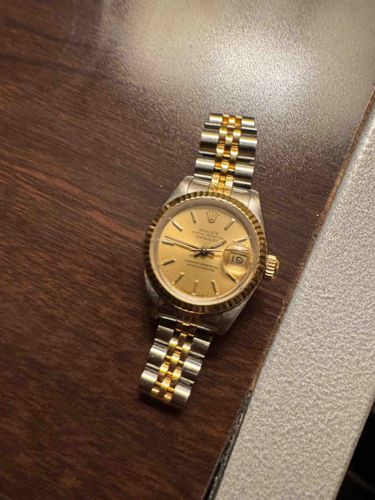
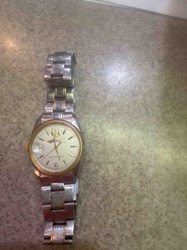
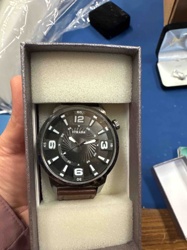
The item is a Rolex Datejust wristwatch, likely a ladies' model given its apparent size. It features a classic two-tone design, characteristic of the 'Rolesor' style, combining stainless steel for the case and outer links of the bracelet, with yellow gold accents on the fluted bezel, crown, and the center links of the Jubilee-style bracelet. The dial is champagne or gold in color, with applied gold stick hour markers and a gold Rolex coronet at 12 o'clock. A cyclops lens magnifies the date window, which displays '19'. The hands are sword-shaped, also in gold. The watch shows signs of wear consistent with age and use, including potential scratches on the case and bracelet, and a visible patina or minor discoloration on the dial, particularly around the center. The fluting on the bezel appears crisp but may show light wear. The bracelet links seem to have some stretch, which is common for vintage Jubilee bracelets. The overall condition suggests it is well-preserved for its age but not pristine. The craftsmanship is evident in the intricate details of the fluted bezel and the multi-link bracelet. Based on visual cues like the dial text, case style, and bracelet type, it likely dates from the mid to late 20th century, possibly 1970s or 1980s. There are no clear visible maker's marks beyond the 'ROLEX' branding on the dial, which is standard. The watch retains its overall classic aesthetic and appears to be in original, unrestored condition.
AI Appraisal Report
I have examined the provided image and information regarding this Rolex Datejust Two-Tone Ladies' Wristwatch. Based on visual cues, the watch appears to be an authentic Rolex, consistent with models produced in the mid-to-late 20th century, likely 1970s or 1980s, given the dial style, fluted bezel, and Jubilee bracelet. The two-tone 'Rolesor' design, combining stainless steel and yellow gold, is characteristic of Rolex. The dial shows a champagne or gold tone with applied stick markers and a visible cyclops lens over the date. The overall condition, as described, suggests normal wear consistent with age, including potential scratches on the case/bracelet and some patina or minor discoloration on the dial. The presence of bracelet stretch is common for vintage Jubilee bracelets. These factors, while indicating age, do not detract significantly from authenticity but do impact overall aesthetic appeal and, consequently, value compared to a pristine example.
In terms of market conditions, vintage two-tone ladies' Rolex Datejust models currently see strong, steady demand. They are not exceptionally rare but are highly desirable for their classic aesthetics and brand recognition. Comparables in similar condition typically range from $3,500 to $5,500 in the secondary market. Factors impacting value here include the 'original, unrestored condition' (a positive), but also the visible wear, potential dial discoloration, and bracelet stretch. A pristine example would fetch a higher premium.
Limitations: A definitive assessment of authenticity and internal condition cannot be made from images alone. A physical in-person examination is crucial to verify the movement's authenticity, serial numbers, case markings, and the integrity of the bracelet. A watchmaker's inspection would confirm the internal condition and servicing needs. Provenance documentation, if available, would further enhance authentication and value. Without these, my appraisal is based purely on external visual assessment and the assumption of originality as stated.