Penny Black Postage Stamp
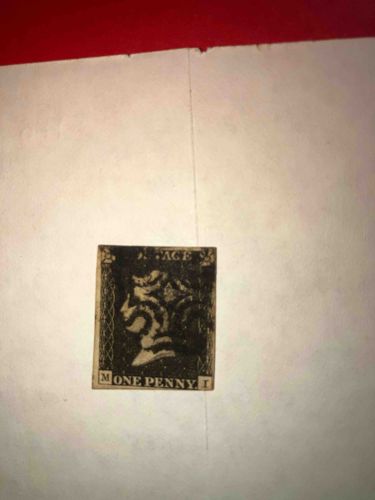
This item is a 1840 British Penny Black, the world's first adhesive postage stamp. It features an intaglio-engraved profile of Queen Victoria in white on a dense black background, designed by William Wyon. Measuring approximately 19mm by 22mm, the stamp is printed on paper that originally featured a small crown watermark. This specific example shows the check letters 'M' in the bottom-left corner and 'I' in the bottom-right, identifying its position on the master plate. The top margin displays the word 'POSTAGE' and the bottom displays 'ONE PENNY'. The condition appears to be used, with a visible Maltese Cross cancellation in red ink partially obscuring the portrait. The margins are 'cut to shape', appearing tight to the frame on several sides. The paper exhibits significant toning consistent with age (1840s Victorian period) and likely handling. The engraving detail remains somewhat visible, showcasing the fine line-work used to prevent forgery during the mid-19th century. Notable aspects include the corner stars in the top corners and the characteristic check letter system which was unique to early British philately to track plate usage.
AI-Generated Appraisal Disclaimer
Estimated Value
$150 - $250
Basic Information
Category
Philately / Collectible Postage Stamps
Appraised On
January 11, 2026
Estimated Value
$150 - $250
Item Description
This item is a 1840 British Penny Black, the world's first adhesive postage stamp. It features an intaglio-engraved profile of Queen Victoria in white on a dense black background, designed by William Wyon. Measuring approximately 19mm by 22mm, the stamp is printed on paper that originally featured a small crown watermark. This specific example shows the check letters 'M' in the bottom-left corner and 'I' in the bottom-right, identifying its position on the master plate. The top margin displays the word 'POSTAGE' and the bottom displays 'ONE PENNY'. The condition appears to be used, with a visible Maltese Cross cancellation in red ink partially obscuring the portrait. The margins are 'cut to shape', appearing tight to the frame on several sides. The paper exhibits significant toning consistent with age (1840s Victorian period) and likely handling. The engraving detail remains somewhat visible, showcasing the fine line-work used to prevent forgery during the mid-19th century. Notable aspects include the corner stars in the top corners and the characteristic check letter system which was unique to early British philately to track plate usage.

Related Tags
Get Your Items Appraised
Instant estimates of your treasures with AI-powered instant appraisals