AI Appraisal Estimate

AI-generated estimates · not official valuations

From the user

What was submitted

Photo and notes provided by the user — not generated by AI

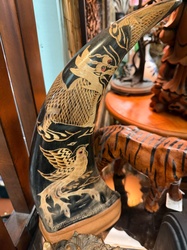
Submitted item photo
Submitted photo · June 6, 2026

User's notes

No additional notes provided.

AI analysis below

AI appraisal

AI analysis & estimate

AI-Generated · Verify before acting

Everything below is generated by AI for informational purposes only. AI can make mistakes — the AI may misidentify items or misattribute them (artist, maker, brand, designer, origin, era). This is not an official valuation and should not be used for insurance, sale, tax, estate, legal, or lending purposes — or any decision requiring a certified appraisal. It is not an authoritative claim about any person, brand, or rights holder — do not share or rely on it as a factual statement about a third party. Always consult qualified professionals before making financial decisions.

Read the full disclaimer

AI Identification

·Not independently authenticated·Verify before acting

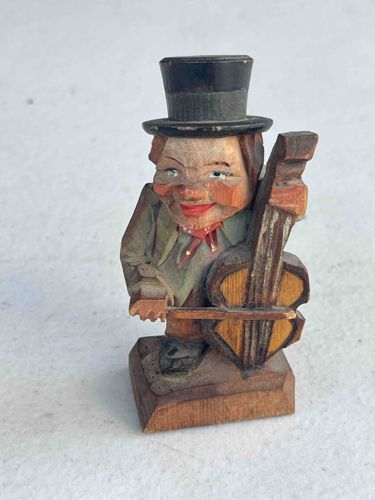
Hand-Carved Wooden Musician Figurine with Top Hat and Stringed Instrument

Folk Art Carving

AI Estimated Value

·Not an official valuation·Verify before acting

$150-250

As of June 6, 2026

AI Item Analysis

·AI can make mistakes·Verify before acting
This item is a small, hand-carved wooden figurine depicting a jovial male musician playing a stringed instrument, likely a cello or double bass. The figure is carved from light-colored wood, possibly lime wood or a similar soft hardwood, and features hand-painted details. It stands approximately 4-6 inches tall, judging by the visual context. The musician is dressed in a greyish-green jacket, a red bow tie, and a black top hat, which shows some visible wear and dust accumulation. His face is characterized by rosy cheeks, bright red lips, and blue eyes with black pupils, conveying a cheerful expression. The style suggests a possible Tyrolean or Black Forest origin, common for such carved caricatures. The instrument is carved in a simplified yet recognizable form, with brownish-orange and darker brown segments to mimic wood grain. Noteworthy features include the prominent smile, the large, round cheeks, and the somewhat exaggerated features typical of folk art carvings designed to evoke character. The overall condition appears good for its age, with some minor scuffs, dust, and possible paint loss consistent with age and handling. There are no major cracks or repairs visible. The base is also carved from wood, suggesting the piece is solid and self-standing. The craftsmanship indicates hand-carving with visible tool marks, showcasing the artisan's skill in bringing the figure to life with simple yet effective details. The precise age is difficult to determine without further information, but it likely dates from the mid-20th century.

AI Appraisal Report

·AI can make mistakes·Verify before acting
Upon visual inspection of the Hand-Carved Wooden Musician Figurine, I assess its condition as good for a folk art piece of its likely age. There are minor scuffs, dust accumulation, and possible slight paint loss consistent with handling and display, but no visible major cracks or repairs. Its authenticity as a hand-carved piece from the mid-20th century, possibly Tyrolean or Black Forest in origin, appears strong based on the stylistic elements, visible tool marks, and characteristic jovial expression. The exaggerated features and simple yet effective detailing are hallmarks of folk art. Market conditions for such carved figures remain stable, with a consistent demand among collectors of European folk art and whimsical wooden carvings. While not exceedingly rare, high-quality, well-preserved examples like this one are sought after. Factors positively impacting its value include its charming character, good overall condition, and the evident skill of the artisan. The specific 'cello' or 'double bass' detail adds appeal. Factors limiting value include its commonality within the broader category of European folk carvings and the lack of specific artist attribution. Limitations in authenticity verification from images alone are significant. While the style strongly suggests a mid-20th-century European origin, precise age and regional attribution cannot be definitively confirmed without in-person examination. A physical inspection would allow for examination of the wood grain, tool mark patterns, and paint composition to further ascertain age and origin. Provenance documentation, such as purchase receipts or family history, would be crucial for complete verification and could potentially enhance value further if a notable carver or specific region is identified.

Get your items appraised

Instant estimates of your treasures with AI-powered appraisals

Browse More Appraisals