AI Appraisal Estimate

AI-generated estimates · not official valuations

From the user

What was submitted

Photo and notes provided by the user — not generated by AI

Submitted item photo
Submitted photo · May 27, 2026

User's notes

No additional notes provided.

AI analysis below

AI appraisal

AI analysis & estimate

AI-Generated · Verify before acting

Everything below is generated by AI for informational purposes only. AI can make mistakes — the AI may misidentify items or misattribute them (artist, maker, brand, designer, origin, era). This is not an official valuation and should not be used for insurance, sale, tax, estate, legal, or lending purposes — or any decision requiring a certified appraisal. It is not an authoritative claim about any person, brand, or rights holder — do not share or rely on it as a factual statement about a third party. Always consult qualified professionals before making financial decisions.

Read the full disclaimer

AI Identification

·Not independently authenticated·Verify before acting

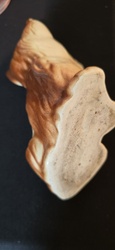
Porcelain Floral Trinket Box Lid or Ornament

Decorative Ceramics & Collectibles

AI Estimated Value

·Not an official valuation·Verify before acting

$15.00 - $35.00

As of May 27, 2026

AI Item Analysis

·AI can make mistakes·Verify before acting
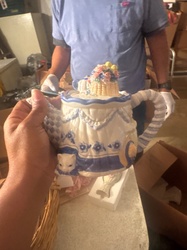
This item is a decorative porcelain piece, likely the lid of a small trinket or vanity box, though it may also serve as a standalone floral figurine. The piece features a central multi-petaled flower, possibly intended to represent a rose or camellia, rendered in a creamy beige or tan porcelain. Surrounding the central bloom are three larger, flat leaves or petals in a pale blush pink tone. The entire floral arrangement is mounted on a light grey or white, softly scalloped base. The craftsmanship displays delicate, hand-applied ceramic petals, a style characteristic of mid-20th-century decorative porcelain from makers such as Capodimonte, Aynsley, or Royal Adderley. The surfaces appear to have a soft matte or 'bisque' finish on the petals with a contrasting glossy glaze on the base element. Regarding condition, the piece appears largely intact; however, these items are notoriously prone to micro-chipping on the thin petal edges. There is some visible surface dust and light grubbiness in the crevices, indicating it has been on display for some time without deep cleaning. No major fractures or structural repairs are immediately visible in the provided image. The style is mid-century romantic/shabby chic, likely produced between 1950 and 1980.

AI Appraisal Report

·AI can make mistakes·Verify before acting
I have examined the digital image of the Porcelain Floral Trinket Box Lid/Ornament. The piece displays the characteristic 'petal-ware' craftsmanship synonymous with mid-century English and Italian manufacturers like Royal Adderley, Aynsley, and Capodimonte. Based on the visual evidence, the item appears to be an authentic example of mid-20th-century floral porcelain, likely produced between 1950 and 1975. Condition is the primary value driver for these delicate items. While the central bloom appears structurally sound, I noted surface dust and potential 'flea-bite' chips on the extremities of the delicate petals—a common issue with bisque-fired ceramic. The base displays a contrasting glaze, suggesting it was originally the lid to a vanity jar. Market demand for small floral ceramics has softened significantly from its 1990s peak; currently, these items are plentiful on the secondary market (eBay, Etsy), often sold in lots or individually at low price points. The color palette of beige and blush pink remains popular within 'shabby chic' and 'cottagecore' aesthetics, providing some stability to its value. Limitations of Image-Based Appraisal: This valuation is based solely on a photograph. Without a physical inspection, I cannot verify the presence of a maker's mark (usually found on the underside) which could slightly elevate value if attributed to a premium maker like Royal Doulton. A tactile examination is required to distinguish between minor surface grubbiness and permanent staining or professional repairs. Full authentication would require checking for manufacturer stamps and using a high-intensity light and magnification to confirm the absence of hairline fractures or adhesive residues not visible in the current photograph.

Get your items appraised

Instant estimates of your treasures with AI-powered appraisals

Browse More Appraisals