Paleolithic Bifacial Chert Tool (Axe/Scraper)
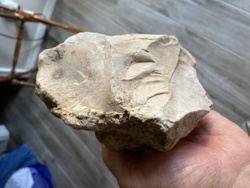
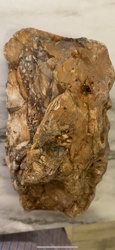
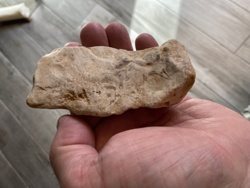
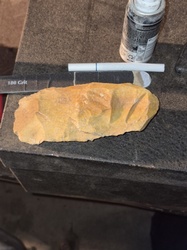
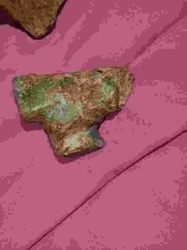
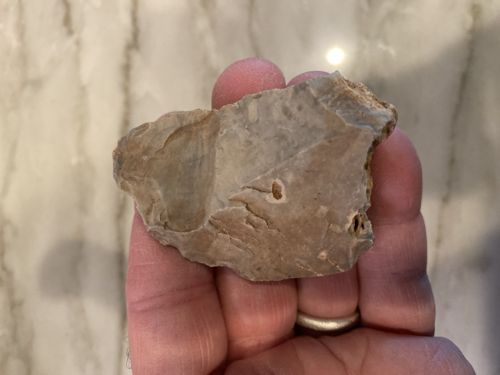
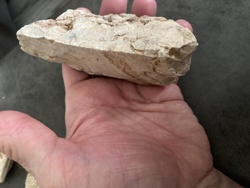
This artifact is a Paleolithic-style bifacial tool, likely serving as a hand axe or scraper, crafted from a tan to light-brown variegated chert. Measuring approximately 2.5 inches by 1.75 inches, the object displays characteristic percussion flaking across its surface. The tool features a roughly ovate or sub-triangular silhouette with asymmetrical proportions. Notable physical traits include conchoidal fracture scars and hinge terminations resulting from the knapping process used to shape the lithic core. The material shows a matte, weathered patina consistent with significant age and environmental exposure. There is a visible white inclusion or pockmark near the center of one face, which appears to be a natural geode or mineral inclusion within the chert rather than man-made. The edges show signs of secondary retouching, which would have sharpened the tool for utilitarian tasks like cutting or hide scraping. While identified as 'Middle Mousterian,' usually associated with Eurasian Neanderthals, the provenance of Guthrie, Oklahoma, suggests this is an indigenous North American lithic tool, possibly from the Paleo-Indian or Archaic periods. The condition is stable with expected archaeological wear, including minor edge-rounding and natural staining from burial in local soil.
AI-Generated Appraisal Disclaimer
Estimated Value
$40-$85
Basic Information
Category
Archaeological Artifacts / Lithics
Appraised On
February 24, 2026
Estimated Value
$40-$85
Additional Details Provided By Owner
User Provided Information
Paleolithic Middle Mousterian chert bi face axe scraper tool found in Guthrie OK measuring 2.5" x 1.75"
Item Description
This artifact is a Paleolithic-style bifacial tool, likely serving as a hand axe or scraper, crafted from a tan to light-brown variegated chert. Measuring approximately 2.5 inches by 1.75 inches, the object displays characteristic percussion flaking across its surface. The tool features a roughly ovate or sub-triangular silhouette with asymmetrical proportions. Notable physical traits include conchoidal fracture scars and hinge terminations resulting from the knapping process used to shape the lithic core. The material shows a matte, weathered patina consistent with significant age and environmental exposure. There is a visible white inclusion or pockmark near the center of one face, which appears to be a natural geode or mineral inclusion within the chert rather than man-made. The edges show signs of secondary retouching, which would have sharpened the tool for utilitarian tasks like cutting or hide scraping. While identified as 'Middle Mousterian,' usually associated with Eurasian Neanderthals, the provenance of Guthrie, Oklahoma, suggests this is an indigenous North American lithic tool, possibly from the Paleo-Indian or Archaic periods. The condition is stable with expected archaeological wear, including minor edge-rounding and natural staining from burial in local soil.

Get Your Items Appraised
Instant estimates of your treasures with AI-powered instant appraisals