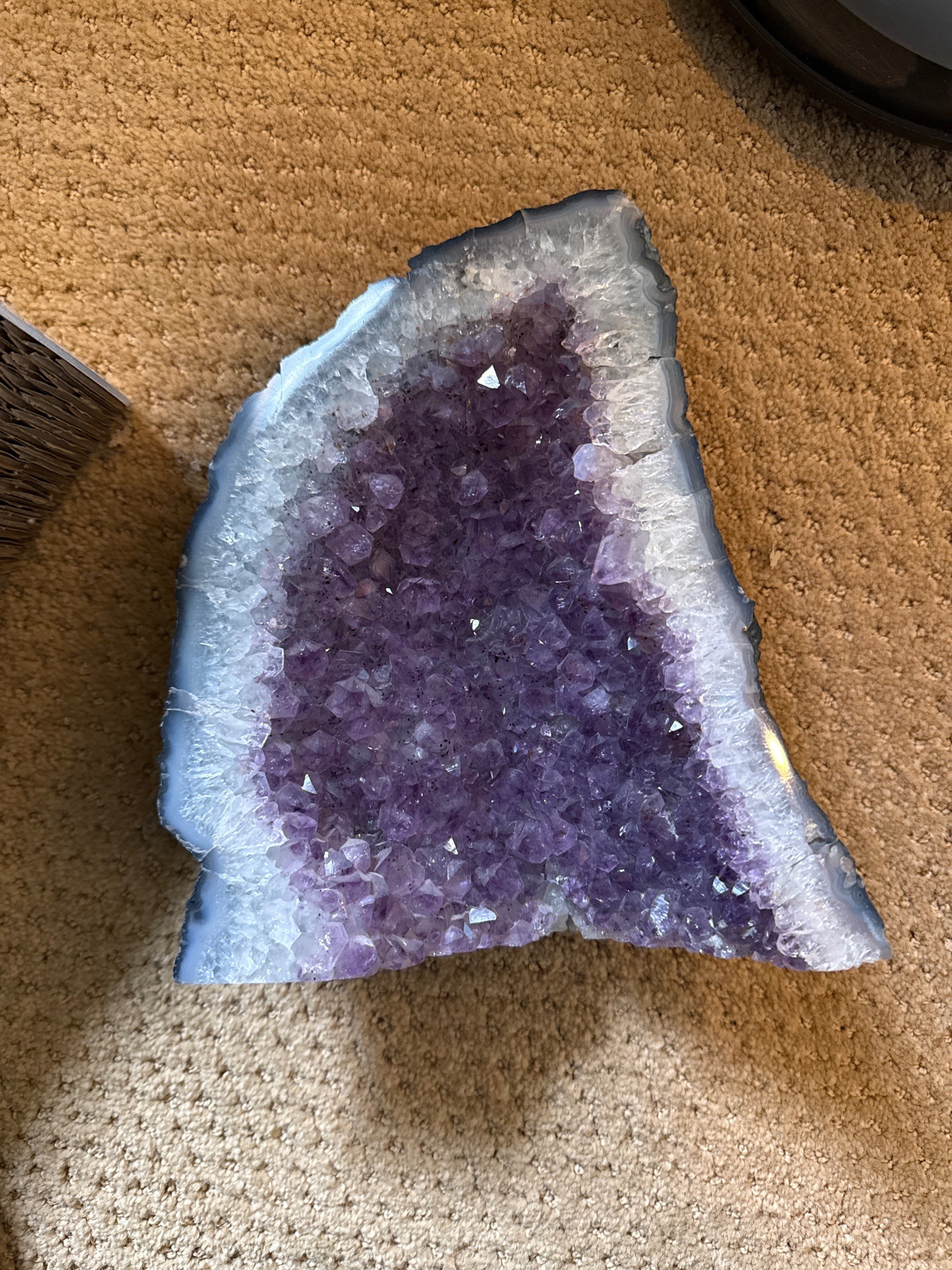
Amethyst Quartz Cathedral Geode Fragment
Minerals and Gemstones

Amethyst Quartz Cathedral Geode Fragment

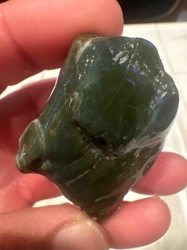
This specimen is a large, upright-standing section of an amethyst geode, often referred to in the trade as a 'cathedral' or 'church' due to its characteristic shape. The interior is lined with a dense cluster of well-defined, macro-crystalline quartz points exhibiting a vibrant, medium-to-deep purple saturation centered within the vug. The crystals transition outward into a thick, banded rim of translucent white to greyish-blue chalcedony (agate) and a final exterior layer of dark green to grey igneous basalt matrix. The specimen features a flat-cut base, allowing for stable vertical display. In terms of condition, the crystal points appear largely intact with high vitreous luster, though some minor peripheral chipping is visible along the cut edges where the agate meets the rough exterior. This type of specimen is naturally occurring, typically sourced from the basalt flows of the Rio Grande do Sul region in Brazil or Artigas in Uruguay. The quality is indicated by the depth of the purple hue and the transparency of the individual crystal faces. There are no visible artificial treatments, though the cut edges have been polished to highlight the agate banding.
Estimated Value

$450 - $600

Basic Information

Category

Minerals and Gemstones

Appraised On

May 3, 2026

Estimated Value

$450 - $600

Item Description

This specimen is a large, upright-standing section of an amethyst geode, often referred to in the trade as a 'cathedral' or 'church' due to its characteristic shape. The interior is lined with a dense cluster of well-defined, macro-crystalline quartz points exhibiting a vibrant, medium-to-deep purple saturation centered within the vug. The crystals transition outward into a thick, banded rim of translucent white to greyish-blue chalcedony (agate) and a final exterior layer of dark green to grey igneous basalt matrix. The specimen features a flat-cut base, allowing for stable vertical display. In terms of condition, the crystal points appear largely intact with high vitreous luster, though some minor peripheral chipping is visible along the cut edges where the agate meets the rough exterior. This type of specimen is naturally occurring, typically sourced from the basalt flows of the Rio Grande do Sul region in Brazil or Artigas in Uruguay. The quality is indicated by the depth of the purple hue and the transparency of the individual crystal faces. There are no visible artificial treatments, though the cut edges have been polished to highlight the agate banding.
Get Your Items Appraised

Instant estimates of your treasures with AI-powered instant appraisals

Browse More Appraisals