AI estimate as of August 2, 2025 · verify with a professional before acting
AI-Generated · Verify before acting
Everything on this page is generated by AI for informational purposes only. AI can make mistakes — the AI may misidentify items or misattribute them (artist, maker, brand, designer, origin, era). This is not an official valuation and should not be used for insurance, sale, tax, estate, legal, or lending purposes — or any decision requiring a certified appraisal. It is not an authoritative claim about any person, brand, or rights holder — do not share or rely on it as a factual statement about a third party. Always consult qualified professionals before making financial decisions.
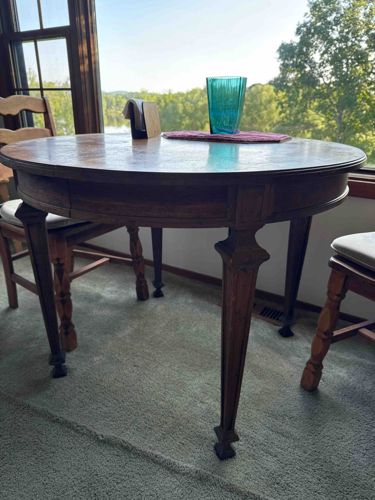
This appears to be an antique or vintage round dining table, likely crafted from a dark-stained hardwood such as oak or mahogany, given its rich, deep brown hue. The tabletop is circular with a slightly beveled or rounded edge, exhibiting a well-worn patina indicative of age and use. There are visible surface scratches, minor dents, and variations in the finish, suggesting natural wear and tear over time, rather than significant damage. The table rests on four elegantly turned and carved legs. Each leg extends from the apron of the table and tapers downwards, terminating in a decorative, possibly pad or claw-like foot. The design of the legs suggests a classic or traditional style, possibly early 20th century or late 19th century, with subtle decorative carving detail near the top attachment point and towards the foot. The apron, or skirt, of the table also appears to have some subtle carving or molded detail, though it is not distinctly clear from the image. The construction seems solid and robust, suggesting quality craftsmanship. There are no obvious signs of major repairs or structural damage. The overall aesthetic is one of aged charm and utility, fitting for a dining or breakfast nook. The heavy, dark wood contributes to a sense of permanence and classic appeal, typical of period furniture built to last. The table's size appears suitable for seating 2-4 individuals comfortably.
AI Appraisal Report
Upon examining the provided image, this round dining table appears to be an authentic antique or vintage piece, likely dating from the late 19th to early 20th century. The dark-stained hardwood, possibly oak or mahogany, exhibits a lovely, well-earned patina, indicative of its age and use. The visible surface scratches, minor dents, and variations in the finish are consistent with natural wear and tear over decades and do not detract significantly from its aesthetic or structural integrity; rather, they contribute to its character. The elegantly turned and carved legs, featuring subtle decorative details and terminating in what appear to be pad or claw-like feet, strongly suggest a classic, traditional design prevalent during that period. The robust construction points to quality craftsmanship. No obvious signs of major repairs or structural damage are discernable from the image.
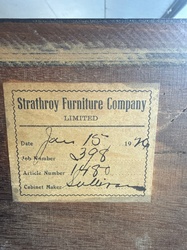
In terms of market conditions, there is a steady demand for well-preserved, functional antique dining tables, particularly those of a manageable size suitable for smaller living spaces (2-4 individuals). While not exceedingly rare, tables with authentic patina and period-appropriate features like this one hold a certain appeal. Factors impacting value include its good condition for its age, classic styling, and apparent solid construction. Limitations in authenticity verification from an image alone are significant; I cannot definitively confirm the wood type, construction methods (e.g., joinery), or look for repairs under the apron or at joints. Full authentication would require in-person examination to inspect joinery, wood grain, and apply touch/smell tests. Provenance documentation (e.g., original sales receipts) would also be highly beneficial to confirm its history and origin. Scientific testing, such as dendrochronology for wood dating, could offer conclusive age verification.
Considering these factors, I assess this table to be a charming and functional piece of period furniture.