Acheulean Style Chert Bifacial Hand Axe Scraper
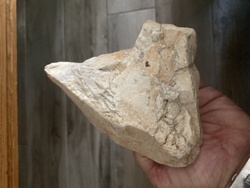
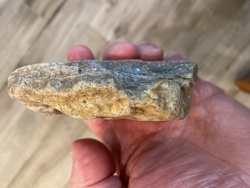
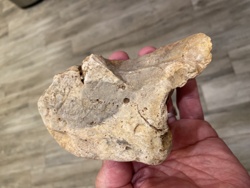
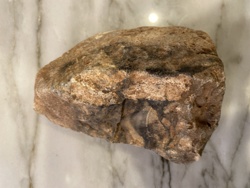
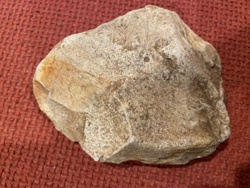
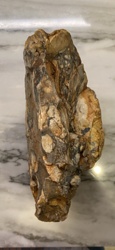
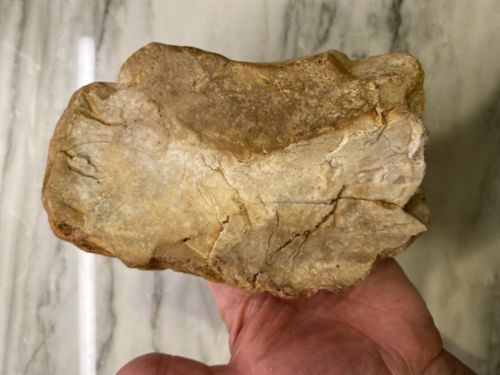
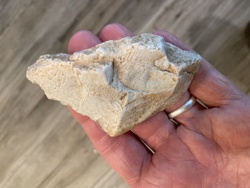
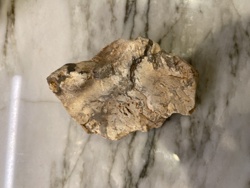
This is a substantial prehistoric-style lithic tool, measuring approximately 7 inches by 4.5 inches, identified as a chert bifacial hand axe or scraper. The item is constructed from a dense, crypto-crystalline chert, characterized by a variegated color palette of ochre, tan, and creamy beige. It exhibits definitive evidence of intentional percussion flaking along its margins to create a functional cutting or scraping edge. The surface displays a matte finish with a well-developed desert varnish or patina, suggesting significant antiquity and prolonged exposure to natural elements. Physically, the tool features a teardrop or amygdaloid shape, designed to fit ergonomically in the palm of a hand. There are visible fracture lines and small step-fractures near the worked edges, which are consistent with heavy use-wear on hard materials. While the Acheulean style is typically associated with the Lower Paleolithic period, the specific find location in Guthrie, Oklahoma, suggests this is a North American lithic tool that mirrors those ancient bifacial reduction techniques. The craftsmanship shows a high degree of skill in stone knapping, with large thinning flakes removed to reduce the overall mass while maintaining structural integrity. No modern signatures or maker's marks are present, as is characteristic of authentic archaeological lithic artifacts.
AI-Generated Appraisal Disclaimer
Estimated Value
$400.00 - $600.00
Basic Information
Category
Archaeological Artifacts / Prehistoric Stone Tools
Appraised On
March 2, 2026
Estimated Value
$400.00 - $600.00
Additional Details Provided By Owner
User Provided Information
Lower Paleolithic Acheulean chert bi facial hand axe scraper tool found in Guthrie OK measuring 7" x 4.5"
Item Description
This is a substantial prehistoric-style lithic tool, measuring approximately 7 inches by 4.5 inches, identified as a chert bifacial hand axe or scraper. The item is constructed from a dense, crypto-crystalline chert, characterized by a variegated color palette of ochre, tan, and creamy beige. It exhibits definitive evidence of intentional percussion flaking along its margins to create a functional cutting or scraping edge. The surface displays a matte finish with a well-developed desert varnish or patina, suggesting significant antiquity and prolonged exposure to natural elements. Physically, the tool features a teardrop or amygdaloid shape, designed to fit ergonomically in the palm of a hand. There are visible fracture lines and small step-fractures near the worked edges, which are consistent with heavy use-wear on hard materials. While the Acheulean style is typically associated with the Lower Paleolithic period, the specific find location in Guthrie, Oklahoma, suggests this is a North American lithic tool that mirrors those ancient bifacial reduction techniques. The craftsmanship shows a high degree of skill in stone knapping, with large thinning flakes removed to reduce the overall mass while maintaining structural integrity. No modern signatures or maker's marks are present, as is characteristic of authentic archaeological lithic artifacts.
Get Your Items Appraised
Instant estimates of your treasures with AI-powered instant appraisals