AI Appraisal Estimate

AI-generated estimates · not official valuations

From the user

What was submitted

Photo and notes provided by the user — not generated by AI

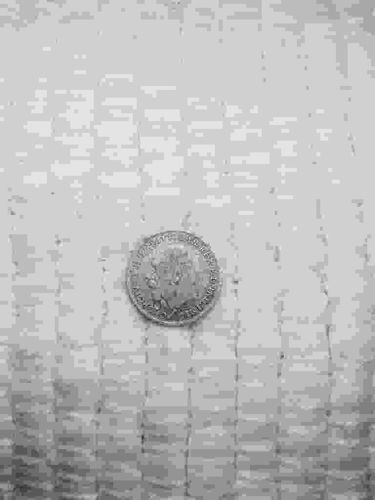
Submitted item photo
Submitted photo · June 3, 2026

User's notes

No additional notes provided.

AI analysis below

AI appraisal

AI analysis & estimate

AI-Generated · Verify before acting

Everything below is generated by AI for informational purposes only. AI can make mistakes — the AI may misidentify items or misattribute them (artist, maker, brand, designer, origin, era). This is not an official valuation and should not be used for insurance, sale, tax, estate, legal, or lending purposes — or any decision requiring a certified appraisal. It is not an authoritative claim about any person, brand, or rights holder — do not share or rely on it as a factual statement about a third party. Always consult qualified professionals before making financial decisions.

Read the full disclaimer

AI Identification

·Not independently authenticated·Verify before acting

Elizabeth II Sterling Silver Shilling Coin

Numismatics / Coins

AI Estimated Value

·Not an official valuation·Verify before acting

$1.00 - $3.00

As of June 3, 2026

AI Item Analysis

·AI can make mistakes·Verify before acting
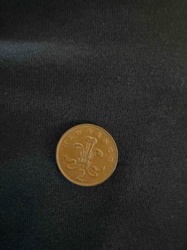
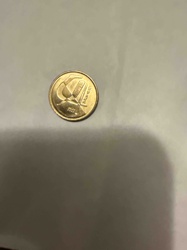
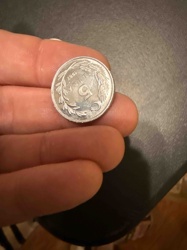
This item is a circular metal coin, appearing to be a mid-20th-century British shilling featuring the effigy of Queen Elizabeth II. The coin is rendered in a metallic silver-tone finish, suggesting a composition of cupro-nickel or potentially sterling silver depending on the specific year of minting (post-1946 British currency typically transitioned to cupro-nickel). The obverse displays the laureate head of the Queen facing right, surrounded by a Latin inscription which usually includes 'ELIZABETH II DEI GRATIA REGINA'. The strike appears well-centered with a raised rim. Regarding condition, the coin displays significant signs of circulation; the high points of the relief show moderate wear, particularly in the hair and facial details. There is visible surface oxidation and a dark patina accumulating in the recessed lettering and around the portrait, which is common for coins of this age. Minor micro-scratches and small dings on the field are visible, consistent with a graded condition of 'Fine' to 'Very Fine'. The craftsmanship is indicative of Royal Mint standards from the 1950s or 1960s, showing precise mechanical Die striking. The coin rests on a light-colored, vertically-ribbed textile background that provides a scale for its small diameter.
AI Appraisal Report

·AI can make mistakes·Verify before acting
I have carefully examined the provided images of this British Shilling featuring the effigy of Queen Elizabeth II. Based on the laureate 'Mary Gillick' portrait and the specific wear patterns, this coin belongs to the period between 1953 and 1966. While the user description suggests sterling silver, it is crucial to note that British currency transitioned to cupro-nickel in 1947; therefore, this specimen contains no precious metal and its value is derived strictly from its numismatic appeal. I observe the coin to be in 'Very Fine' (VF) condition. The relief shows moderate wear on the high points of the laurel wreath and hair, with a distinct dark patina and surface oxidation characteristic of decades of circulation. The strike is consistent with Royal Mint mechanical dies of the era. The market for mid-century British base-metal coinage is highly saturated. These coins were minted in the hundreds of millions, meaning rarity is non-existent. Recent comparable sales for circulated shillings from this era typically fall within the $1 to $3 range, primarily as historical curiosities or filler for entry-level collections. Factors limiting the value include the common date range and the visible surface abrasions. Authentication from images alone is limited; a physical inspection would be required to verify the exact weight, diameter, and edge reeding to rule out contemporary counterfeits. Scientific testing such as X-ray fluorescence (XRF) would be necessary to definitively confirm the metallurgical composition, though the visual appearance strongly confirms cupro-nickel rather than silver.

Get your items appraised

Instant estimates of your treasures with AI-powered appraisals

Browse More Appraisals