AI Appraisal Estimate

AI-generated estimates · not official valuations

From the user

What was submitted

Photo and notes provided by the user — not generated by AI

Submitted item photo
Submitted photo · June 25, 2026

User's notes

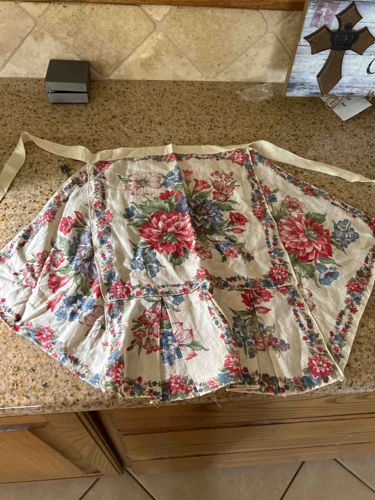
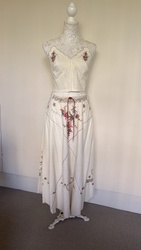
Apron from the 1940s made with handkerchiefs In

AI analysis below

AI appraisal

AI analysis & estimate

AI-Generated · Verify before acting

Everything below is generated by AI for informational purposes only. AI can make mistakes — the AI may misidentify items or misattribute them (artist, maker, brand, designer, origin, era). This is not an official valuation and should not be used for insurance, sale, tax, estate, legal, or lending purposes — or any decision requiring a certified appraisal. It is not an authoritative claim about any person, brand, or rights holder — do not share or rely on it as a factual statement about a third party. Always consult qualified professionals before making financial decisions.

Note

This analysis also relies on unverified notes provided by the user, which may be incomplete or inaccurate and could affect the result.

Read the full disclaimer

AI Identification

·Not independently authenticated·Verify before acting

Vintage 1940s Handkerchief Apron

Vintage Textiles & Clothing

AI Estimated Value

·Not an official valuation·Verify before acting

$45.00-$65.00

As of June 25, 2026

AI Item Analysis

·AI can make mistakes·Verify before acting
This is a characteristic example of a mid-century homecraft textile, specifically a half-apron constructed from multiple repurposed or coordinating vintage handkerchiefs. The item features a vibrant, large-scale floral print dominated by red dahlias and blue accent flowers on a creamy off-white background. The construction is unique to the 1940s era, where handkerchiefs were overlapping and pleated to create volume and a decorative hemline. Specifically, the lower section shows knife pleats that allow the floral borders of the individual handkerchiefs to serve as a ruffled edge. The apron is gathered at a narrow, plain cream-colored waistband that extends into long fabric ties for fastening around the waist. Physically, the material appears to be a lightweight cotton or lawn, typical for the period's handkerchiefs. Regarding condition, there is visible softening of the fabric consistent with age and laundering. Some fraying is present at the hemline and edges where the delicate handkerchief borders meet. There is no immediate evidence of significant staining or large tears from this view, though some minor yellowing or 'foxing' is common for whites of this age. This piece represents the 'make do and mend' spirit of the 1940s, showcasing how domestic textiles were creatively assembled using high-quality printed cottons from that era.
AI Appraisal Report

·AI can make mistakes·Verify before acting
I have carefully examined the provided images of this vintage 'handkerchief apron' and can confirm it as a characteristic example of 1940s homecraft. The construction demonstrates the 'Make Do and Mend' wartime ethos, utilizing high-quality printed cotton lawn kerchiefs with vibrant red dahlia motifs. The knife pleating and the use of the handkerchief borders as a decorative hem are authentic to mid-century folk-craft techniques. The condition shows expected wear, including softening of the fibers and minor fraying consistent with a utilitarian domestic item of this age. In the current market, vintage kitchenalia remains popular for kitsch decor and rockabilly fashion; however, because these were often homemade in large quantities, they are not strictly rare. Value is buoyed by the brightness of the floral print, as fading significantly diminishes desirability in textiles. Comparables for similar multi-handkerchief aprons generally range from $35 to $75 depending on the complexity of the print and the stability of the fabric. It is important to note that while the visual evidence strongly suggests authenticity, I cannot definitively verify the age or fiber content without a physical examination. To provide a conclusive authentication, I would need to perform a thread burn test to confirm 100% natural cotton vs. later synthetic blends, and a tactile inspection of the waistband stitching to determine if it was assembled using period-correct cotton thread or modern polyester. Furthermore, an inspection for hidden 'rust spots' or structural dry rot would be necessary to ensure the item is wearable rather than purely decorative.

Get your items appraised

Instant estimates of your treasures with AI-powered appraisals

Browse More Appraisals