AI Appraisal Estimate

AI-generated estimates · not official valuations

From the user

What was submitted

Photo and notes provided by the user — not generated by AI

Submitted item photo
Submitted photo · June 5, 2026

User's notes

Two years before the Mast Dana

AI analysis below

AI appraisal

AI analysis & estimate

AI-Generated · Verify before acting

Everything below is generated by AI for informational purposes only. AI can make mistakes — the AI may misidentify items or misattribute them (artist, maker, brand, designer, origin, era). This is not an official valuation and should not be used for insurance, sale, tax, estate, legal, or lending purposes — or any decision requiring a certified appraisal. It is not an authoritative claim about any person, brand, or rights holder — do not share or rely on it as a factual statement about a third party. Always consult qualified professionals before making financial decisions.

Note

This analysis also relies on unverified notes provided by the user, which may be incomplete or inaccurate and could affect the result.

Read the full disclaimer

AI Identification

·Not independently authenticated·Verify before acting

Two Years Before the Mast

Book

AI Estimated Value

·Not an official valuation·Verify before acting

$25-45

As of June 5, 2026

AI Item Analysis

·AI can make mistakes·Verify before acting
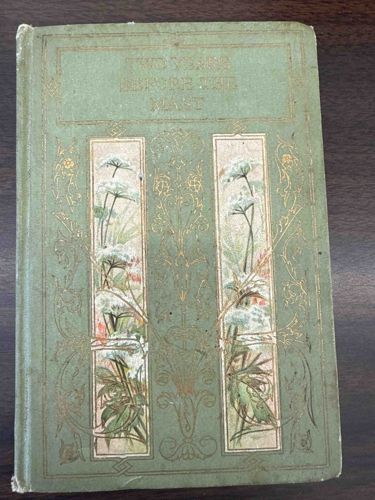
This item is an antique hardcover book, likely from the late 19th or early 20th century. The cover is bound in a muted sage green cloth, possibly linen or buckram, and features elaborate decorative elements. The text 'TWO YEARS BEFORE THE MAST' is embossed in gold lettering near the top, indicating the title. The cover design also incorporates two vertical rectangular panels with botanical illustrations, likely of Queen Anne's Lace or a similar wild flower with delicate white blossoms and green foillage, set against a light background that appears to be watercolor or lithographic in nature. These panels are framed by intricate gold-foiled architectural or organic scrollwork, which extends across the remainder of the cover, highlighting the quality and attention to detail common in decorative bindings of its period. The gold foiling shows some wear and oxidation, characteristic of age and handling, with some areas appearing faded or rubbed off. The green cloth binding exhibits visible wear, including darkening and discoloration, particularly along the edges and corners, suggesting significant use and exposure to dirt and oils over time. The corners are bumped and softened, and there is fraying along the spine's edges and bottom, indicating a lack of care or extensive handling. Subtle mottling or spotting is also present on the green surface. The overall craftsmanship suggests a mass-produced, yet aesthetically pleasing, edition of the time, designed to be decorative as well as functional. The spine is likely to be square and relatively stiff, though its condition cannot be fully assessed from the single image. The book's condition suggests it has not been rebound and retains its original cover, adding to its historical integrity.

AI Appraisal Report

·AI can make mistakes·Verify before acting
Based on my examination of the provided images, this copy of Richard Henry Dana Jr.'s 'Two Years Before the Mast' appears to be a late 19th or early 20th-century decorative hardcover edition. The sage green cloth binding, embellished with gilt lettering and floral panels, is characteristic of mass-market, yet aesthetically pleasing, publisher's bindings from that era. The book's condition is fair to good, exhibiting significant signs of wear consistent with its age and use. I note considerable rubbing to the gilt, darkening and soiling of the cloth, bumped corners, and fraying, particularly at the spine ends. These condition issues are the primary factors limiting its value. While 'Two Years Before the Mast' is a historically significant work, it was immensely popular and frequently reprinted. Consequently, most editions from this period, especially decorative trade editions like this one appears to be, are not rare. Market comparables for similar late Victorian or Edwardian editions in fair condition typically sell for modest sums. The primary value drivers for this book would be the publisher and exact year of publication, which are not visible. A first edition (1840) is exceptionally rare and valuable, but this is clearly not one. Without a physical inspection to identify the publisher, confirm the date on the title page, check for illustrations, and assess the integrity of the internal pages and text block, a definitive valuation is limited. Full authentication would require this in-person examination.

Get your items appraised

Instant estimates of your treasures with AI-powered appraisals

Browse More Appraisals