These notes were written by the person who submitted this item. Appraiser.AI has not verified them, and the AI's identification and estimate may rely on them.
AI Estimated Value
Not an official valuation
$3,500 - $6,000
AI estimate as of September 4, 2025 · verify with a professional before acting
AI-Generated · Verify before acting
Everything on this page is generated by AI for informational purposes only. AI can make mistakes — the AI may misidentify items or misattribute them (artist, maker, brand, designer, origin, era). This is not an official valuation and should not be used for insurance, sale, tax, estate, legal, or lending purposes — or any decision requiring a certified appraisal. It is not an authoritative claim about any person, brand, or rights holder — do not share or rely on it as a factual statement about a third party. Always consult qualified professionals before making financial decisions.
This analysis also relies on unverified notes provided by the user, which may be incomplete or inaccurate and could affect the result.
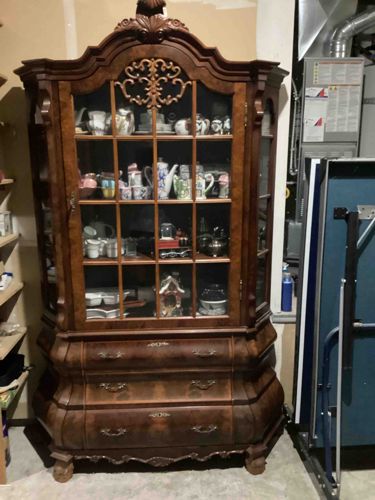
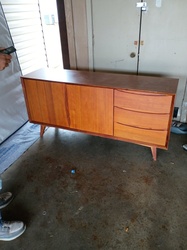
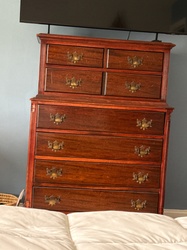
This appears to be an antique display cabinet, likely crafted from walnut wood, given the rich, dark brown color and visible grain, consistent with the provided context of 'Walnut display cabinet 1900'. The cabinet features a distinct two-part construction: an upper glazed display section and a lower bombe-style chest of drawers. The overall design suggests a Baroque or Rococo influence, characteristic of early 20th-century revival styles. The upper section has a serpentine or 'broken' pediment top adorned with ornate shell and foliage carvings, indicative of the period’s elaborate ornamentation. The glass doors are framed with sturdy wooden mullions, creating multiple panes for displaying items, and a central carved wooden fretwork appliqué adds another layer of decorative detail. The lower section showcases a pronounced bombe, or bulging, chest of three dovetailed drawers, each fitted with decorative brass or bronze pulls and escutcheons, likely original to the piece. The cabinet stands on four robust, carved cabriole legs, connecting to a highly decorative, scrolled apron that mirrors the Rococo stylistic flourishes found throughout the piece. The finish appears to be a natural clear coat that allows the wood's inherent beauty to show through, with a warm, aged patina. Given its age, some minor surface wear, such as shallow scratches, dings, or slight fading, would be expected, though none are overtly visible from the provided image. The craftsmanship appears to be of high quality, with attention to carved details and the impressive shaping of the bombe base, suggesting a piece made by skilled artisans. The extensive use of solid wood and intricate carving indicates a significant investment of time and material.
AI Appraisal Report
Upon examining the provided image and information, I assess this Antique Walnut Glass Display Cabinet with Bombe Base to be a well-preserved piece from the early 20th century, consistent with the 'Walnut display cabinet 1900' detail. The condition appears very good for its age, showing a rich, aged patina and what seems to be a clear, natural finish with no immediately apparent significant damage like large cracks or major losses to the carving. Minor surface wear, typical of a piece over a century old, is implied, though not clearly visible. The elaborate Rococo revival styling, especially the ornate pediment, bombe form, and intricate carving on the legs and apron, speaks to its authenticity as a period piece of high quality.
In terms of market conditions, large, elaborately carved antique display cabinets like this are generally desirable, especially those in walnut with strong design elements. Pieces with bombe bases and extensive carving tend to command higher prices. Comparables in the current market for well-maintained, large-scale antique walnut display cabinets with similar decorative flourishes often range from $3,000 to $7,000, depending on provenance and specific quality details. The demand for such substantial antique furniture varies, but high-quality, distinctive items like this tend to find appreciative buyers. Its rarity is moderate; while not unique, finding pieces of this scale and decorative intensity in good condition is becoming less common.
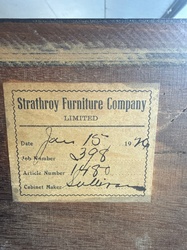
The primary factors impacting its value are its excellent apparent condition, the quality of craftsmanship, the desirable walnut wood, and the intricate, appealing design. While this visual assessment is strong, for full authentication, an in-person examination would be crucial to verify wood species, joinery techniques, and the originality of all components (e.g., glass, hardware). Provenance documentation would further enhance value, and scientific testing, such as dendrochronology, could definitively confirm age if required. Without physical inspection, I cannot confirm the absence of subtle repairs, restorations, or internal condition.