AI estimate as of August 11, 2025 · verify with a professional before acting
AI-Generated · Verify before acting
Everything on this page is generated by AI for informational purposes only. AI can make mistakes — the AI may misidentify items or misattribute them (artist, maker, brand, designer, origin, era). This is not an official valuation and should not be used for insurance, sale, tax, estate, legal, or lending purposes — or any decision requiring a certified appraisal. It is not an authoritative claim about any person, brand, or rights holder — do not share or rely on it as a factual statement about a third party. Always consult qualified professionals before making financial decisions.
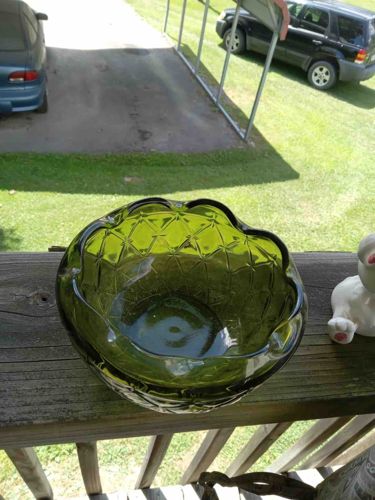
This is a vintage dark green glass bowl, likely a fruit bowl or a decorative centerpiece. It appears to be made of pressed glass, indicated by the distinct, repeating pattern on its exterior and interior surfaces. The bowl features a scalloped or undulating rim, adding to its decorative appeal. The primary pattern visible is a series of raised diamond shapes that create a textured, almost quilted effect across the body of the bowl. The color is a deep, rich forest green, which is characteristic of glassware produced in the mid-20th century. The glass exhibits a good level of clarity despite the dark tint, allowing light to refract through the patterned surfaces. There are no immediately obvious chips, cracks, or significant damage from the provided image, suggesting it is in good vintage condition. The interior seems smooth, leading down to a slightly recessed center. The craftsmanship appears to be typical of mass-produced decorative glass from its era, with a focus on both functionality and aesthetic appeal through molded designs. Without a visible maker's mark or specific identifying features, it is challenging to pinpoint the exact manufacturer, but many companies like Anchor Hocking, Federal Glass, or Jeannette Glass produced similar items during the Depression era through the 1970s. The thickness of the glass suggests durability. There are no visible quality issues beyond what would be expected from a vintage glass item, such as minor surface abrasions or slight manufacturing imperfections inherent to the pressing process.
AI Appraisal Report
I have carefully examined the image of this Vintage Dark Green Scalloped Pressed Glass Bowl. My assessment of its condition, based solely on the visual information provided, is that it is in very good vintage condition. I observe no chips, cracks, or significant damage, which contributes positively to its value. The dark forest green color and the raised diamond pattern are characteristic of pressed glass popular from the mid-20th century. Authenticity as a period piece seems high given the manufacturing characteristics visible.
From a market perspective, this type of decorative pressed glass, while charming, is not considered rare. Numerous manufacturers such as Anchor Hocking, Federal Glass, and Jeannette Glass produced similar items in large quantities. The demand for such pieces is moderate, driven primarily by collectors of vintage home decor or those seeking nostalgic items. Factors impacting value include the excellent apparent condition, attractive color, and decorative design. However, the lack of a discernible maker's mark limits its appeal to specific collectors and thus its market value.
Comparables in the current market, such as similar pressed glass bowls from the mid-20th century, typically fetch values in the lower to mid-range for vintage glassware. Without an in-person examination, I cannot definitively confirm the absence of subtle flaws such as minor surface abrasions, internal stress fractures, or manufacturing imperfections. An in-person inspection would allow me to feel the glass, examine it under various lighting conditions, and search for faint marks that might not be visible in the image. Provenance documentation, if available, could further authenticate its origin and potentially impact value, but is not typically a factor for items in this price range. Scientific testing is not relevant for this type of glassware.