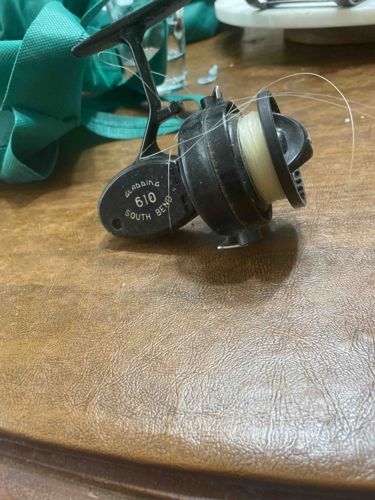
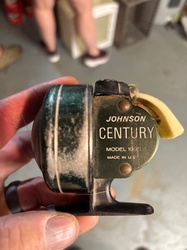
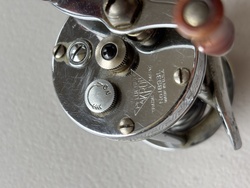
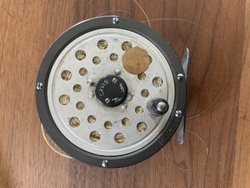
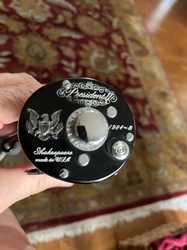
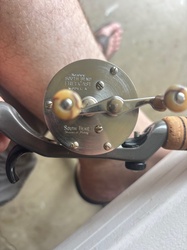
Antique 610 South Bend spinning real good condition a bit dusty but working
These notes were written by the person who submitted this item. Appraiser.AI has not verified them, and the AI's identification and estimate may rely on them.
AI Estimated Value
Not an official valuation
$40 - $70
AI estimate as of August 5, 2025 · verify with a professional before acting
AI-Generated · Verify before acting
Everything on this page is generated by AI for informational purposes only. AI can make mistakes — the AI may misidentify items or misattribute them (artist, maker, brand, designer, origin, era). This is not an official valuation and should not be used for insurance, sale, tax, estate, legal, or lending purposes — or any decision requiring a certified appraisal. It is not an authoritative claim about any person, brand, or rights holder — do not share or rely on it as a factual statement about a third party. Always consult qualified professionals before making financial decisions.
This analysis also relies on unverified notes provided by the user, which may be incomplete or inaccurate and could affect the result.
The item is an antique South Bend 610 spinning reel, characterized by its predominantly black finish. It features a compact design, typical of earlier spinning reels, and appears to be constructed from metal, likely aluminum or an alloy, given its age and common materials for fishing gear. The reel exhibits a classic look with a well-integrated reel foot, extending from the main body, designed to attach to a fishing rod. The handle assembly is visible, though the specific type (e.g., folding, single, double crank) cannot be fully discerned from the provided image, but it appears to be a single crank arm with a black knob. A notable feature is the presence of existing fishing line, which appears to be monofilament, wound onto the spool, indicating it has been in active use. The reel's body bears clear white lettering identifying it as 'GLADDING', followed by '610' and 'SOUTH BEND', which serves as the manufacturer's mark and model number. Despite its antique status, the reel is stated to be in working condition, with only a light layer of dust observed, further suggesting its functionality. There are no readily apparent signs of significant damage like deep scratches, dents, or corrosion that would compromise its structural integrity. The finish shows a slight sheen, hinting at a well-maintained or robust original coating. The general condition suggests a good example of its type, with normal wear commensurate with age and use, but nothing that detracts heavily from its overall presentation or function. Given it's an 'antique' and branded 'South Bend', it likely dates from the mid-20th century, a period when such reels were popular and durable.
AI Appraisal Report
Upon visual examination of the provided image, this Gladding South Bend 610 spinning reel presents in good overall condition. The black finish appears largely intact with a slight sheen, suggesting robust original coating and diligent care. While some dust is noted, which is easily remedied, there are no visible signs of significant damage such such as deep scratches, dents, or corrosion. The white 'GLADDING 610 SOUTH BEND' lettering is clear and legible, confirming authenticity of the branding and model. The presence of fishing line on the spool and the stated working condition indicate functional integrity; however, the precise smoothness of retrieves and drag operation cannot be ascertained without a physical inspection. Market conditions for vintage fishing reels vary, with South Bend reels generally holding steady but not exceptionally high values unless they are rare models, or in mint, unused condition. The 610 model is a relatively common vintage reel. Demand is from collectors of fishing memorabilia and enthusiasts seeking functional vintage gear. Rarity for this specific model is moderate; it's not a museum piece but desirable to a niche market. Factors impacting value positively include its good cosmetic condition and stated functionality. Negatively, its commonality as a model and the lack of original packaging or provenance documentation somewhat limit its top-tier value.
Limitations on authentication are significant solely from images. A physical examination would allow for: 1) Verification of material integrity and absence of hidden cracks or repairs. 2) Confirmation of all internal mechanisms' functionality, including gear trains and bearings, for smoothness and proper drag. 3) Detailed inspection for any alterations or non-original parts. 4) A thorough search for subtle signs of wear that escape photographic detection. While the branding is clear, without direct handling, I cannot definitively rule out the possibility of a highly convincing reproduction, though this is less common for production reels of this type and value. Provenance documentation, such as original purchase receipts or service records, would significantly bolster a claim of authenticity and history, but is rarely available for such items.