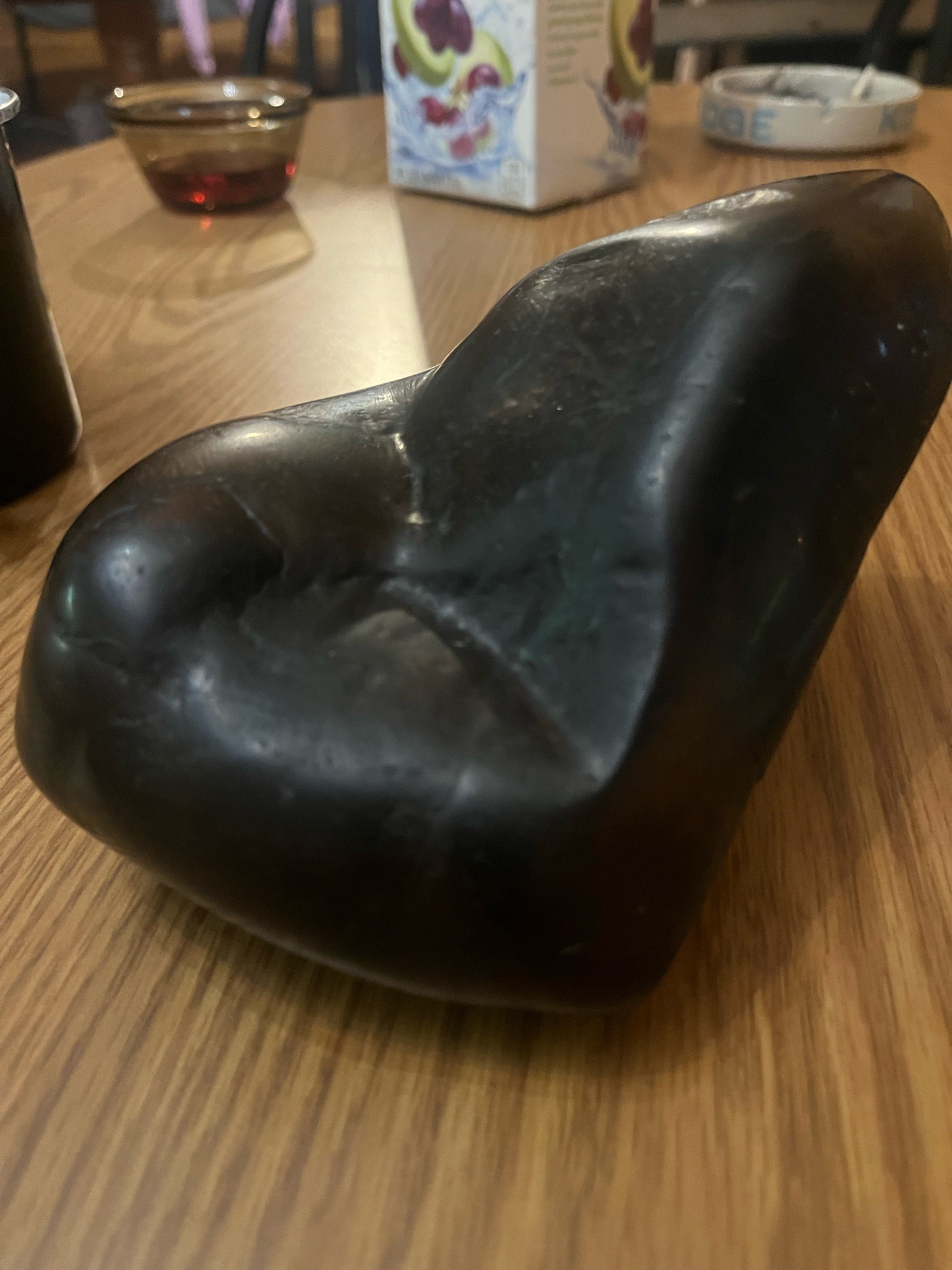
Large Irregular Black Pearl (Non-Nacreous Blister Pearl)
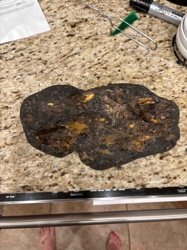
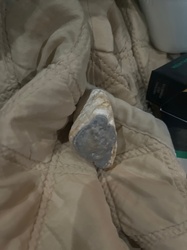
This is a substantial, non-nacreous organic specimen, identified in colloquial terms as a 'giga pearl.' Physically, it weighs between 3 to 5 pounds and exhibits a deeply irregular, bulbous, or amorphous shape, typical of pearls formed within the soft tissue of giant clams (Tridacna gigas) or similar large mollusks. Unlike traditional spherical jewelry pearls, this specimen is non-nacreous, meaning it lacks the iridescent 'orient' or luster associated with oyster pearls. Instead, it has a matte to semi-glossy black finish, which may be natural pigmentation or a result of environmental mineralization within the shell. The surface construction is dense and solid, showing visible undulations and heavy creasing throughout the body. Notable features include several surface fissures, shallow abrasions, and a waxy patina consistent with years of handling or natural formation processes. The condition is generally good for its size, though there are visible scuffs and indentations that appear to be part of its growth morphology rather than post-extraction damage. There are no manufacturing marks or signatures, as it is a biological growth. Specimens of this size are exceptionally rare and are considered scientific curiosities or high-end natural history collectibles of the modern era.
AI-Generated Appraisal Disclaimer
Estimated Value
$4,500 - $7,000
Basic Information
Category
Natural History / Organic Gemstones
Appraised On
April 16, 2026
Estimated Value
$4,500 - $7,000
Additional Details Provided By Owner
User Provided Information
Giga pearl 3 to 5 pounds
Item Description
This is a substantial, non-nacreous organic specimen, identified in colloquial terms as a 'giga pearl.' Physically, it weighs between 3 to 5 pounds and exhibits a deeply irregular, bulbous, or amorphous shape, typical of pearls formed within the soft tissue of giant clams (Tridacna gigas) or similar large mollusks. Unlike traditional spherical jewelry pearls, this specimen is non-nacreous, meaning it lacks the iridescent 'orient' or luster associated with oyster pearls. Instead, it has a matte to semi-glossy black finish, which may be natural pigmentation or a result of environmental mineralization within the shell. The surface construction is dense and solid, showing visible undulations and heavy creasing throughout the body. Notable features include several surface fissures, shallow abrasions, and a waxy patina consistent with years of handling or natural formation processes. The condition is generally good for its size, though there are visible scuffs and indentations that appear to be part of its growth morphology rather than post-extraction damage. There are no manufacturing marks or signatures, as it is a biological growth. Specimens of this size are exceptionally rare and are considered scientific curiosities or high-end natural history collectibles of the modern era.
Get Your Items Appraised
Instant estimates of your treasures with AI-powered instant appraisals