AI Appraisal Estimate

AI-generated estimates · not official valuations

From the user

What was submitted

Photo and notes provided by the user — not generated by AI

Submitted item photo
Submitted photo · July 19, 2026

User's notes

found

AI analysis below

AI appraisal

AI analysis & estimate

AI-Generated · Verify before acting

Everything below is generated by AI for informational purposes only. AI can make mistakes — the AI may misidentify items or misattribute them (artist, maker, brand, designer, origin, era). This is not an official valuation and should not be used for insurance, sale, tax, estate, legal, or lending purposes — or any decision requiring a certified appraisal. It is not an authoritative claim about any person, brand, or rights holder — do not share or rely on it as a factual statement about a third party. Always consult qualified professionals before making financial decisions.

Note

This analysis also relies on unverified notes provided by the user, which may be incomplete or inaccurate and could affect the result.

Read the full disclaimer

AI Identification

·Not independently authenticated·Verify before acting

Smooth banded river-style stone

Rocks and Minerals

AI Estimated Value

·Not an official valuation·Verify before acting

$5 - $15

As of July 19, 2026

AI Item Analysis

·AI can make mistakes·Verify before acting
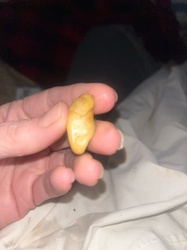
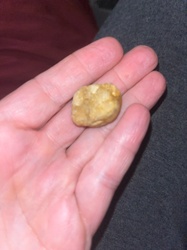
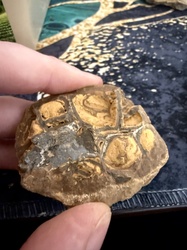
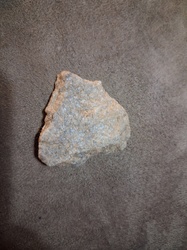
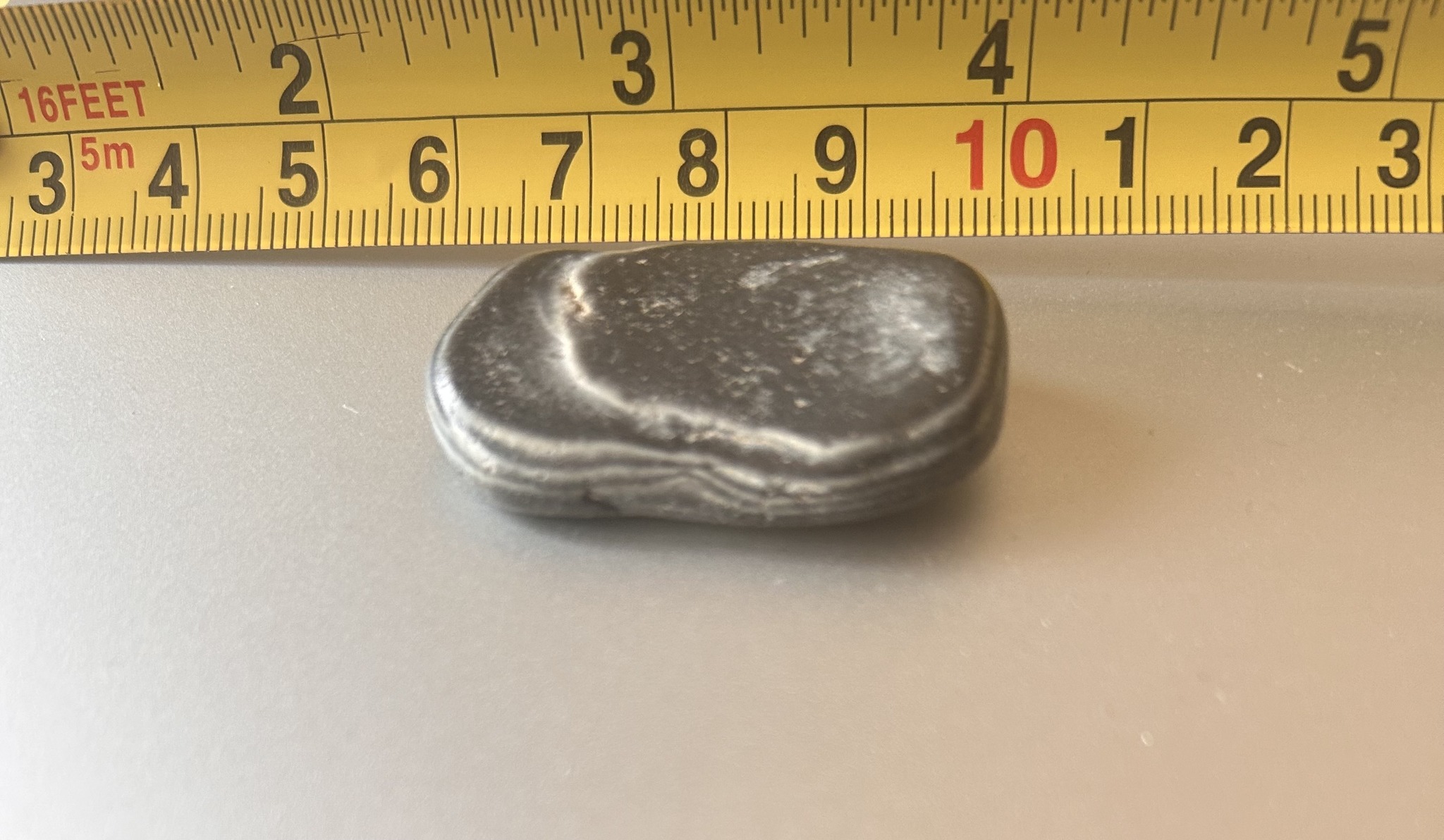
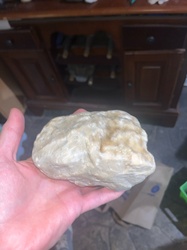
This item appears to be a small, naturally smoothed rock or river stone. Based on the accompanying tape measure, the object is approximately 5 centimeters (roughly 2 inches) in length. It possesses a rounded, oblong, and slightly flattened shape consistent with water-worn erosion. The surface is primarily a dark charcoal or slate-grey color, characterized by prominent horizontal white or light-grey banding along the sides, which suggests a sedimentary or metamorphic composition such as striped gneiss or a similar banded silicate. The texture appears matte to slightly satiny, with visible surface pits, minor scratches, and small indentations consistent with natural environmental wear. There are no visible maker's marks, inscriptions, or hallmarks, as is expected for a natural geological specimen. The owner indicates the item was 'found,' which is consistent with its appearance as a naturally occurring pebble rather than a manufactured or synthetic object. Without a physical mineralogical test or a density check, the exact geological classification remain a hypothesis. The craftsmanship is entirely natural, resulting from the mechanical action of water and abrasive debris over an undetermined period of time.
AI Appraisal Report

·AI can make mistakes·Verify before acting
Based on my visual assessment of the photo, this item appears to be a naturally occurring river stone, approximately 5cm in length, exhibiting characteristic water-worn erosion and geological banding consistent with striped gneiss or a similar metamorphic silicate. From what I can see, the stone features a charcoal grey body with light grey concentric banding and a matte surface texture. I cannot verify the exact mineral composition from a photo alone; a physical density test or mineralogical scratch test would be required to provide a scientific classification. The owner's submission indicates this item was 'found,' which aligns with its appearance as a natural geological specimen rather than a manufactured object. The valuation range of $5 to $15 is based on the general market for 'pocket stones' or curiosity specimens of this size and aesthetic appeal. While attractive, such stones occupy a very low price point due to their abundance in nature. Demand for unworked, naturally occurring pebbles is generally limited to the souvenir or hobbyist market. The value is tied entirely to its visual appeal as a natural object; if the stone were found to contain rare mineral inclusions or possessed a specific historical provenance—neither of which are visible or documented here—the value could slightly increase. Conversely, as a common geological find, its market value is negligible compared to professional lapidary work or rare gemstones. To determine a more precise identification, an in-person examination by a geologist would be necessary.

Related Tags

Explore similar items and categories

Get your items appraised

Instant estimates of your treasures with AI-powered appraisals

Browse More Appraisals