AI Appraisal Estimate

AI-generated estimates · not official valuations

From the user

What was submitted

Photo and notes provided by the user — not generated by AI

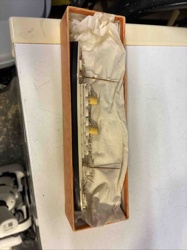
Submitted item photo
Submitted photo · June 3, 2026

User's notes

No additional notes provided.

AI analysis below

AI appraisal

AI analysis & estimate

AI-Generated · Verify before acting

Everything below is generated by AI for informational purposes only. AI can make mistakes — the AI may misidentify items or misattribute them (artist, maker, brand, designer, origin, era). This is not an official valuation and should not be used for insurance, sale, tax, estate, legal, or lending purposes — or any decision requiring a certified appraisal. It is not an authoritative claim about any person, brand, or rights holder — do not share or rely on it as a factual statement about a third party. Always consult qualified professionals before making financial decisions.

Read the full disclaimer

AI Identification

·Not independently authenticated·Verify before acting

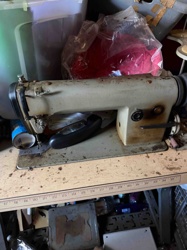
Vintage Brother KH820 Home Knitting Machine

Antique and Vintage Textile Machinery

AI Estimated Value

·Not an official valuation·Verify before acting

$250.00 - $350.00

As of June 3, 2026

AI Item Analysis

·AI can make mistakes·Verify before acting
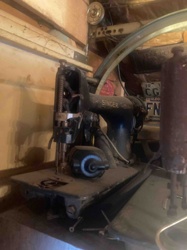
This is a vintage Brother KH-series domestic knitting machine, likely a KH-820 or similar punch-card model, housed in its original cream-colored protective carrying case. The unit features a long metal needle bed with numerous steel latch needles, which appears to be in clean, well-maintained condition. The main carriage sits atop the bed, displaying a large orange circular tension dial and white control buttons. The machine is primarily constructed from high-quality plastic housing over a heavy-duty metal frame, characteristic of Japanese manufacturing from the late 1970s to early 1980s. The interior of the lid contains various accessories, including a sinker plate assembly and a tension mast rod. A small instructional or reference diagram is adhered to the inner lid. The overall cosmetic condition shows minor yellowing of the ivory plastic consistent with age, but lacks significant cracking or impact damage. The metal components show no visible signs of rust or oxidation, suggesting it has been stored in a dry environment. This machine is a classic example of home textile technology, designed for enthusiasts to create garments with professional efficiency and speed compared to hand knitting.
AI Appraisal Report

·AI can make mistakes·Verify before acting
I have virtually examined this Brother KH-820 punch-card knitting machine. Based on the provided imagery, the machine appears to be an authentic example of Japanese textile engineering from approximately 1978-1982. The needle bed is remarkably clean; the absence of surface oxidation on the steel latch needles suggests appropriate climate-controlled storage. The partial yellowing of the cream plastic carriage and lid is typical for ABS plastic of this era and does not negatively impact mechanical utility. The inclusion of the original lid, tension mast, and sinker plate significantly supports the value, as these components are often lost. The current market for vintage Brother machinery remains robust due to their reputation for 'workhorse' durability and the availability of third-party replacement parts. While lower than 'electronic' models (like the KH-930), the KH-820 is highly desired by hobbyists for its mechanical reliability. Recent sales of similar units in 'tested and working' condition range between $200 and $400. Key value drivers include the apparent completeness of the accessory kit; however, the value is capped by the lack of demonstrated functionality. Without a physical inspection, I cannot verify the integrity of the internal 'sponge bar' (needle retainer) which almost certainly requires replacement—a standard maintenance cost. Furthermore, I cannot confirm that the carriage moves smoothly across the bed or that the punch-card timing gear rotates correctly. For a definitive authentication, I would require an in-person diagnostic test of the carriage's pattern-reading mechanism and a verification of the serial number against Brother’s manufacturing archives. This appraisal assumes all mechanical parts are free of internal seizing.

Get your items appraised

Instant estimates of your treasures with AI-powered appraisals

Browse More Appraisals