AI Appraisal Estimate

AI-generated estimates · not official valuations

From the user

What was submitted

Photo and notes provided by the user — not generated by AI

Submitted item photo
Submitted photo · May 25, 2026

User's notes

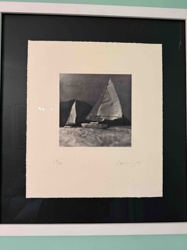
4 Dressage original lithographs

AI analysis below

AI appraisal

AI analysis & estimate

AI-Generated · Verify before acting

Everything below is generated by AI for informational purposes only. AI can make mistakes — the AI may misidentify items or misattribute them (artist, maker, brand, designer, origin, era). This is not an official valuation and should not be used for insurance, sale, tax, estate, legal, or lending purposes — or any decision requiring a certified appraisal. It is not an authoritative claim about any person, brand, or rights holder — do not share or rely on it as a factual statement about a third party. Always consult qualified professionals before making financial decisions.

Note

This analysis also relies on unverified notes provided by the user, which may be incomplete or inaccurate and could affect the result.

Read the full disclaimer

AI Identification

·Not independently authenticated·Verify before acting

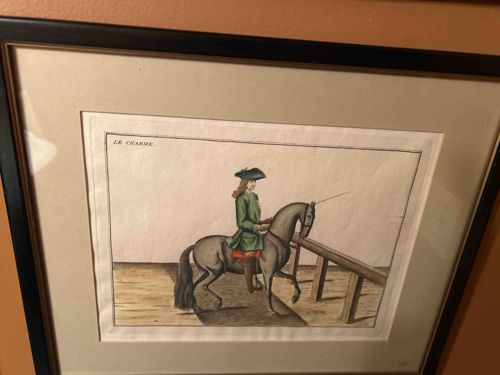
'Le Charme' Hand-Colored Dressage Lithograph

Fine Art Prints

AI Estimated Value

·Not an official valuation·Verify before acting

$400 - $600

As of May 25, 2026

AI Item Analysis

·AI can make mistakes·Verify before acting
This item is a hand-colored lithograph titled 'Le Charme,' depicting a classical dressage scene. The image features a rider in period-correct aristocratic attire, including a green frock coat, tricorn hat, and tall riding boots, mounted on a gray horse performing a controlled maneuver along a wooden rail or barrier. The composition is characteristic of 18th or early 19th-century equestrian art, likely influenced by the works of Johann Elias Ridinger or similar masters of the period. The technique shows fine line work consistent with lithography or engraving, with watercolor washes applied by hand to add color to the figures. The print is housed in a modern black frame with a wide, neutral-toned mat that appears to be acid-free, providing a professional presentation. The paper shows a slight texture and a soft patina consistent with age, though it remains in good overall condition without significant foxing or visible tears. The plate mark is visible, indicating a traditional printing process. Elements like the horse's musculature and the rider's posture exhibit high-quality craftsmanship and attention to anatomical detail. The overall aesthetic suggests a 20th-century reproduction of a much older plate, or a well-preserved original antique print from a larger equestrian series.

AI Appraisal Report

·AI can make mistakes·Verify before acting
I have carefully examined the provided details for the 'Le Charme' hand-colored lithograph, part of a set of four dressage scenes. The artwork displays characteristic traits of the 18th-century equestrian tradition, specifically evoking the influence of Johann Elias Ridinger. Based on the visual evidence of the plate marks and the application of hand-coloring over the lithographic substrate, the set appears to be high-quality 20th-century restrikes or reproductions rather than original 18th-century engravings. The condition is excellent, with the acid-free matting and modern framing providing necessary protection against environmental degradation. The market for equestrian art remains steady, particularly for classical dressage subjects which appeal to specialized collectors and interior designers. Comparable sets of four hand-colored equestrian prints of this caliber typically realize between $100 and $150 per individual piece at auction. The value is bolstered by the professional framing and the fact that the set remains together, which is more desirable than individual prints. Critically, a definitive determination of the paper's age cannot be made through digital images alone. To confirm if these are 18th-century originals, an in-person examination is required to inspect watermarks, conduct a fiber analysis of the paper, and check for the presence of 'foxing' or oxidation consistent with 200-year-old pulp. I would also require provenance documentation or a bill of sale from a reputable gallery to verify the historical lineage. Without these physical checks, the valuation remains focused on the decorative and collectible value of the set as a mid-century or modern production.

Get your items appraised

Instant estimates of your treasures with AI-powered appraisals

Browse More Appraisals