AI Appraisal Estimate

AI-generated estimates · not official valuations

From the user

What was submitted

Photo and notes provided by the user — not generated by AI

Submitted item photo
Submitted photo · June 6, 2026

User's notes

J Trayer

AI analysis below

AI appraisal

AI analysis & estimate

AI-Generated · Verify before acting

Everything below is generated by AI for informational purposes only. AI can make mistakes — the AI may misidentify items or misattribute them (artist, maker, brand, designer, origin, era). This is not an official valuation and should not be used for insurance, sale, tax, estate, legal, or lending purposes — or any decision requiring a certified appraisal. It is not an authoritative claim about any person, brand, or rights holder — do not share or rely on it as a factual statement about a third party. Always consult qualified professionals before making financial decisions.

Note

This analysis also relies on unverified notes provided by the user, which may be incomplete or inaccurate and could affect the result.

Read the full disclaimer

AI Identification

·Not independently authenticated·Verify before acting

Jean-Baptiste-Jules Trayer Genre Painting (Print/Reproduction)

Fine Art / Prints & Multiples

AI Estimated Value

·Not an official valuation·Verify before acting

$100 - $200

As of June 6, 2026

AI Item Analysis

·AI can make mistakes·Verify before acting
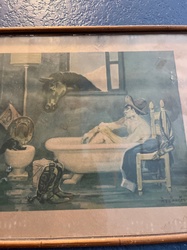
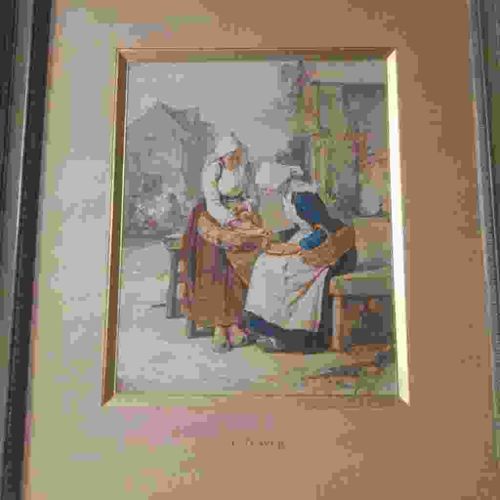
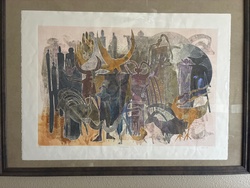
This item is a framed visual work of art depicting a domestic genre scene, attributed to Jean-Baptiste-Jules Trayer (1824–1909), a noted French painter. The composition features two figures, likely a mother and older child or two peasant women, engaged in a quiet domestic task—possibly food preparation or needlework—in a courtyard or rustic interior setting. The figures are dressed in traditional period attire, including white caps (coifs) and aprons, which are characteristic of 19th-century rural French or Flemish life. The palette utilizes soft, muted tones with hits of blue and earthen browns. Physically, the work is presented within a multi-tiered matting system; a beveled gold inner mat is surrounded by a larger tan or beige outer mat. The frame appears to be a dark, possibly black or dark wood, rectangular profile. Below the central image, the name 'J Trayer' is visibly printed or inscribed on the mount, serving as a primary identification mark. As a print or reproduction of a known Trayer work, the piece reflects the Realistic style of the mid-to-late 19th century. Condition-wise, the image shows some fading or color shifts typical of aged paper prints. The matting appears intact, though the overall image resolution in the photo suggests significant age and potential minor toning or foxing with time. The craftsmanship of the Matting suggests a professional framing job, likely from the mid-20th century.
AI Appraisal Report

·AI can make mistakes·Verify before acting
I have examined the provided images of the artwork attributed to Jean-Baptiste-Jules Trayer. The work depicts a classic 19th-century domestic genre scene. Based on the visual evidence, specifically the typography of the 'J Trayer' name on the mount and the visible color shift toward cyan/blue tones, I have identified this as a vintage photomechanical reproduction rather than an original oil painting or a hand-pulled lithograph from the period. The professional matting and framing appear to date from the mid-20th century, which adds decorative appeal but confirms its status as a commercial print. The condition shows signs of ultraviolet light exposure, resulting in the aforementioned color fading. The paper exhibits minor toning consistent with age. In the current market, works by Trayer are sought after as originals, but mass-produced vintage prints occupy a much lower price bracket, primarily valued for their decorative 'shabby chic' or provincial aesthetic. Comparables for framed mid-century prints of similar French genre scenes typically sell within the $75 to $225 range at estate auctions or specialized antique decor shops. Limitations: This appraisal is based solely on digital images. A physical inspection would be required to rule out the possibility of a highly aged oleograph or a process print with hand-applied gouache highlights. To definitively confirm the printing technique, I would need to examine the work under 10x magnification to check for a halftone dot pattern or the presence of a 'plate mark.' Provenance documentation regarding the original purchase would further clarify its history, though the presence of printed text on the mount strongly supports its status as a reproduction.

Get your items appraised

Instant estimates of your treasures with AI-powered appraisals

Browse More Appraisals