AI estimate as of August 23, 2025 · verify with a professional before acting
AI-Generated · Verify before acting
Everything on this page is generated by AI for informational purposes only. AI can make mistakes — the AI may misidentify items or misattribute them (artist, maker, brand, designer, origin, era). This is not an official valuation and should not be used for insurance, sale, tax, estate, legal, or lending purposes — or any decision requiring a certified appraisal. It is not an authoritative claim about any person, brand, or rights holder — do not share or rely on it as a factual statement about a third party. Always consult qualified professionals before making financial decisions.
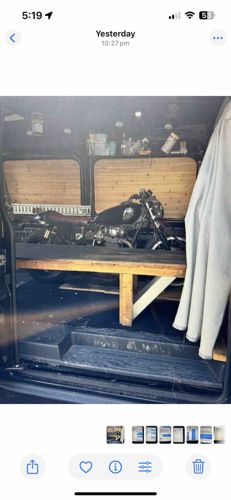
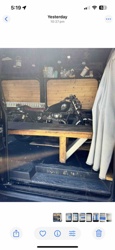
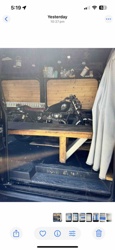
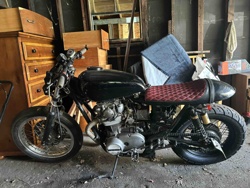
The item depicted is a motorcycle, specifically a custom or cafe racer style, stored within the rear cargo area of a van, likely for transport or mobile storage. The motorcycle features a dark-colored, possibly black, fuel tank, and a dark brown or black leather-clad seat with visible stitching, suggesting either age or a bespoke finish. The engine block appears to be a V-twin configuration, with chrome or polished metal accents on the exhaust pipes and possibly the engine covers, though detailed identification is difficult due to the angle and lighting. The handlebars are low-slung, typical of a more aggressive or sporty riding posture. The front wheel and suspension components are visible, including disc brakes. The overall condition of the motorcycle appears to be good; no significant dents or major damage are immediately evident on the tank or frame. There might be some dust or light surface grime, consistent with being stored. The design aesthetic points towards a classic or vintage-inspired custom build, rather than a modern production sportbike. Given its location inside a van, it is likely being transported or is part of a mobile setup. No specific manufacturer's marks or model numbers are discernible from the image. The craftsmanship appears solid, suggesting a well-maintained or well-built machine, possibly early to mid-20th century in style, but exact age is indeterminate without clearer markings.
AI Appraisal Report
Upon examining the provided image of this custom/cafe racer style motorcycle, my initial assessment suggests a well-maintained, aesthetically pleasing build. The dark fuel tank, leather-clad seat with visible stitching, and low-slung handlebars contribute to a classic, vintage-inspired look. The V-twin engine configuration with chrome accents indicates a robust powerplant, likely air-cooled, which is common in custom builds. The presence of disc brakes on the front wheel is a positive indicator for modern rideability and safety, despite the vintage aesthetic.
Condition-wise, the bike appears to be in good shape; I observe no significant dents or major damage to the bodywork. There might be some minor surface dust, consistent with storage, but no obvious signs of neglect. Authenticity, based solely on this image, is difficult to ascertain regarding its original manufacture or the extent of its custom work. It’s clearly a bespoke machine. Limitations in visual authentication are significant; I cannot verify the engine's internal condition, frame integrity, or the quality of custom modifications. Without manufacturer markings, specific model identification is impossible.
Market conditions for well-executed custom cafe racers are strong, with demand for unique, rideable art. While not inherently rare, a high-quality build like this can command a premium. Factors positively impacting value include the apparent craftsmanship, good cosmetic condition, and classic styling. However, the lack of provable provenance (such as a build sheet or original title) and unknown mechanical history significantly limit its top-tier value compared to a documented, professionally built custom.
For a full appraisal and authentication, an in-person examination is crucial. This would involve a mechanical inspection (engine compression, fluid checks, electrical system), a detailed examination of the frame for modifications or damage, and verification of component origins. Provenance documentation, including a clear title, registration, and any build records, would be essential to establish its history and authenticity. Without this, the 'custom' nature leaves much to speculation.