AI estimate as of October 25, 2025 · verify with a professional before acting
AI-Generated · Verify before acting
Everything on this page is generated by AI for informational purposes only. AI can make mistakes — the AI may misidentify items or misattribute them (artist, maker, brand, designer, origin, era). This is not an official valuation and should not be used for insurance, sale, tax, estate, legal, or lending purposes — or any decision requiring a certified appraisal. It is not an authoritative claim about any person, brand, or rights holder — do not share or rely on it as a factual statement about a third party. Always consult qualified professionals before making financial decisions.
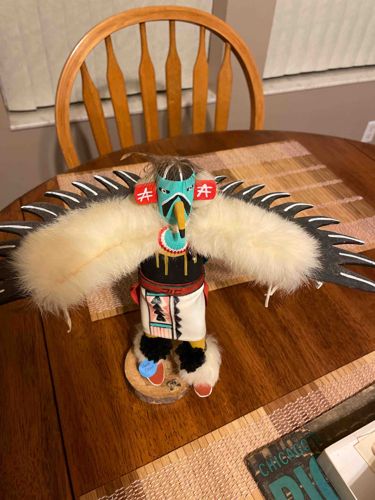
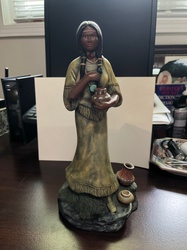
This appears to be a Native American Kachina doll, specifically an Eagle Dancer (Kwahu). The doll is crafted from carved wood, evident in the body and head, and adorned with various materials. The dominant feature is the expansive wingspan (suggesting approximately 12-16 inches) created by real or simulated white and black feathers, providing a dramatic silhouette. The body is wrapped in a white fabric garment, possibly cotton or a similar textile, with detailed embroidered or painted geometric patterns in red, black, and light blue. The 'kilt' or skirt section features vertical striped lines and a stepped design. The figure wears fur or fluff around the ankles, likely rabbit fur or similar material, in a combination of white and black. The feet are painted or carved in red and light blue moccasin-like shapes. The face is painted turquoise, with a prominent beak-like nose in yellow and black. Red markings resembling hash symbols or stylized hands are painted on the side of the head. Hair, possibly horsehair or synthetic fibers, protrudes from the top of the head. A cylindrical headdress or collar, painted black with yellow and red accents, completes the upper body. A necklace detail with circular elements in red, turquoise, and black is visible around the neck. The doll stands on a round, wooden base, possibly a cross-section of a branch or trunk, approximately 3-4 inches in diameter, indicating individual craftsmanship. The overall condition appears good, with no obvious signs of significant damage or repairs, although minor wear consistent with display might be present. The level of detail and combination of materials suggest a hand-crafted item, possibly from the mid to late 20th century. The intricate painting and material integration point to a respectable quality of craftsmanship.
AI Appraisal Report
Based on my visual examination of the provided image, this Native American Kachina doll, depicting an Eagle Dancer (Kwahu), appears to be a well-crafted piece. The use of carved wood for the body and head, combined with real or simulated feathers for the expansive wings, fabric garments with intricate patterns, fur accents, and painted details, indicates a traditional approach to Kachina doll making. The condition appears good, with no obvious signs of significant damage or repairs, although minor display wear would be expected. The overall quality of craftsmanship, including the detailed painting and material integration, is respectable.
Authenticity: From images alone, I assess this as an authentic Native American-made Kachina doll, likely from the mid to late 20th century. However, without in-person examination, it's impossible to definitively confirm the age of materials, the specific tribal origin (though Kwahu is generally Hopi), or rule out the possibility of a well-executed contemporary decorative piece rather than one made for traditional purposes. In-person examination would allow for tactile inspection of materials, confirmation of carving techniques, and assessment of aging. Provenance documentation, such as artist signatures, purchase records, or tribal certification, would be crucial for full authentication and to potentially identify the artisan, which significantly impacts value.
Market Conditions: The market for Native American Kachina dolls remains steady, with collector interest in authentic, well-preserved pieces. Eagle Dancers are popular subjects. Similar quality dolls from recognized artists or with strong provenance often command higher prices. Without artist attribution, the value relies heavily on aesthetic appeal, condition, and perceived authenticity. Demand for well-executed traditional pieces is consistent.
Rarity: This particular style of Eagle Dancer is not exceptionally rare, but the quality of execution and apparent good condition contribute positively. The individual craftsmanship, especially the unique wooden base, adds to its character.
Given these factors, and acknowledging the limitations inherent in appraising from images, I would place the retail appraisal value for this Kwahu Kachina doll in the range of $350-600. A physical inspection, along with any available provenance, could potentially refine or increase this valuation.