AI Appraisal Estimate

AI-generated estimates · not official valuations

From the user

What was submitted

Photo and notes provided by the user — not generated by AI

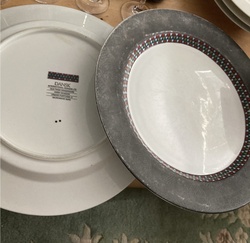
Submitted item photo
Submitted photo · June 6, 2026

User's notes

No additional notes provided.

AI analysis below

AI appraisal

AI analysis & estimate

AI-Generated · Verify before acting

Everything below is generated by AI for informational purposes only. AI can make mistakes — the AI may misidentify items or misattribute them (artist, maker, brand, designer, origin, era). This is not an official valuation and should not be used for insurance, sale, tax, estate, legal, or lending purposes — or any decision requiring a certified appraisal. It is not an authoritative claim about any person, brand, or rights holder — do not share or rely on it as a factual statement about a third party. Always consult qualified professionals before making financial decisions.

Read the full disclaimer

AI Identification

·Not independently authenticated·Verify before acting

Queen Anne Bone China Teacup by Ridgway Potteries Ltd.

Dinnerware / Collectible Tableware

AI Estimated Value

·Not an official valuation·Verify before acting

$5 - $15

As of June 6, 2026

AI Item Analysis

·AI can make mistakes·Verify before acting
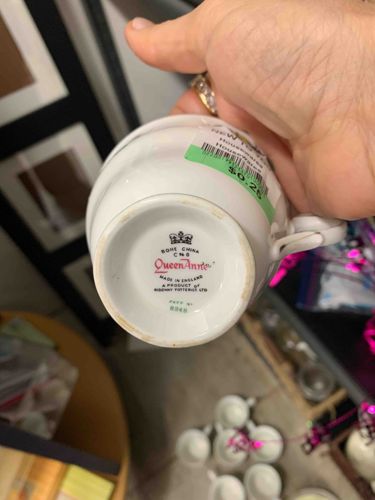
The item is identified as a teacup or coffee cup, specifically a piece of 'Queen Anne' bone china. It is made from fine bone china, indicating a higher quality and delicate feel. The primary color of the cup is white, suggesting it is part of a larger pattern that may include decorative elements not fully visible in the provided image (though the side of the cup does show some subtle coloring). The construction appears to be standard for a teacup, with a rounded body and a C-shaped handle. A key distinguishing feature is the manufacturer's mark on the base. It clearly states "BONE CHINA," followed by "C.N.B." and "Queen Anne®" in an elegant red script, surrounded by a black royal crown motif. Below this, it reads "MADE IN ENGLAND" and "A PRODUCT OF RIDGWAY POTTER'S LTD." There's also a faint stamped or handwritten number "8040" which could be a pattern number or internal manufacturing code. The base shows some minor dirt or residue, which is superficial and indicates light use or storage wear. There are no visible chips, cracks, or significant damage to the body or rim of the cup from the visible angles. The glaze appears intact and glossy. The general appearance suggests a mid-20th century to early 21st-century production, typical of English bone china manufacturers. The craftsmanship appears to be of good quality, typical of Ridgway Potteries who produced various lines of domestic ware. A green sticker with "$0.25" and "Housewares" indicates it was likely acquired from a thrift store or second-hand vendor at a very low price.
AI Appraisal Report

·AI can make mistakes·Verify before acting
Upon examining the provided images of this Queen Anne bone china teacup, I can confirm its identity. The backstamp, featuring 'BONE CHINA,' 'Queen Anne®,' 'MADE IN ENGLAND,' and 'A PRODUCT OF RIDGWAY POTTER'S LTD.,' is consistent with items produced by this manufacturer, likely in the mid-to-late 20th century. The piece appears to be in very good condition, with no visible chips, cracks, or crazing from the angles shown. The glaze is intact and the manufacturer's mark is clear. The number '8040' is likely a pattern identifier. While this is a genuine piece of English bone china, the market for individual, mass-produced teacups from this era is generally soft. These items were made in large quantities, and full sets are more desirable to collectors. Market comparables for single Queen Anne teacups by Ridgway Potteries commonly sell online in the $5 to $15 range, depending on the rarity and appeal of the specific pattern. The $0.25 sticker indicates its origin in the secondary thrift market, which is typical for such pieces. The value is primarily decorative or for replacement purposes within an existing set. There is little investment potential. My assessment is based solely on visual images. A physical examination would be necessary to check for hairline cracks, subtle repairs, or wear not visible in photos. However, for mass-produced ceramics of this type, photographic evidence is generally sufficient, as a high degree of forgery is not a concern.

Get your items appraised

Instant estimates of your treasures with AI-powered appraisals

Browse More Appraisals