AI Appraisal Estimate

AI-generated estimates · not official valuations

From the user

What was submitted

Photo and notes provided by the user — not generated by AI

Submitted item photo
Submitted photo · June 6, 2026

User's notes

Antique

AI analysis below

AI appraisal

AI analysis & estimate

AI-Generated · Verify before acting

Everything below is generated by AI for informational purposes only. AI can make mistakes — the AI may misidentify items or misattribute them (artist, maker, brand, designer, origin, era). This is not an official valuation and should not be used for insurance, sale, tax, estate, legal, or lending purposes — or any decision requiring a certified appraisal. It is not an authoritative claim about any person, brand, or rights holder — do not share or rely on it as a factual statement about a third party. Always consult qualified professionals before making financial decisions.

Note

This analysis also relies on unverified notes provided by the user, which may be incomplete or inaccurate and could affect the result.

Read the full disclaimer

AI Identification

·Not independently authenticated·Verify before acting

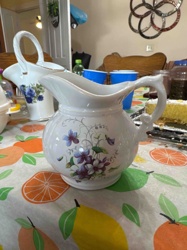
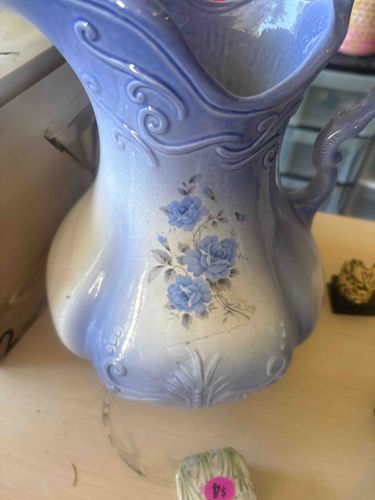
Antique Blue and White Ombre Ceramic Pitcher with Rose Decal

Ceramic Pitcher

AI Estimated Value

·Not an official valuation·Verify before acting

$15-30

As of June 6, 2026

AI Item Analysis

·AI can make mistakes·Verify before acting
This is an antique ceramic pitcher, likely made of earthenware or porcelain, featuring an ombre blue and white glaze. The top portion of the pitcher, including the rim and neck, is a vibrant periwinkle blue, which gradually fades into a creamy off-white towards the bulbous base. The body of the pitcher is distinctly fluted or paneled, giving it a scalloped profile, especially noticeable around the base where these sections terminate in decorative leaf-like motifs in relief. The upper neck of the pitcher is adorned with raised, scrolling molded details, enhancing its ornamental appeal. A prominent feature is the transfer-printed decal of blue roses and green foliage, centrally located on the body, adding a touch of floral elegance. The handle, partially visible, appears to be of the same periwinkle blue and is likely molded to match the decorative style of the piece. Visible condition issues include significant crazing across the glazed surface, indicative of age and stress, particularly noticeable in the lighter portions and around the floral decal. There is also what appears to be a hairline crack or significant discoloration extending downward from the floral motif, which would impact its integrity and value. There are no discernible maker's marks or signatures visible in the provided image, making it challenging to pinpoint the exact manufacturer or artist. Based on its style, decorative elements, and visible aging, this pitcher dates back to the late 19th or early 20th century, consistent with the Victorian or Edwardian era's aesthetic preferences for ornate ceramic wares. The craftsmanship appears to be of a reasonable quality for mass-produced decorative ceramics of that period, focusing on visual appeal through molded forms and applied decoration.
AI Appraisal Report

·AI can make mistakes·Verify before acting
Upon examination of the provided images, this ceramic pitcher presents as a decorative item from the late 19th or early 20th century, likely from the Victorian or Edwardian period. Its design, featuring an ombre blue-to-white glaze, fluted body, and transfer-printed rose decal, is characteristic of mass-produced wares from that era. The visible crazing across the surface is a common sign of age in such ceramics. However, the most significant factor impacting its value is the apparent hairline crack or significant discoloration extending from the floral motif. This structural flaw severely diminishes its desirability for collectors, who prioritize items in excellent condition. Market demand for unmarked, mass-produced decorative ceramics of this period is generally modest. While aesthetically pleasing, the lack of a known maker's mark prevents attribution to a more desirable manufacturer, such as Royal Worcester or a majolica producer. Comparable unmarked pitchers in similar condition, especially those with damage, typically sell in the lower price tiers at auction and in antique shops. The current market prioritizes pristine examples or those from well-documented factories. Without physical inspection, I cannot confirm the full extent of the crack, determine if it has been repaired, or verify its authenticity. A physical examination would be necessary to check for maker's marks under the base and to assess the damage with a blacklight. Full authentication would require professional analysis, but based on the visual evidence, it appears to be a genuine period piece, albeit in compromised condition.

Get your items appraised

Instant estimates of your treasures with AI-powered appraisals

Browse More Appraisals