AI estimate as of September 1, 2025 · verify with a professional before acting
AI-Generated · Verify before acting
Everything on this page is generated by AI for informational purposes only. AI can make mistakes — the AI may misidentify items or misattribute them (artist, maker, brand, designer, origin, era). This is not an official valuation and should not be used for insurance, sale, tax, estate, legal, or lending purposes — or any decision requiring a certified appraisal. It is not an authoritative claim about any person, brand, or rights holder — do not share or rely on it as a factual statement about a third party. Always consult qualified professionals before making financial decisions.
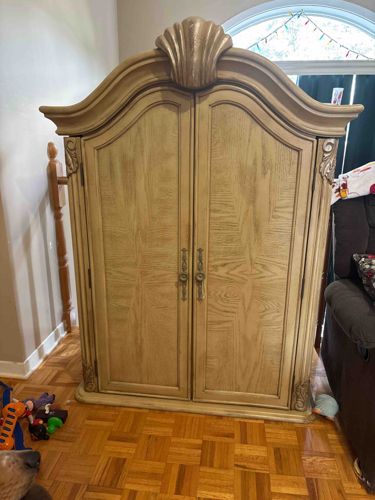
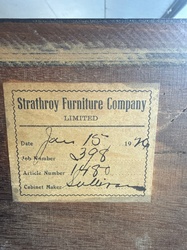
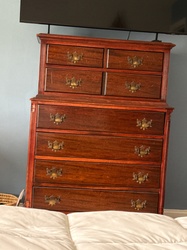
This item is a large wooden armoire or wardrobe, featuring a light, possibly distressed or pickled, wood finish that highlights the natural grain, likely of an oak or similar hardwood. It has two prominent, recessed panel doors that dominate the front facade. The overall design features a highly decorative, curved pediment at the top, centered with a distinctive carved shell motif, finished in a slightly darker, possibly gold-toned, accent. The top molding also curves gracefully downwards at the sides. Flanking the doors are decorative pilasters or columns near the bottom, adorned with carved acanthus leaves or similar scrolling ornamentation, which also appear to have a subtle highlight or gilding. The hardware consists of two sets of ornate metal drawer pulls, likely brass or bronze colored, with an antique or patinated finish, adding to the classical aesthetic. The base of the armoire is solid and features a simple, yet robust, plinth-like structure. The construction appears sturdy, suggesting a piece of quality craftsmanship. There are no obvious signs of significant damage such as large scratches, chips, or major wear, although the finish exhibits a deliberate aged appearance. The estimated age would likely be late 20th century, possibly influenced by French or Rococo revival styles due to the ornate carvings and curved lines. The size appears substantial, suitable for clothing storage or housing a television. Its quality indicators include the detailed carvings, robust joinery visible in the paneling, and the presence of decorative hardware. It lacks discernible maker's marks from the provided image.
AI Appraisal Report
Upon visual examination of the provided image, I assess this ornate wooden armoire with shell motif to be in excellent condition, with no apparent significant damage such as deep scratches, chips, or major wear. The 'distressed' or 'pickled' finish appears intentional and consistent with its likely late 20th-century construction, reflecting a revival of French or Rococo styles. The carving details, including the shell motif and acanthus leaves, suggest quality craftsmanship, and the hardware appears original and appropriate to the style.
In terms of market conditions, large armoires like this typically appeal to buyers seeking accent pieces or functional storage with a classical aesthetic. While vintage furniture has seen fluctuating demand, pieces with distinct stylistic elements and good condition, like this one, generally retain interest. Comparables in the current market, particularly those with elaborate carvings and substantial size, suggest a value range. Factors positively impacting value include its attractive design, apparent good condition, and substantial size. Conversely, its age (late 20th century) places it in a period where mass production became more prevalent, which slightly limits its rarity compared to true antiques. Furthermore, the lack of discernible maker's marks is a notable limitation.
It is crucial to state that this appraisal is based solely on the provided image. Limitations in authenticity verification from images alone are significant. To provide a full authentication, I would require an in-person examination to verify wood species, joinery techniques (e.g., dovetails, mortise and tenon) that are not visible, and the true nature of the finish. Physical inspection would also allow for a more precise assessment of the hardware's material and attachment. Provenance documentation, such as original sales receipts or family history, could further confirm its age and origin. Scientific testing, like wood dating, would typically be reserved for much older or higher-value pieces where authenticity is strongly contested.