Acoma Pueblo Polychrome Pottery Bowl
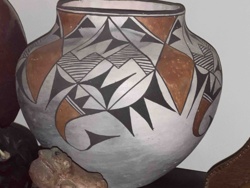
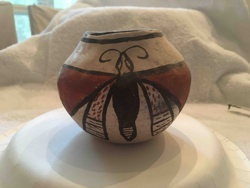
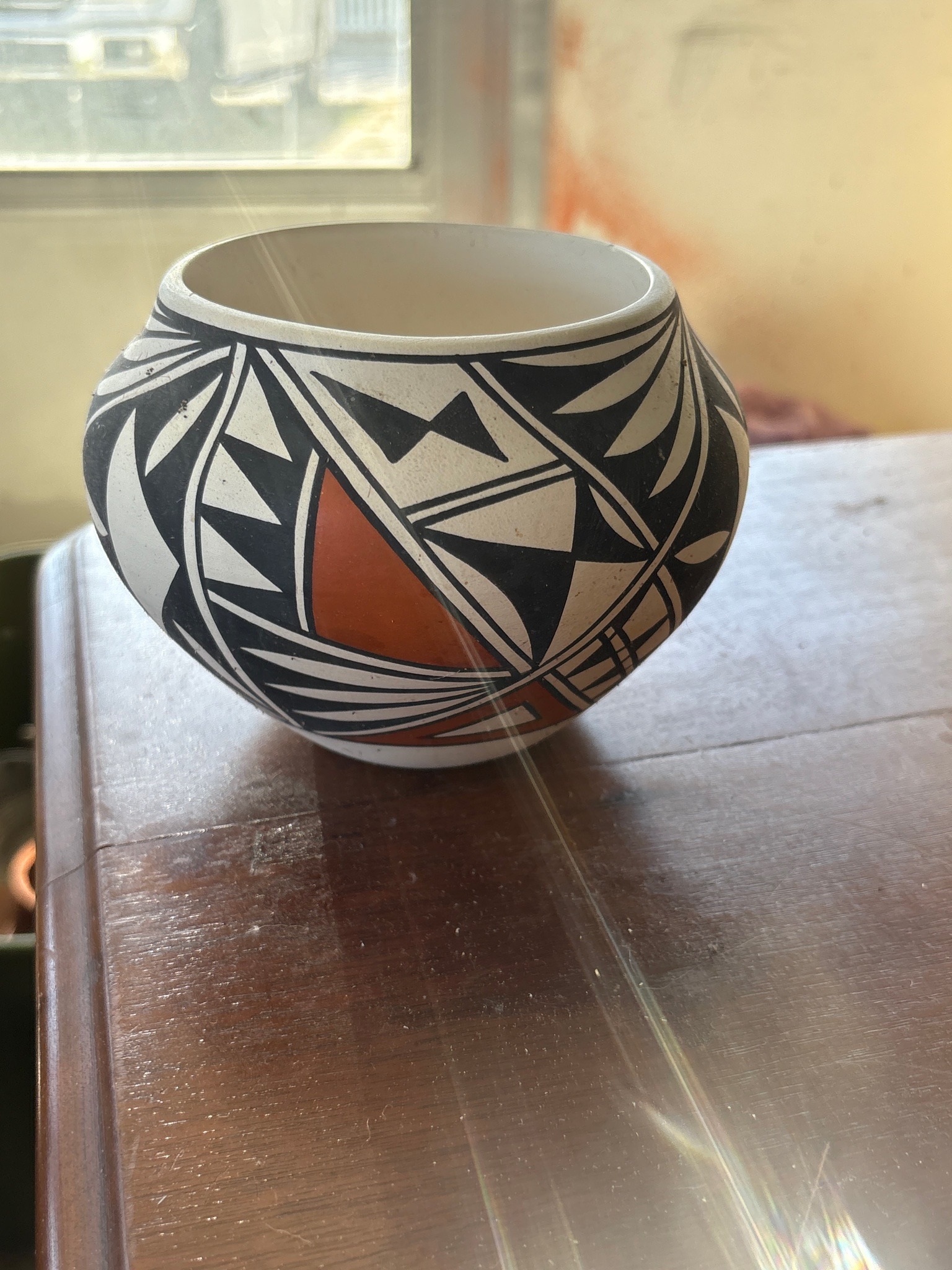
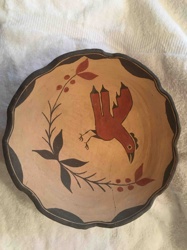
This is a hand-coiled ceramic pottery jar or bowl, characteristic of the Acoma Pueblo tradition in New Mexico. The piece features a thin-walled construction with a white-slipped ground, decorated with intricate geometric polychrome designs in black and terracotta orange mineral pigments. The motifs include stylized feathers, sharp geometric triangles, hatchwork patterns, and 'bird' elements common to Southwest Native American iconography. Physically, the vessel has a rounded, squat body that tapers to a small base and an open rim. The craftsmanship shows high-level skill in the symmetry of the hand-painted line work and the smoothness of the slip finish. Regarding condition, there are visible surface scuffs and minor areas of pigment loss or 'spalling' on the upper shoulder, likely due to age or handling. Small black specks are visible on the white slip, which may be fire clouds or natural inclusions in the clay/slip materials. While no signature is visible in this specific view, such pieces are typically produced by master potters of the Acoma community. Based on the style and patina, it appears to be a mid-to-late 20th-century piece, exhibiting the fine, thin walls and sharp contrast for which Acoma pottery is highly regarded among collectors.
AI-Generated Appraisal Disclaimer
Estimated Value
$1,200 - $1,800
Basic Information
Category
Native American Art & Ceramics
Appraised On
April 17, 2026
Estimated Value
$1,200 - $1,800
Item Description
This is a hand-coiled ceramic pottery jar or bowl, characteristic of the Acoma Pueblo tradition in New Mexico. The piece features a thin-walled construction with a white-slipped ground, decorated with intricate geometric polychrome designs in black and terracotta orange mineral pigments. The motifs include stylized feathers, sharp geometric triangles, hatchwork patterns, and 'bird' elements common to Southwest Native American iconography. Physically, the vessel has a rounded, squat body that tapers to a small base and an open rim. The craftsmanship shows high-level skill in the symmetry of the hand-painted line work and the smoothness of the slip finish. Regarding condition, there are visible surface scuffs and minor areas of pigment loss or 'spalling' on the upper shoulder, likely due to age or handling. Small black specks are visible on the white slip, which may be fire clouds or natural inclusions in the clay/slip materials. While no signature is visible in this specific view, such pieces are typically produced by master potters of the Acoma community. Based on the style and patina, it appears to be a mid-to-late 20th-century piece, exhibiting the fine, thin walls and sharp contrast for which Acoma pottery is highly regarded among collectors.
Related Tags
Get Your Items Appraised
Instant estimates of your treasures with AI-powered instant appraisals