AI estimate as of July 10, 2025 · verify with a professional before acting
AI-Generated · Verify before acting
Everything on this page is generated by AI for informational purposes only. AI can make mistakes — the AI may misidentify items or misattribute them (artist, maker, brand, designer, origin, era). This is not an official valuation and should not be used for insurance, sale, tax, estate, legal, or lending purposes — or any decision requiring a certified appraisal. It is not an authoritative claim about any person, brand, or rights holder — do not share or rely on it as a factual statement about a third party. Always consult qualified professionals before making financial decisions.
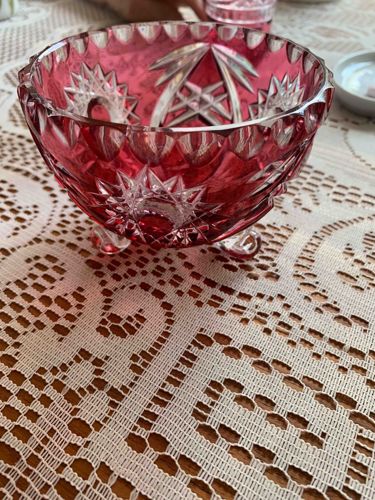
This item is a ruby red, footed cut glass bowl, likely made from lead crystal due to its brilliance and the sharp facets. It appears to be a smaller serving or decorative bowl, possibly for candies, nuts, or as a trinket dish. The primary color is a deep, translucent ruby red, achieved through a process known as 'cranberry glass' or by flashing a clear glass with a thin layer of red glass. The exterior and interior are extensively cut with various patterns. Notable features include large, prominent starburst or hobstar patterns repeated around the sides of the bowl, indicative of a brilliant-cut style. Between these starbursts, there are cross-hatch or diamond-cut patterns that add to the intricate design. The scalloped or saw-tooth rim adds a delicate finishing touch. The bowl stands on three small, clear glass feet, also faceted, which elevates it slightly from the surface. The clarity of the cut edges against the rich red color suggests good quality craftsmanship. There are no visible chips, cracks, or significant abrasions from the provided image, suggesting good overall condition. A slight patina or dust might be present in the deeper cuts, but no major wear is apparent. This style of deeply cut and colored glass, particularly with starburst patterns, was highly popular during the late 19th to early 20th century, consistent with the American Brilliant Period or Bohemian crystal. No maker's marks or signatures are discernible in the image, which is common for this type of glassware. The combination of its vibrant color, intricate cutting, and delicate feet makes it a very appealing piece of vintage or antique glassware.
AI Appraisal Report
I have examined the image of this ruby red, footed cut glass bowl. Based on its appearance, it is likely lead crystal due to its brilliance and sharp facets. The deep ruby red suggests 'cranberry glass' or flashed glass, a common technique for this vibrant color. The extensive brilliant cutting, including starburst and cross-hatch patterns, along with the scalloped rim and three clear faceted feet, is consistent with American Brilliant Period or Bohemian crystal styles from the late 19th to early 20th century.
The condition appears excellent; I observe no chips, cracks, or significant abrasions. This preservation enhances its market appeal significantly. This style of deeply cut, colored glass, while not exceedingly rare, maintains consistent demand among collectors of antique glassware and decorative arts. Comparables for well-preserved, brilliantly cut ruby red bowls of this size typically fall within the higher end of the decorative glassware market, especially those exhibiting such intricate craftsmanship.
Factors positively impacting value include its appealing color, intricate cutting, and apparent good condition. However, a major limitation of this appraisal is the lack of physical examination. Without direct inspection, I cannot verify the exact method of coloring (solid cranberry vs. flashed), the precise quality of the lead content, or detect subtle surface imperfections, flea bites, or repairs that would impact value. Furthermore, the absence of discernible maker's marks is common for this period but prevents definitive identification of a specific manufacturer. Full authentication would require in-person examination to assess glass quality, a blacklight test for repairs, and potentially spectrographic analysis if precise material composition were critical, along with provenance documentation if available.