Chert Biface Hand Axe Scraper
Archaeological Artifacts / Lithic Tools

Chert Biface Hand Axe Scraper

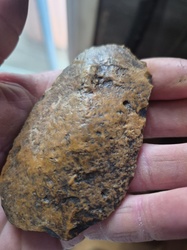
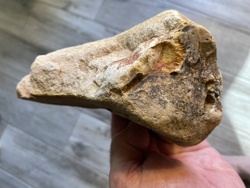
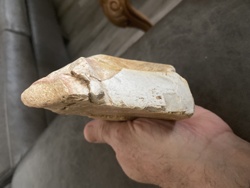
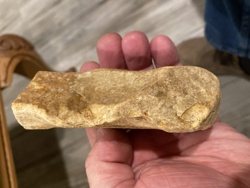
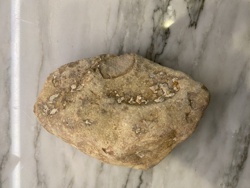
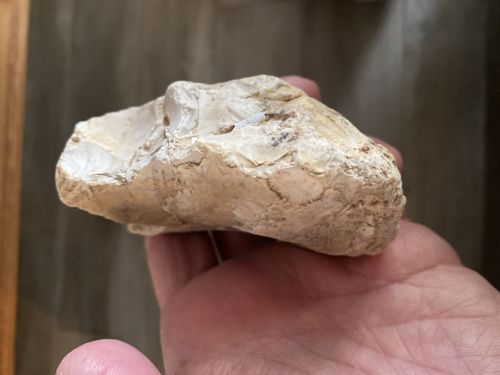
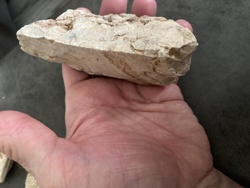
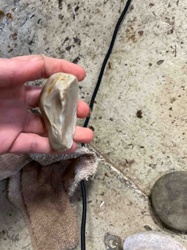
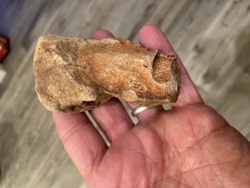
This artifact is a prehistoric Chert biface tool, identified as a hand axe or scraper, measuring approximately 4 inches in length by 2.5 inches in width. The item is crafted from a light-colored, creamy tan to off-white chert, a microcrystalline sedimentary rock valued for its conchoidal fracturing properties. The tool exhibits characteristics of the Levallois technique, a sophisticated method of lithic reduction typical of the Middle Paleolithic Mousterian era, which involves the preparation of a core to strike off flakes of a predetermined size and shape. Physically, the object shows clear evidence of intentional percussion flaking along its margins to create a functional cutting or scraping edge. The surface displays a distinct desert varnish or patina consistent with long-term environmental exposure, alongside secondary mineralization captured in small crevices. There are deep flake scars and a prominent dorsal ridge reflecting purposeful construction. While showing significant weathering and rounded edges indicative of extreme age, the piece remains structurally sound with no modern fractures. The craftsmanship displays the transition from crude core tools to more refined, specialized implements. Found in Guthrie, Oklahoma, this specimen serves as a notable example of early human (or hominid) lithic industry in North America.
Estimated Value

$150 - $350

Basic Information

Category

Archaeological Artifacts / Lithic Tools

Appraised On

April 3, 2026

Estimated Value

$150 - $350

Additional Details Provided By Owner

User Provided Information

Chert Bi face hand axe scraper tool from the Middle Paleolithic Mousterian era utilizing the Levallois technique in the creation of these artifacts found in Guthrie, OK. Measurements are 4" x 2.5"

Item Description

This artifact is a prehistoric Chert biface tool, identified as a hand axe or scraper, measuring approximately 4 inches in length by 2.5 inches in width. The item is crafted from a light-colored, creamy tan to off-white chert, a microcrystalline sedimentary rock valued for its conchoidal fracturing properties. The tool exhibits characteristics of the Levallois technique, a sophisticated method of lithic reduction typical of the Middle Paleolithic Mousterian era, which involves the preparation of a core to strike off flakes of a predetermined size and shape. Physically, the object shows clear evidence of intentional percussion flaking along its margins to create a functional cutting or scraping edge. The surface displays a distinct desert varnish or patina consistent with long-term environmental exposure, alongside secondary mineralization captured in small crevices. There are deep flake scars and a prominent dorsal ridge reflecting purposeful construction. While showing significant weathering and rounded edges indicative of extreme age, the piece remains structurally sound with no modern fractures. The craftsmanship displays the transition from crude core tools to more refined, specialized implements. Found in Guthrie, Oklahoma, this specimen serves as a notable example of early human (or hominid) lithic industry in North America.
Get Your Items Appraised

Instant estimates of your treasures with AI-powered instant appraisals

Browse More Appraisals