AI identification & appraisal estimate

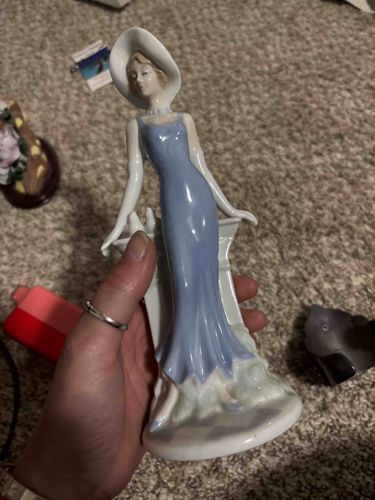
Porcelain Figurine of a Woman in a Blue Gown and Hat

Submitted photo of Porcelain Figurine of a Woman in a Blue Gown and Hat
Photo submitted by the user — not generated by AI

User's notes

Taiwan

These notes were written by the person who submitted this item. Appraiser.AI has not verified them, and the AI's identification and estimate may rely on them.

AI Estimated Value

Not an official valuation

$15-30

AI estimate as of July 31, 2025 · verify with a professional before acting

AI-Generated · Verify before acting

Everything on this page is generated by AI for informational purposes only. AI can make mistakes — the AI may misidentify items or misattribute them (artist, maker, brand, designer, origin, era). This is not an official valuation and should not be used for insurance, sale, tax, estate, legal, or lending purposes — or any decision requiring a certified appraisal. It is not an authoritative claim about any person, brand, or rights holder — do not share or rely on it as a factual statement about a third party. Always consult qualified professionals before making financial decisions.

This analysis also relies on unverified notes provided by the user, which may be incomplete or inaccurate and could affect the result.

Read the full disclaimer

AI Item Analysis

The item is a porcelain figurine depicting a woman in a formal pose. She is wearing a light blue, floor-length gown with a simple, elegant cut, and long white gloves that extend past her elbows. A wide-brimmed white hat adorns her head, casting a slight shadow over her delicate facial features. She also appears to be wearing a discrete pearl-like choker necklace. Her arms are bent at the elbows, with her hands resting on or near an unseen support structure, possibly a pedestal or balustrade, which is rendered in white and light gray tones, mimicking marble or stone. The base of the figurine is also white with subtle light gray accents, suggesting a cloud-like or abstract texture, and provides stable support for the figure. The figurine exhibits a smooth, glossy finish typical of glazed porcelain. The craftsmanship suggests a commercially produced decorative piece, likely from the mid-to-late 20th century, given its style. The colors are muted and classic, indicating a timeless aesthetic. No obvious chips, cracks, or repairs are visible from the provided image, and the surface appears clean, suggesting good overall condition. There are no visible manufacturer's marks or signatures apparent in the image, but such marks are commonly found on the base of these types of items. The overall impression is one of grace and sophistication, characteristic of porcelain figurines designed for display in a home setting.
AI Appraisal Report

Based on my examination of the provided images, this porcelain figurine of a woman in a blue gown presents as a commercially produced decorative piece, likely dating from the mid-to-late 20th century. The style is reminiscent of popular decorative arts from that period, often mass-produced for the home market. The key detail provided by the owner, that the origin is likely Taiwan, significantly influences my valuation. Porcelain from Taiwan during this era was often created as accessible decor, rather than fine art, and typically does not command high prices in the secondary market. The figurine appears to be in good condition, with no visible chips, cracks, or crazing from the photographs. The glossy glaze is intact, and the colors are stable. However, a significant factor limiting its value is the absence of a discernible manufacturer's mark from a sought-after maker like Lladró, Royal Doulton, or Meissen. The market for unmarked, mass-produced decorative figurines is generally soft, with a large supply and modest demand primarily from decorators or casual collectors. My valuation is based on auction results and online marketplace sales for similar unmarked, 20th-century Taiwanese porcelain figurines. These items are common and are not considered rare. For full authentication, an in-person examination would be necessary to inspect the underside of the base for any faint impressed or printed marks, and to assess the porcelain body and glaze quality up close. Without a clear maker's mark from a respected factory, its value remains in the decorative category.

Keep exploring

More decorative arts appraisals

Get your items appraised

Instant AI-powered appraisal estimates from a photo

Browse More Appraisals