AI estimate as of December 13, 2025 · verify with a professional before acting
AI-Generated · Verify before acting
Everything on this page is generated by AI for informational purposes only. AI can make mistakes — the AI may misidentify items or misattribute them (artist, maker, brand, designer, origin, era). This is not an official valuation and should not be used for insurance, sale, tax, estate, legal, or lending purposes — or any decision requiring a certified appraisal. It is not an authoritative claim about any person, brand, or rights holder — do not share or rely on it as a factual statement about a third party. Always consult qualified professionals before making financial decisions.
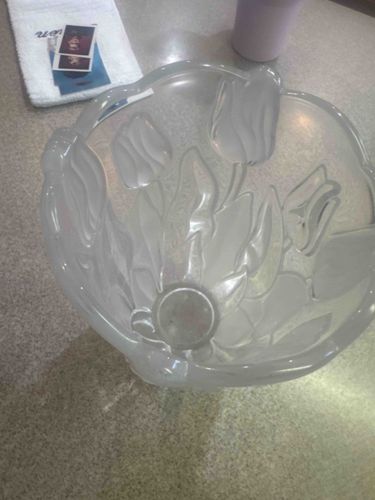
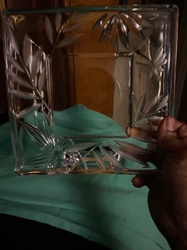
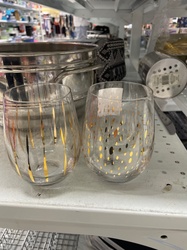
This is a decorative glass bowl, primarily clear but featuring distinctive frosted patterns of tulips. The bowl appears to be approximately medium in size, suitable for serving or as a centerpiece. Its construction is molded glass, characterized by a rounded, somewhat irregular rim that follows the outline of the petal motifs. The most prominent feature is the array of frosted tulip designs that are integrated into both the exterior and interior surfaces of the bowl. These tulips vary slightly in size and orientation, creating a dynamic and visually appealing floral arrangement. The exterior surfaces of the tulips appear to be smooth and polished, while the frosted areas give them a soft, translucent quality, contrasting with the clear glass. There are no obvious chips, cracks, or significant wear visible from the provided image, suggesting good overall condition. The base of the bowl features a distinct circular, slightly raised area, which might be a manufacturing mark or a design element for stability. The style suggests a mid-to-late 20th-century aesthetic, likely manufactured using a mold-pressed glass technique. The craftsmanship appears to be of good quality, with clear delineation between the frosted and clear sections. There are no discernible maker's marks or signatures visible in the provided images. The bowl's wavy rim adds to its decorative appeal, making it suitable for serving candies, nuts, or as a standalone ornamental piece.
AI Appraisal Report
Based on my visual examination of the provided image, this Frosted Tulip Glass Bowl appears to be in very good condition. There are no visible chips, cracks, or significant wear, which is a positive factor for its value. The craftsmanship, characterized by clear delineation between frosted and clear sections and a decorative wavy rim, suggests a well-executed molded glass piece. I assess its authenticity as a mass-produced decorative glassware item, likely from the mid-to-late 20th century, consistent with the described aesthetic and manufacturing technique. Without a physical inspection, however, I cannot definitively confirm the absence of subtle flaws like internal stress fractures, minor nicks not visible in the image, or the exact quality of the glass composition.
In terms of market conditions, decorative glass bowls of this type are generally readily available. While the tulip motif is pleasant, it's not exceptionally rare or associated with a highly sought-after designer or manufacturer. Comparables for similar vintage molded glass bowls, even in excellent condition, typically fall within the $20-$60 range, depending on size, intricacy, and brand recognition which is absent here. Demand for such items is steady among collectors of vintage decorative glassware, but it doesn't command premium prices. The lack of discernible maker's marks or signatures significantly impacts its value, as it prevents attribution to a specific, potentially more desirable, factory or artist. Rarity is low; these types of bowls were produced in large quantities.
For full authentication, an in-person examination would allow for a precise assessment of glass quality, weight, and the detection of any minute imperfections. While provenance documentation would be ideal, it is highly unlikely for such an item. Scientific testing, such as spectroscopy, would be overkill for this type of glassware and would not significantly alter the appraisal given its likely origin and construction. My valuation reflects its decorative appeal, good condition, and the general market for unsigned vintage molded glass.