Paleo Indian Chert Multi-Tool / Portable Rock Art Effigy
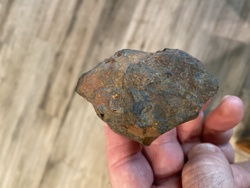
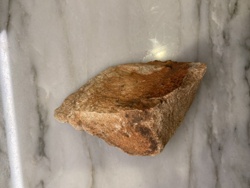
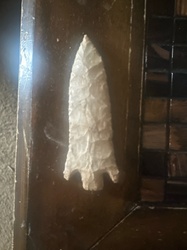
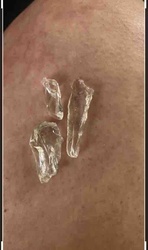
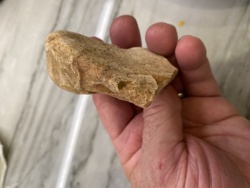
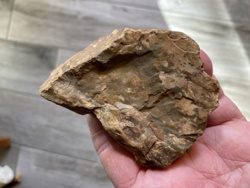
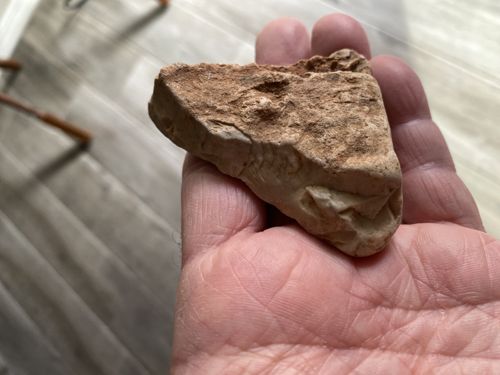
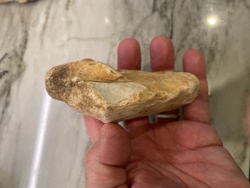
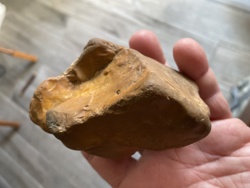
This specimen is a triangular lithic object measuring approximately 2.5 inches by 2.5 inches, identified as a chert multi-tool and portable rock art effigy from Guthrie, Oklahoma. The material displays the characteristic microcrystalline structure of chert, featuring a matte, tan to light brown coloration with significant surface patination and iron-oxide staining typical of long-term burial in Oklahoma soil. The object exhibits intentional percussion flaking and pressure flaking along various edges, suggesting secondary use as a scraper or cutting implement. Topographically, the stone incorporates natural dips and man-made indentations that, when viewed from specific angles, create an anthropomorphic or zoomorphic 'effigy' profile, a hallmark of portable rock art. The surface shows a high degree of weathering, with rounded high points and a distinct 'desert varnish' or mineralized crust that indicates significant age, reaching back to the Paleo-Indian or Archaic periods. There are no modern tool marks or fresh fractures visible; instead, all edges show uniform softening and microscopic step-fracturing consistent with prehistoric utility and natural geological aging. The craftsmanship reflects a utilitarian mastery of local lithic resources, where the maker utilized the stone's natural geometry to serve both functional scraping needs and symbolic representation.
AI-Generated Appraisal Disclaimer
Estimated Value
$150 - $350
Basic Information
Category
Native American Artifacts / Lithic Tools
Appraised On
February 25, 2026
Estimated Value
$150 - $350
Additional Details Provided By Owner
User Provided Information
A Paleo Indian chert multi tool portable rock art effigy found in Guthrie, OK measuring 2.5"x 2.5"
Item Description
This specimen is a triangular lithic object measuring approximately 2.5 inches by 2.5 inches, identified as a chert multi-tool and portable rock art effigy from Guthrie, Oklahoma. The material displays the characteristic microcrystalline structure of chert, featuring a matte, tan to light brown coloration with significant surface patination and iron-oxide staining typical of long-term burial in Oklahoma soil. The object exhibits intentional percussion flaking and pressure flaking along various edges, suggesting secondary use as a scraper or cutting implement. Topographically, the stone incorporates natural dips and man-made indentations that, when viewed from specific angles, create an anthropomorphic or zoomorphic 'effigy' profile, a hallmark of portable rock art. The surface shows a high degree of weathering, with rounded high points and a distinct 'desert varnish' or mineralized crust that indicates significant age, reaching back to the Paleo-Indian or Archaic periods. There are no modern tool marks or fresh fractures visible; instead, all edges show uniform softening and microscopic step-fracturing consistent with prehistoric utility and natural geological aging. The craftsmanship reflects a utilitarian mastery of local lithic resources, where the maker utilized the stone's natural geometry to serve both functional scraping needs and symbolic representation.
Related Tags
Explore similar items and categories:
Get Your Items Appraised
Instant estimates of your treasures with AI-powered instant appraisals