AI estimate as of October 18, 2025 · verify with a professional before acting
AI-Generated · Verify before acting
Everything on this page is generated by AI for informational purposes only. AI can make mistakes — the AI may misidentify items or misattribute them (artist, maker, brand, designer, origin, era). This is not an official valuation and should not be used for insurance, sale, tax, estate, legal, or lending purposes — or any decision requiring a certified appraisal. It is not an authoritative claim about any person, brand, or rights holder — do not share or rely on it as a factual statement about a third party. Always consult qualified professionals before making financial decisions.
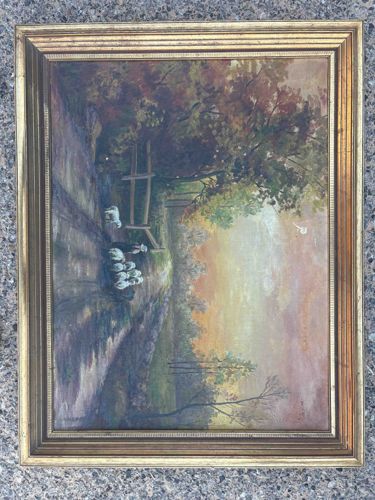
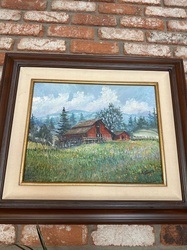
This item is an oil painting depicting a pastoral landscape scene. The artwork is housed within a gold-colored, possibly gilded or gessoed, wooden frame featuring a stepped profile and some decorative molding. The painting itself illustrates a winding path or dirt road through a wooded area. To the left, a shepherd figure, possibly a child due to its small stature, is herding a small flock of sheep or lambs. A rustic wooden fence is visible in the middle ground, separating the foreground from what appears to be a more open, sunlit expanse. The lighting suggests either dawn or dusk, with warm yellows, oranges, and soft purples dominating the sky on the right side of the canvas, creating a sense of depth and atmosphere. The foliage ranges from dark greens and browns in the foreground to lighter, more ethereal greens and yellows in the background, indicative of a mature wooded environment. There are no clear visible artist's signatures or maker's marks from the image, but the style suggests a traditional, possibly academic or genre painting approach. The colors are somewhat muted, which could indicate age, accumulated grime, or the artist's palette choice. Some slight discoloration or potential foxing might be present on the canvas based on the uneven tonal quality, particularly in the lighter areas. The frame shows some minor wear consistent with age, such as small chips or abrasions to the gold finish, but generally appears to be in fair condition. The construction of the frame appears solid, with mitered corners. The overall aesthetic points to an estimated age from the late 19th to mid-20th century, typically fitting within a traditional art period focusing on genre scenes and landscapes. The craftsmanship appears to be of reasonable quality for a decorative piece, although without further inspection of the canvas condition, stretcher, or reverse, a definitive assessment of master-level quality is difficult.
AI Appraisal Report
Based on my visual examination of the 'Pastoral Landscape with Shepherd and Sheep' oil painting, I assess its condition as fair. The paint surface exhibits what appears to be some discoloration or possible foxing, suggesting age-related patina or potential minor degradation. The colors are muted, which could be an artistic choice or indicative of accumulated grime over time. The gold-colored frame, while exhibiting minor wear consistent with age, such as small chips, appears structurally sound. This item appears to be an authentic late 19th to mid-20th century genre landscape painting, consistent with the stylistic elements described.
Market conditions for unsigned decorative pastoral landscapes of this caliber are generally modest. While charming, the lack of a discernible artist's signature significantly impacts its value. Comparables for unsigned, decorative oil paintings of this period and theme typically fall within the sub-$1,000 range. Demand for such pieces is steady but not particularly high, as the emphasis in the market often leans towards documented artists or pieces with strong provenance. Rarity is not a significant factor here; similar decorative landscapes were produced in quantity during the period.
Factors significantly impacting value include the absence of a signature, the fair condition, and its decorative rather than fine art status. To fully authenticate and assess precise condition, an in-person examination is crucial. This would allow for closer inspection of the painting's surface for cracking, overpainting, or damage, and investigation of the stretcher and canvas reverse for any hidden markings or labels. Additionally, a UV light examination could reveal restorations or repairs that are not visible in the provided image. Without these steps and provenance documentation, my assessment of authenticity and condition remains limited to visual interpretation.