AI estimate as of August 20, 2025 · verify with a professional before acting
AI-Generated · Verify before acting
Everything on this page is generated by AI for informational purposes only. AI can make mistakes — the AI may misidentify items or misattribute them (artist, maker, brand, designer, origin, era). This is not an official valuation and should not be used for insurance, sale, tax, estate, legal, or lending purposes — or any decision requiring a certified appraisal. It is not an authoritative claim about any person, brand, or rights holder — do not share or rely on it as a factual statement about a third party. Always consult qualified professionals before making financial decisions.
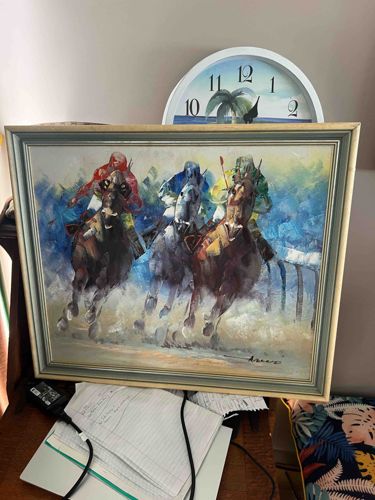
This item is a framed painting depicting a dynamic horse racing or polo scene, characterized by its vibrant, abstract expressionist style. The artwork features three horses and riders, rendered with loose, impasto brushstrokes, giving a sense of motion and energy. The colors are bold and varied, with prominent blues, reds, browns, and hints of yellow and green, suggesting a spirited competition. The background is abstracted, with splashes of color that blend into the figures, indicating a rapid movement or possibly a dusty track. The painting appears to be an oil on canvas or similar board, given the visible texture and depth of the paint. The visible signature on the lower right suggests the artist's name is 'Daver' or similar, although clarity is limited. The painting is housed within a simple, light-colored wooden or composite frame with a slight beveled edge, complementing the artwork without overpowering it. The frame shows no obvious signs of significant damage or wear, and the painting itself appears to be in good condition with no visible tears, punctures, or significant paint loss. The style suggests it could be from the mid to late 20th century, particularly leaning towards the latter half due to the vibrant abstraction often seen in that period. The craftsmanship quality appears to be professional, with a well-executed composition and strong use of color and texture to convey its subject matter.
AI Appraisal Report
I have examined the provided image of the 'Dynamic Horse and Rider Abstract Painting.' Based on my visual assessment, the artwork appears to be in good condition, with no visible tears, punctures, or significant paint loss. The frame is simple and complementary, also appearing well-maintained. The vibrant, impasto brushstrokes and abstract expressionist style strongly suggest an origin in the mid to late 20th century, consistent with the described artistic trends of that period.
From the image alone, definitive authenticity verification is limited. While a signature, possibly 'Daver,' is visible, its clarity is insufficient for conclusive artist identification without in-person examination. For full authentication, I would require a physical inspection to confirm the medium (oil on canvas/board), assess the paint's age and texture firsthand, and microscopically examine the signature. Provenance documentation, such as exhibition history or previous ownership records, would be crucial. Scientific testing, like pigment analysis, could further confirm the period.
The market for dynamic, well-executed abstract works, particularly those depicting equestrian themes, remains consistent. Comparable works by lesser-known but skilled artists in a similar style typically fetch values based on size, condition, and aesthetic appeal rather than artist notoriety. Demand for such pieces is often driven by decorative appeal in residential or commercial settings. The lack of a firmly identifiable, established artist limits its potential for significant auction premiums, making its value primarily aesthetic and secondary market driven. The quality of composition and use of color are strong factors contributing to its appeal.
Given the professional craftsmanship, good condition, and strong visual impact, this piece holds value as a decorative abstract work. Its value is impacted by the unknown artist, which places it outside the collectible art market tied to famous names, but within a robust market for accessible, aesthetically pleasing art.