AI estimate as of November 13, 2025 · verify with a professional before acting
AI-Generated · Verify before acting
Everything on this page is generated by AI for informational purposes only. AI can make mistakes — the AI may misidentify items or misattribute them (artist, maker, brand, designer, origin, era). This is not an official valuation and should not be used for insurance, sale, tax, estate, legal, or lending purposes — or any decision requiring a certified appraisal. It is not an authoritative claim about any person, brand, or rights holder — do not share or rely on it as a factual statement about a third party. Always consult qualified professionals before making financial decisions.
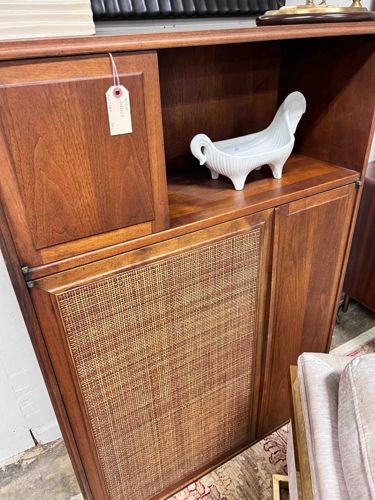
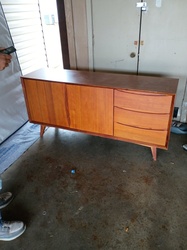
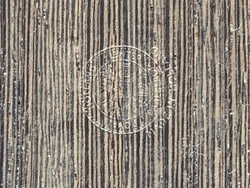
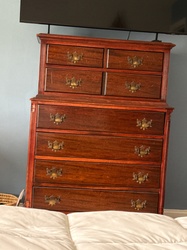
This is a Mid-Century Modern record cabinet or bar console, constructed primarily from rich, medium-toned wood, likely walnut or teak, with a smooth, polished finish. The design is characterized by clean lines and functional aesthetics typical of the period. The upper section features a recessed open shelf on the right, housing a white ceramic decorative object, possibly a planter or serving dish, shaped like a stylized animal. To the left, there's a closed compartment with a solid wooden door, hinting at storage. A small tag, possibly a price or identification tag, hangs from this door. The lower section is dominated by a large panel of woven cane, which suggests it might have been designed to allow sound to pass through from a speaker or to provide ventilation for electronic components, such as a turntable or amplifier, or simply for visual texture. The cane appears to be in good condition with no visible tears or significant discoloration, exhibiting a natural light brown and yellow hue. The cabinet's overall structure appears sturdy, with no overt signs of damage like severe scratches, dents, or structural instability. The corners and edges are relatively sharp and well-maintained. The legs are not fully visible, but the impression is one of a freestanding unit. The piece reflects a practical yet stylish approach to furniture design, common from the 1950s to the 1970s, making it suitable for storing vinyl records, serving as a bar, or media console. The craftsmanship appears to be of good quality, focusing on durability and seamless integration of materials. The wood grain is visible, adding to its natural appeal.
AI Appraisal Report
This Mid-Century Modern record cabinet or bar console presents as a well-preserved piece from the 1950s-1970s. The wood, likely walnut or teak, exhibits a rich, even tone and a smooth, polished finish, indicative of good maintenance. The cane panel, a hallmark of the era, appears intact and in good condition, which is a significant factor as cane damage can be costly to repair. Structurally, the cabinet seems sound with clean lines and sharp edges, suggesting a lack of major impacts or wear. The presence of the ceramic object is merely decorative and doesn't influence the cabinet's intrinsic value, but does add to the vintage aesthetic presented in the image.
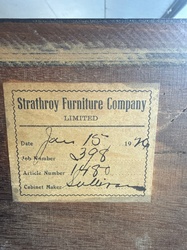
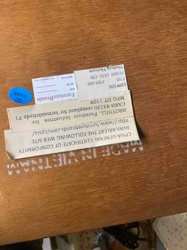
Authenticity, based solely on visual inspection, aligns with typical Mid-Century Modern design principles. However, without maker's marks, construction details only visible upon in-person inspection (e.g., joinery), or provenance documentation, full authentication of a specific designer or manufacturer is impossible. The market for well-maintained, functional Mid-Century Modern furniture remains robust, driven by continued demand for vintage aesthetics and quality craftsmanship. Pieces like this, offering versatility as a record cabinet, bar, or media console, attract a broad range of buyers. Comparables would include similar period sideboards or credenzas with cane detailing and quality wood construction, which can range from $500 to $1,500 depending on designer, condition, and market. This piece's sturdy appearance and good condition place it in the mid-to-higher range for unsigned pieces.
Factors impacting value positively are its apparent solid condition and functional versatility. Limitations include the inability to inspect internal construction, drawer functionality (if any), or the finish for subtle repairs. An in-person examination would be crucial to verify wood species definitively, check for warp, loose joints, hidden damage, and confirm any maker's marks. Scientific testing would not typically be necessary for a piece of this nature unless provenance was highly disputed and materials needed verification. For full authenticity and to potentially attribute it to a specific designer, a direct physical examination is paramount.