AI Appraisal Estimate

AI-generated estimates · not official valuations

From the user

What was submitted

Photo and notes provided by the user — not generated by AI

Submitted item photo
Submitted photo · June 26, 2026

User's notes

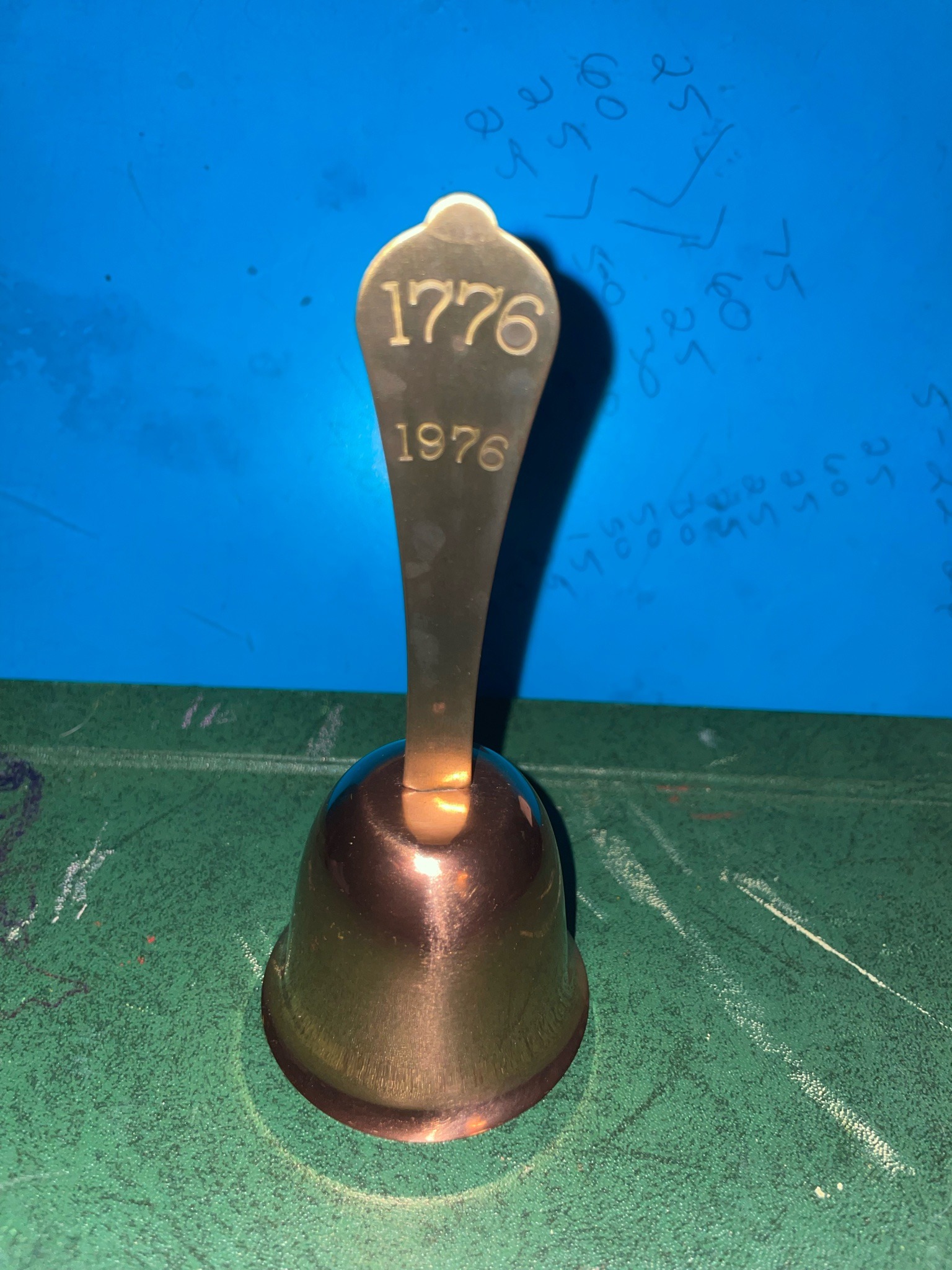
Brass bell 1776

AI analysis below

AI appraisal

AI analysis & estimate

AI-Generated · Verify before acting

Everything below is generated by AI for informational purposes only. AI can make mistakes — the AI may misidentify items or misattribute them (artist, maker, brand, designer, origin, era). This is not an official valuation and should not be used for insurance, sale, tax, estate, legal, or lending purposes — or any decision requiring a certified appraisal. It is not an authoritative claim about any person, brand, or rights holder — do not share or rely on it as a factual statement about a third party. Always consult qualified professionals before making financial decisions.

Note

This analysis also relies on unverified notes provided by the user, which may be incomplete or inaccurate and could affect the result.

Read the full disclaimer

AI Identification

·Not independently authenticated·Verify before acting

Bicentennial-era style brass-tone hand bell

Decorative Collectibles

AI Estimated Value

·Not an official valuation·Verify before acting

$15 – $35

As of June 26, 2026

AI Item Analysis

·AI can make mistakes·Verify before acting
This object is a small hand bell featuring a tall, flattened handle and a rounded, dome-shaped bell body. The item is constructed from a metallic material with a polished yellow-to-copper finish, appearing consistent with brass or a brass-plated alloy. The handle is notably flat and widens at the top into a lobed, spade-like shape. Engraved or stamped into this flat surface are the numerals '1776' and '1976', which are stylistically consistent with commemorative items produced for the United States Bicentennial. While the user refers to this as a 'Brass bell 1776', the inclusion of the 1976 date suggests the item was likely manufactured around the mid-1970s rather than the 18th century; however, this is a hypothesis based on visual markings and cannot be verified without physical metallurgical testing. The surface shows some minor signs of wear, including small dark spots of oxidation or patina, particularly on the handle and the shoulder of the bell. Fingerprints and slight surface scuffing are visible under the flash photography, but the metal retains a high luster. No additional maker's marks, brand names, or foundry stamps are legible in the provided image. The clapper is not visible from this angle. The overall craftsmanship is consistent with mass-produced commemorative giftware from the late 20th century.

AI Appraisal Report

·AI can make mistakes·Verify before acting
Based on my visual examination of the provided photograph, I have assessed this commemorative hand bell. The item features '1776' and '1976' markings, which I hypothesize indicate production during the United States Bicentennial era. Per the user's submission, this is an '1776 Brass bell'; however, the physical characteristics—such as the flat handle profile and surface luster—suggest a mass-produced decorative object from the mid-1970s rather than an 18th-century artifact. I cannot verify the specific metallic composition from a photo, though it appears consistent with a brass-plated alloy. The value estimate of $15 – $35 is based on the assumption that this is a standard Bicentennial collectible in good vintage condition. I can see minor oxidation and surface scuffing which are typical for its age but do not significantly detract from its decorative appeal. This estimate reflects general market behavior for 20th-century patriotic memorabilia, which remains stable but modest due to high production volumes. A physical inspection would be required to search for obscured maker’s marks and to confirm if the metal is solid brass or a plated base metal; solid brass examples generally command the higher end of the range. If this item were found to be a more modern reproduction of a 1976 design, or if plating loss is more significant than it appears, the value would likely drop below $10. Conversely, if it possessed a verified foundry mark from a notable American maker, the value could see a slight increase. To reach a more certain conclusion, one would need to document provenance and perform metallurgical testing.

Get your items appraised

Instant estimates of your treasures with AI-powered appraisals

Browse More Appraisals