Antique EAPG Pedestal Compote Bowl
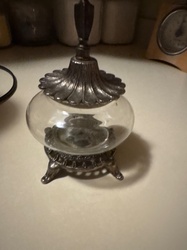
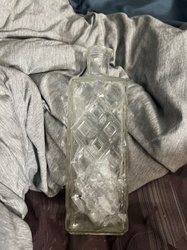
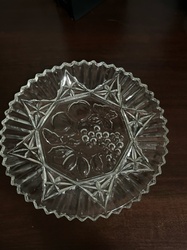
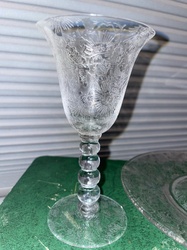
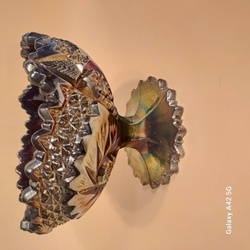
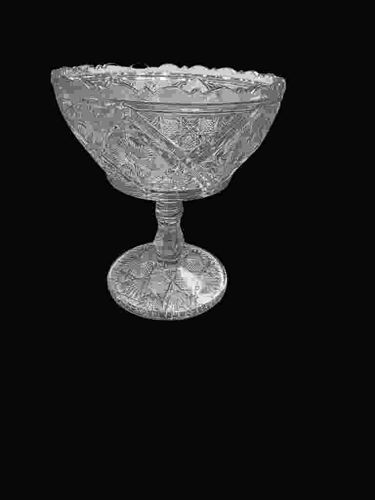
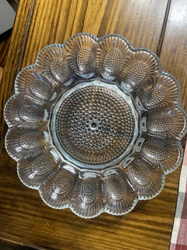
This item is an antique Early American Pattern Glass (EAPG) pedestal compote, also referred to as a stemmed sweetmeat dish or jelly compote. The piece is constructed from thick, clear pressed glass featuring a complex geometric pressed pattern. The design showcases traditional Victorian motifs including hobstars, fans, and diamond-cut facets that provide high reflectivity and brilliance. The bowl has a scalloped or serrated sawtooth rim which transitions into a deep conical basin. It is supported by a faceted, multi-knop stem that flares into a wide circular foot, which is also patterned on the underside to match the bowl. Physically, the item appears robust with thick walls, typical of glass production from the late 19th to early 20th century (circa 1885-1910). The clarity of the glass suggests a quality manufacturing process, though common age-related signs such as minor straw marks (mold lines), cooling striations, and faint surface scratches from use are visible. There are no major chips or structural cracks apparent in the image, preserving the decorative integrity of the complex serrated edge. This style of glass was popularized by companies such as United States Glass Co. or Fostoria during the American Brilliant period.
AI-Generated Appraisal Disclaimer
Estimated Value
$45.00 - $75.00
Basic Information
Category
Antique Glassware
Appraised On
March 5, 2026
Estimated Value
$45.00 - $75.00
Item Description
This item is an antique Early American Pattern Glass (EAPG) pedestal compote, also referred to as a stemmed sweetmeat dish or jelly compote. The piece is constructed from thick, clear pressed glass featuring a complex geometric pressed pattern. The design showcases traditional Victorian motifs including hobstars, fans, and diamond-cut facets that provide high reflectivity and brilliance. The bowl has a scalloped or serrated sawtooth rim which transitions into a deep conical basin. It is supported by a faceted, multi-knop stem that flares into a wide circular foot, which is also patterned on the underside to match the bowl. Physically, the item appears robust with thick walls, typical of glass production from the late 19th to early 20th century (circa 1885-1910). The clarity of the glass suggests a quality manufacturing process, though common age-related signs such as minor straw marks (mold lines), cooling striations, and faint surface scratches from use are visible. There are no major chips or structural cracks apparent in the image, preserving the decorative integrity of the complex serrated edge. This style of glass was popularized by companies such as United States Glass Co. or Fostoria during the American Brilliant period.
Related Tags
Get Your Items Appraised
Instant estimates of your treasures with AI-powered instant appraisals