AI Appraisal Estimate

AI-generated estimates · not official valuations

From the user

What was submitted

Photo and notes provided by the user — not generated by AI

Submitted item photo
Submitted photo · June 15, 2026

User's notes

No additional notes provided.

AI analysis below

AI appraisal

AI analysis & estimate

AI-Generated · Verify before acting

Everything below is generated by AI for informational purposes only. AI can make mistakes — the AI may misidentify items or misattribute them (artist, maker, brand, designer, origin, era). This is not an official valuation and should not be used for insurance, sale, tax, estate, legal, or lending purposes — or any decision requiring a certified appraisal. It is not an authoritative claim about any person, brand, or rights holder — do not share or rely on it as a factual statement about a third party. Always consult qualified professionals before making financial decisions.

Read the full disclaimer

AI Identification

·Not independently authenticated·Verify before acting

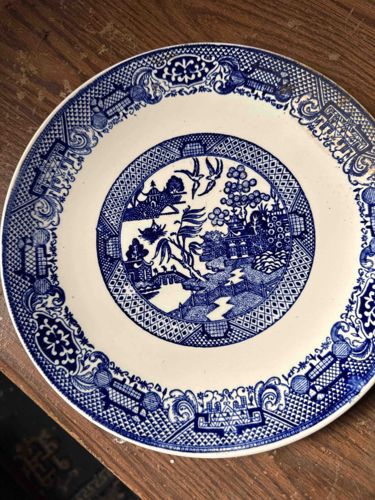
Blue and White Transferware Dinner Plate (Willow Pattern)

Ceramic Dinnerware

AI Estimated Value

·Not an official valuation·Verify before acting

$25-45

As of June 15, 2026

AI Item Analysis

·AI can make mistakes·Verify before acting
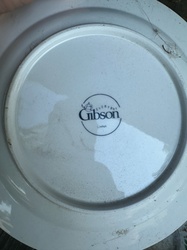
This item is a round dinner plate, likely made of earthenware or refined porcelain, featuring the classic blue and white 'Willow Pattern' transferware design. The plate appears to be a standard dinner plate size, likely 9 to 10 inches in diameter. The dominant colors are a rich cobalt blue applied over an off-white or cream-colored ceramic body. The design depicts a stylized Chinese landscape with a pagoda in the foreground, a bridge with three figures, a boat on a lake, and various trees and foliage. Two birds, often described as doves or swallows, are prominently featured in flight at the top center of the design. The central scene is framed by a decorative border composed of geometric patterns, floral motifs, and scrollwork, also executed in blue. The craftsmanship appears to be of good quality, typical of mass-produced transferware from the late 19th or early 20th century. There are no clear maker's marks visible in the image, but the consistent application of the transfer suggests industrial production. The plate shows signs of age, including some minor wear around the rim and potentially some small specks of dirt or discolored areas on the white surface, consistent with regular use or storage over time. No major chips, cracks, or repairs are immediately visible, indicating a relatively good preserved condition for its probable age. The blue pigment shows good saturation and detail, with crisp lines where the pattern is applied. The plate's surface has a subtle sheen, characteristic of glazed ceramic. Given the widespread popularity and long manufacturing history of the Willow Pattern, this plate likely dates from the late 19th century through the mid-20th century.
AI Appraisal Report

·AI can make mistakes·Verify before acting
Based on my visual examination of the provided image, this Blue and White Transferware Dinner Plate, featuring the classic Willow Pattern, appears to be in relatively good condition for its probable age. I observe no obvious chips, cracks, or repairs, which is positive. There is some minor wear around the rim and slight discoloration consistent with age and use, but these are typical for mass-produced transferware from the late 19th or early 20th century. The blue pigment retains good saturation and the intricate details of the pattern are crisp. From an authenticity standpoint, the design is unequivocally the well-known Willow Pattern. However, without a visible maker's mark, definitively authenticating the manufacturer or precise age from the image alone is impossible. Willow Pattern was produced by countless potteries across various countries for over two centuries. In-person examination would be required to check for impressed or printed marks on the reverse, assess the specific ceramic body (earthenware vs. refined porcelain), and evaluate the glaze quality more closely. Market conditions for common Willow Pattern transferware are generally stable but not highly collectible in individual plate form unless attributed to a significant maker or of exceptional rarity. Individual dinner plates are abundant. Demand exists for replacement pieces or for decorative purposes, but rarity is low for a single plate of this type. Factors impacting value negatively include the lack of a clear maker's mark and its status as a single, common dinner plate rather than part of a complete, rare set. Conversely, its good survival condition is a positive. To fully authenticate and precisely value this plate, I would need a physical inspection to check for maker's marks, assess the ceramic body and glaze quality by touch, and potentially use a UV light to detect professional repairs. Provenance documentation, though unlikely for such a common item, would also add value.

Get your items appraised

Instant estimates of your treasures with AI-powered appraisals

Browse More Appraisals