AI Appraisal Estimate

AI-generated estimates · not official valuations

From the user

What was submitted

Photo and notes provided by the user — not generated by AI

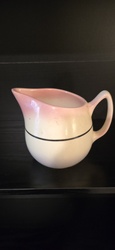
Submitted item photo
Submitted photo · June 8, 2026

User's notes

No additional notes provided.

AI analysis below

AI appraisal

AI analysis & estimate

AI-Generated · Verify before acting

Everything below is generated by AI for informational purposes only. AI can make mistakes — the AI may misidentify items or misattribute them (artist, maker, brand, designer, origin, era). This is not an official valuation and should not be used for insurance, sale, tax, estate, legal, or lending purposes — or any decision requiring a certified appraisal. It is not an authoritative claim about any person, brand, or rights holder — do not share or rely on it as a factual statement about a third party. Always consult qualified professionals before making financial decisions.

Read the full disclaimer

AI Identification

·Not independently authenticated·Verify before acting

DeForest of California Green Ceramic Covered Pot / Dish

Ceramic Tableware / Kitchenware

AI Estimated Value

·Not an official valuation·Verify before acting

$40-70

As of June 8, 2026

AI Item Analysis

·AI can make mistakes·Verify before acting
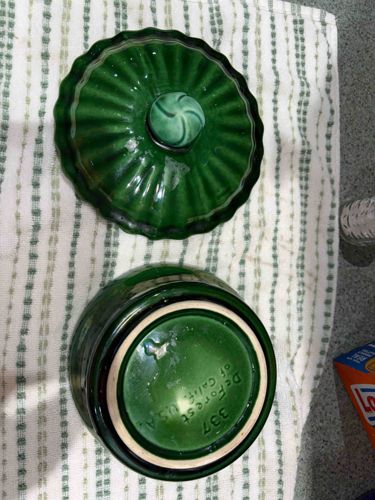
This item is a vibrant dark green ceramic covered dish or pot, likely a sugar bowl, candy dish, or small casserole, manufactured by DeForest of California. The main body of the pot has a simple cylindrical or slightly tapered form. The exterior is finished with a deep, glossy green glaze. The lid is distinctively designed with radiating fluted or ribbed patterns, giving it a somewhat scalloped or star-like appearance when viewed from above. It features a central spherical finial, also in the same dark green, with a subtle swirl pattern molded into its surface, serving as a decorative handle. The ceramic material appears robust, indicating good craftsmanship for its intended use. The base of the pot reveals a cream-colored unglazed rim, providing contrast to the rich green. Visible on the unglazed base are incised markings: "DeForest of Calif. U.S.A." and the number "337". These markings clearly identify the manufacturer and likely a model or production number. The overall condition appears good with an even gloss, suggesting well-maintained ceramic. There are no obvious chips, cracks, or significant scuffs visible in the provided images, though a full assessment would require a 360-degree view. The style aligns with mid-20th century American pottery (likely 1940s-1960s), known for its bold colors and utilitarian yet decorative designs. The piece exhibits quality craftsmanship typical of regional ceramic manufacturers of that era, intended for both practical use and aesthetic appeal.
AI Appraisal Report

·AI can make mistakes·Verify before acting
Upon examining the provided image of the DeForest of California green ceramic covered pot/dish, I note its vibrant dark green finish and distinctive lid design. The glossy glaze appears largely intact and uniform, suggesting good overall condition with no obvious chips, cracks, or significant scuffs visible. The unglazed base with the clear incised markings "DeForest of Calif. U.S.A. 337" strongly supports its authenticity as a DeForest piece, aligning with their mid-20th century production. DeForest of California produced utilitarian and decorative ceramics, and while sought after by collectors of California pottery, their pieces are generally not rare. The demand for such items is steady among collectors focused on regional Americana and mid-century modern aesthetics, but it is not exceptionally high, nor is it a high-value collectible category compared to art pottery or rare studio ceramics. Market comparables for similar DeForest covered dishes typically fall within the modest range, influenced by condition and specific design. Factors impacting value positively include the excellent visual condition and the iconic, deeply fluted lid design which adds a decorative element. Conversely, while attractive, its commonality within California pottery limits its top-tier value. My assessment of its condition and authenticity is based solely on the visual information provided. A full authenticity verification would require in-person examination to confirm the ceramic body's integrity, feel the texture of the glaze, check for repairs or hairline cracks not visible in images, and thoroughly inspect the markings for originality. Provenance documentation, though unlikely for such a piece, could also offer additional authentication. Without physical inspection, I cannot rule out subtle imperfections or restorations.

Get your items appraised

Instant estimates of your treasures with AI-powered appraisals

Browse More Appraisals